What Is Oxygen Deficiency? The #1 Cause of Confined Space Fatalities
Oxygen (O₂) constitutes 20.9% of normal atmospheric air. In confined spaces, organic decomposition, oxidation reactions, inert gas displacement, and combustion can reduce O₂ below 18%, creating an oxygen-deficient atmosphere that immediately threatens life. Unlike CO poisoning, oxygen deficiency produces almost no detectable symptoms, causing workers to lose consciousness before realizing anything is wrong.
💡 Key Point
Under Korea's Occupational Safety and Health Act, oxygen measurement before entering confined spaces is a mandatory legal requirement. Below 18%, work must stop; below 16%, immediate evacuation is required. The WANDI EDW500 measures O₂ alongside 4 other gases simultaneously to guarantee safety before entry.
Oxygen Concentration and Human Health Effects
| O₂ Level (%) | Status | Health Effects | Legal Standard |
|---|---|---|---|
| 20.9 | Normal | Standard atmosphere | — |
| 19.5–20.9 | Caution | Minor effects; monitoring required | OSHA lower limit |
| 18–19.5 | Alert | Breathing difficulty begins | Korea 1st alarm (18%) |
| 16–18 | Danger | Headache, dizziness, impaired judgment | Stop work |
| 14–16 | High Danger | Clouded consciousness, rapid pulse | Evacuate immediately |
| 6–10 | Extreme | Unconsciousness, death within minutes | Fatal risk |
| <6 | Instant Death | Immediate unconsciousness and death | Instant fatal |
※ Source: KOSHA, Occupational Safety and Health Standards Appendix 18

Real Incident: Oxygen Deficiency Deaths in Confined Spaces
Case 1 — 2021 Manhole Entry O₂ Deficiency Fatality, Gyeongnam
In 2021, a worker died from oxygen deficiency while inspecting a sewer manhole in South Gyeongsang Province; a colleague who entered to rescue him also lost consciousness. Entry without measurement was cited as the cause. The local authority subsequently mandated 5-gas measurement before all confined space entry by internal regulation. (Source: Ministry of Employment and Labor Serious Accident Investigation, 2021)
WANDI EDW500 — O₂ Detection with IECEx-Certified 5-Gas Monitor
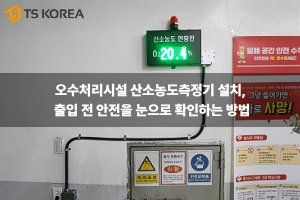
EDW500 O₂ Detection Specifications
- Measurement Range: 0–30% O₂
- Alarm Thresholds: 1st: 19.5% / 2nd: 18.0% (adjustable)
- Oxygen-Enriched Alarm: ≥23.5% (increased flammable gas explosion risk)
- Sensor Type: Electrochemical (galvanic cell) — long-term stability
- 5-Gas Simultaneous: EX + O₂ + CO + H₂S + CO₂
- IECEx Certified: TPS 25.0057X (TÜV SÜD), Zone 0 rated
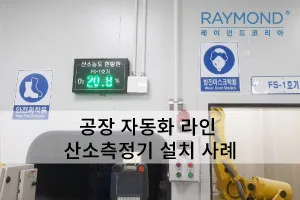
Accident Prevention Scenario with the EDW500
- 1Pre-Entry O₂ Check: Instantly verify O₂ levels in manholes, tanks, and confined spaces before any entry
- 219.5% First Alarm: Audible alarm and vibration alert trigger as O₂ begins to drop during work
- 3Cloud Transmission: Real-time O₂ data sent to supervisor's monitor; immediate response if anomaly detected
- 45-Gas Composite Check: O₂ deficiency, CO, H₂S, and EX hazards all identified simultaneously in a single reading