Hydrogen (H2): New Safety Challenges in the Hydrogen Energy Era
Hydrogen (H2) is the most abundant element in the universe and the leading candidate for carbon-free clean energy. Its use is rapidly expanding across fuel cells, hydrogen refueling stations, semiconductor manufacturing, and battery charging rooms. However, hydrogen has an extremely wide explosive range (4–75%) and is colorless and odorless—completely undetectable by the senses. Being 14 times lighter than air, it accumulates quickly near ceilings in enclosed spaces. Even small leaks can reach explosive concentrations rapidly, making dedicated H2 detectors essential.
H2 Hazards by Concentration

| H2 Level / State | Hazard Type | Note |
|---|---|---|
| 4% (40,000 ppm) | Lower Flammability Limit (LFL) — explodes with ignition source | LEL 4% |
| 10% LEL | Standard first-stage alarm set-point | Minimum alarm threshold |
| 75% | Upper Flammability Limit (UFL) | Exceptionally wide explosive range |
| Oxygen deficiency | O2 below 18% — asphyxiation risk | Simultaneous O2 monitoring essential |
| Upon detonation | Overpressure, fire, blast wave — fatality or severe injury | Immediate catastrophic risk |
※ Source: Korean MoEL Chemical Exposure Standards (2023), NFPA 2, ISO 26142
Real Accident Cases
Case 1 — Hydrogen Refueling Station Explosion (Norway, 2019)
At the Kjørbo hydrogen station near Oslo, a hydrogen leak caused an explosion that destroyed the station and injured two nearby residents. A defective high-pressure plug assembly was identified as the cause, and the incident prompted international reinforcement of hydrogen safety standards. (Source: Norwegian Safety Investigation Authority, 2019)
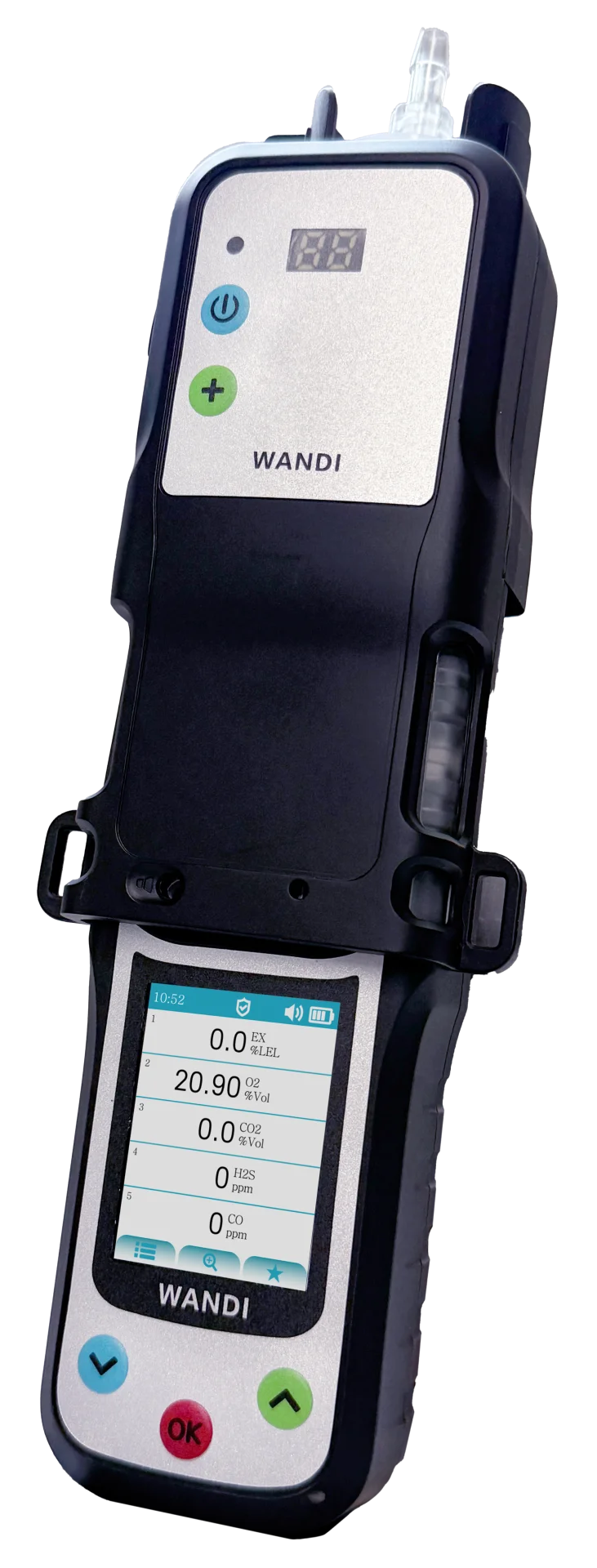
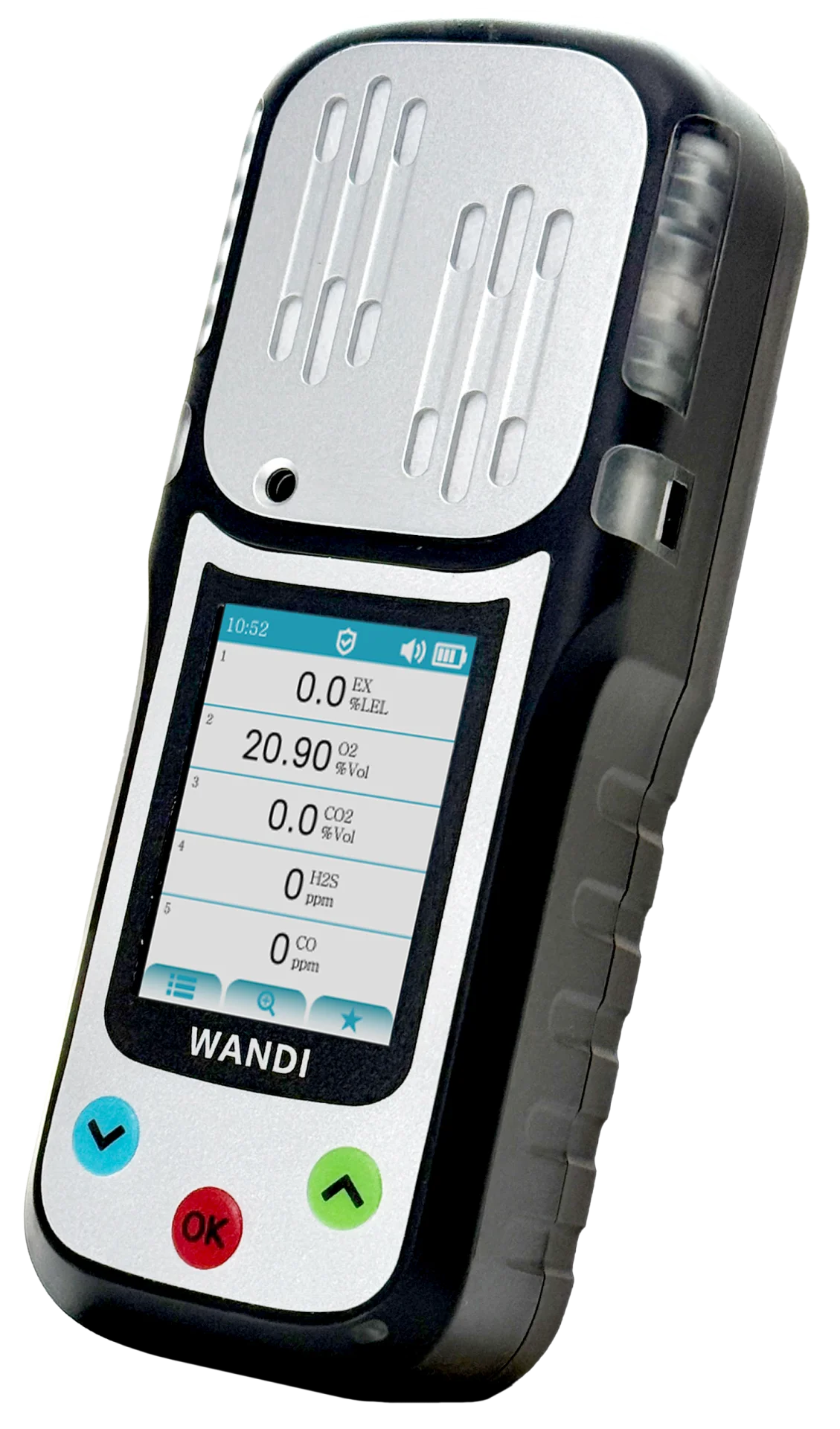
WANDI EDW500 — IECEx-Certified Portable 5-Gas Detector for H2
The WANDI EDW500 holds IECEx certificate TPS 25.0057X (TÜV SÜD) with explosion-protection marking Ex da ia IIC T4 Ga—certified for Zone 0, the most hazardous explosive atmosphere. Equipped with a catalytic combustion H2 sensor, it simultaneously measures H2 plus four additional gases (O2, CO, H2S, EX), providing real-time cloud data and three-mode alarms for workers in hydrogen environments.
Prevention Scenario
In the 2022 Gyeonggi semiconductor incident, an EDW500 continuously sampling the hydrogen piping area would have alarmed at 10% LEL during the accumulation phase—well before ignition—triggering an automatic work-area shutdown and worker evacuation that would have prevented the fire entirely.
A Closer Look at the WANDI EDW500
Below are real photos of the WANDI EDW500 portable multi-gas detector and its use on site.