Applied Markets
Installed Gases
Project Details
Hello,
This is RS Korea.
Today's post covers the installation of a FIX800 5-Gas [O2, CO, H2S, LEL, CO2] fixed gas detector at a food waste wastewater treatment facility located in the Gyeongsang region.
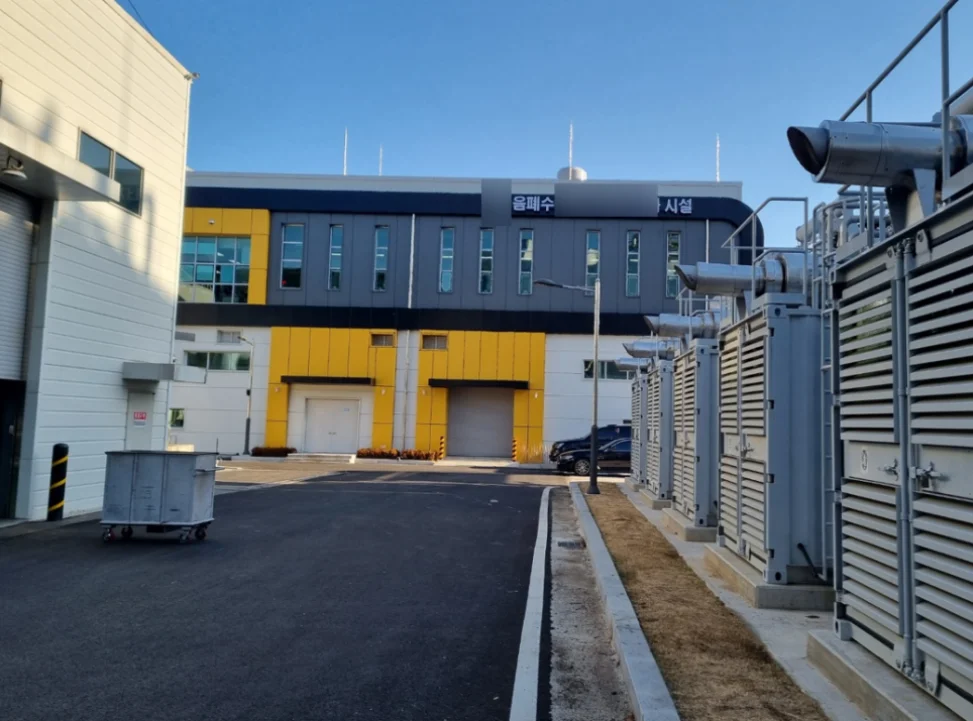
Food waste wastewater treatment facility
To protect the safety of workers inside the facility, the site requested a survey for installing a 5-gas detection system (O2, CO, CO2, H2S, LEL) in line with Korea's amended Occupational Safety and Health Act (2017), which led to this installation.
The food waste wastewater treatment facility is an indoor, enclosed space used to process food waste. Under the Occupational Safety and Health Act, confined spaces of this type are required to have gas detectors covering five specified gas items.
Confined Space
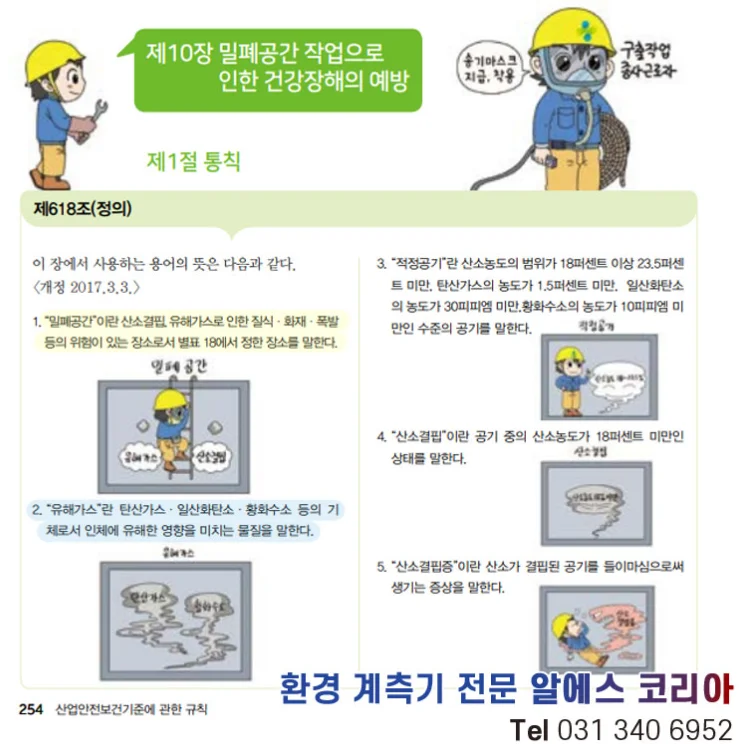
This site meets the definition of a confined space under the Occupational Safety and Health Act and is used for processing food waste. While the treatment process was not fully visible in the structure, the odor at the site was noticeable due to the nature of the space.
Installed Products
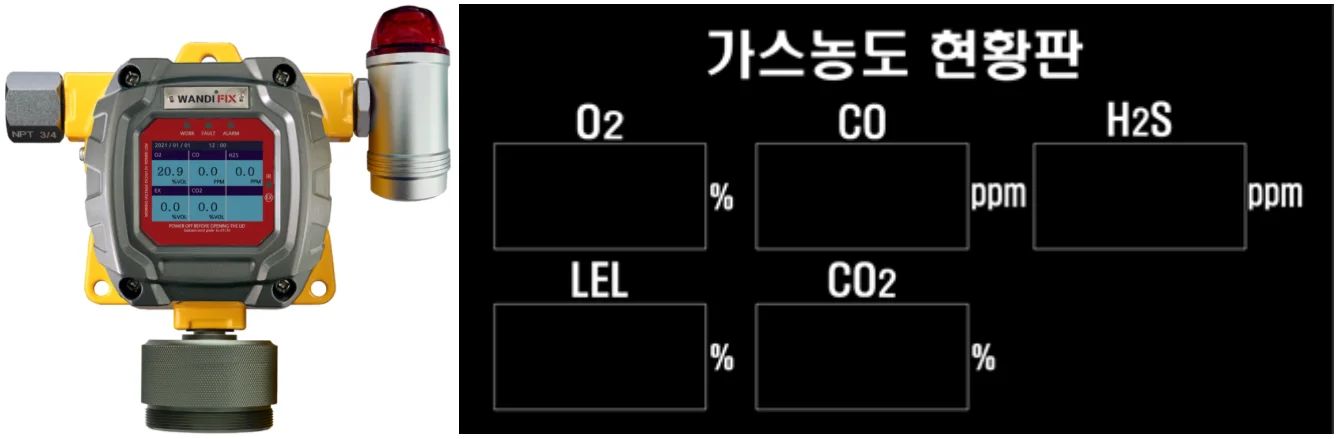
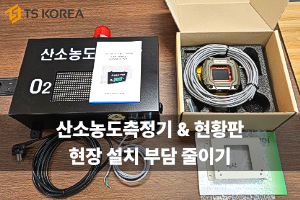
The products installed are the FIX800, a fixed gas detector from Wandi — a specialist gas detection brand — together with a gas concentration display board.
The FIX800 can be configured from a single gas type up to five gas types. Readings from the installed sensors are shown in real time on its large front display. When paired with a display board, gas readings inside the confined space can be checked from outside — such as at the entrance or building exterior — before entering, allowing an immediate response if a hazard is detected. This is why the detector and display board are installed together.
Consider a site with only a gas detector and no display board. If the first-level alarm goes off during work and the operator steps out to ventilate and rest, no one outside the facility can tell what the internal conditions are — re-entering without checking first could put the worker at risk.
For this reason, we recommend installing a gas concentration display board together with the detector whenever a confined space is not staffed around the clock.
Installation Points
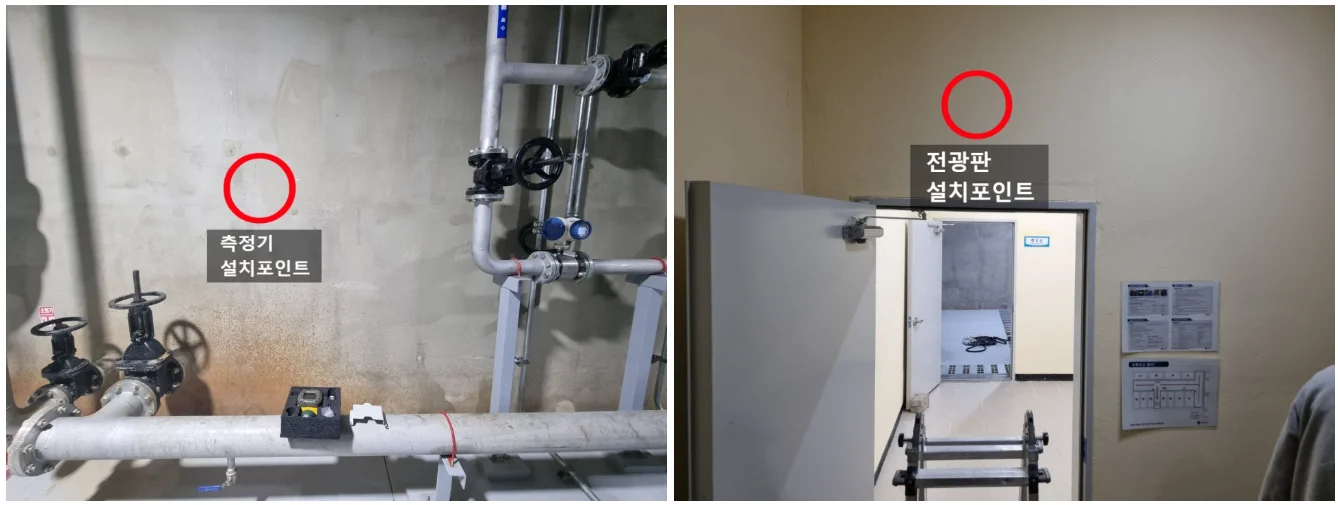
These are the installation points.
Left: installation point of the fixed multi-gas detector, inside the food waste wastewater treatment facility.
Right: installation point of the gas concentration display board, outside the entrance.
We first determined the exact locations for the display board and the detector, then informed the on-site personnel of these points before starting work, since the installation points determine how the power and communication cables are routed.
Installation
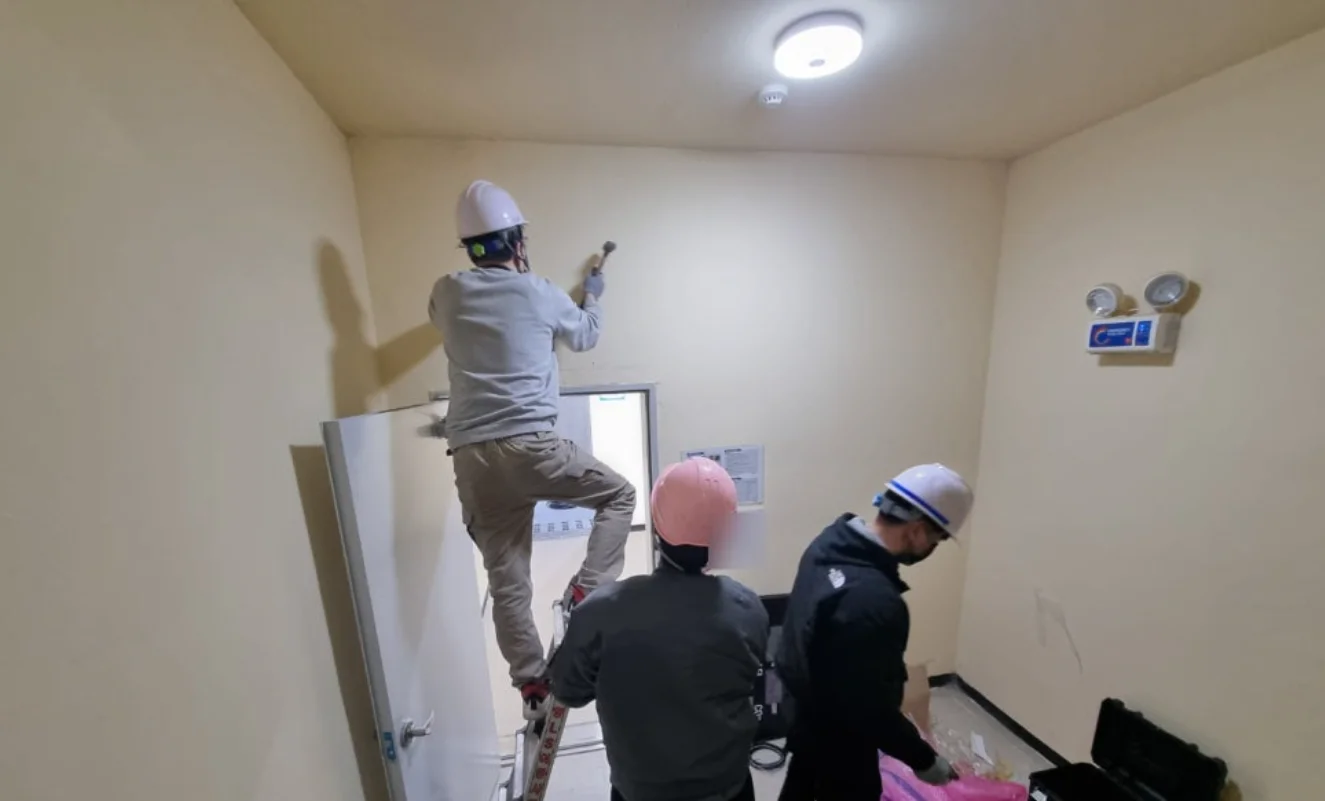
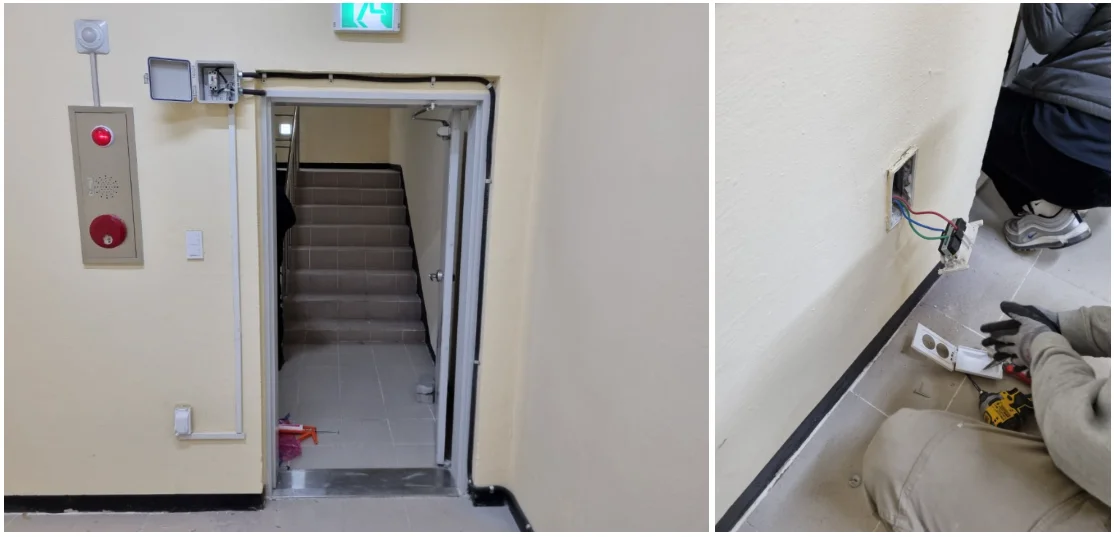
The display board's mounting location was determined first and then installed.
Power was drawn from a 220V outlet near the emergency stairwell.
Because the power supply and communication cables from the display board needed to reach the detector inside the food waste wastewater treatment facility, wall penetration work was carried out.
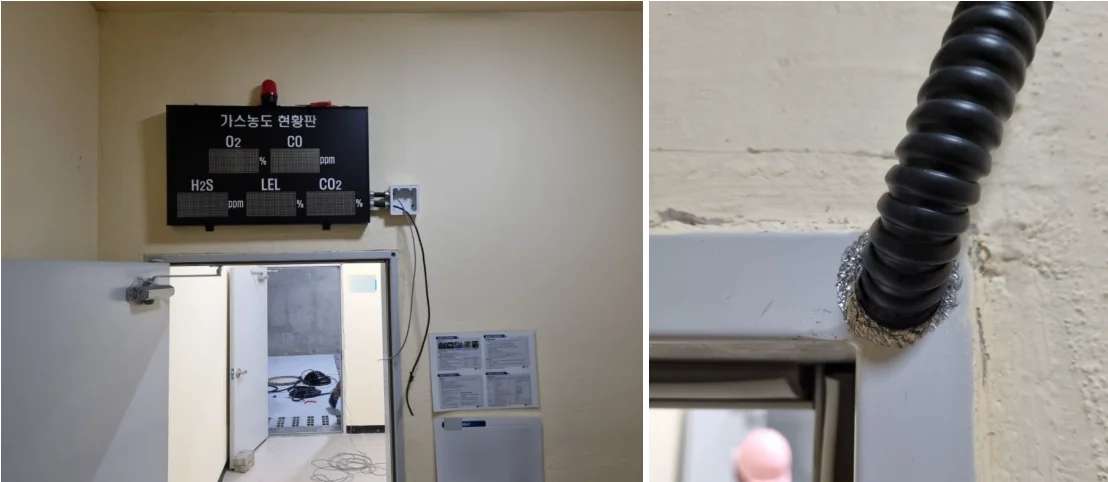
The power and communication cables from the display board were neatly organized using flexible conduit, tidied with a pull box, and then the wall penetration was carried out.
Wall penetration is usually done by drilling through concrete, but where the wall is too thick or concrete drilling is not permitted — as at this site — a caulking method is used instead.
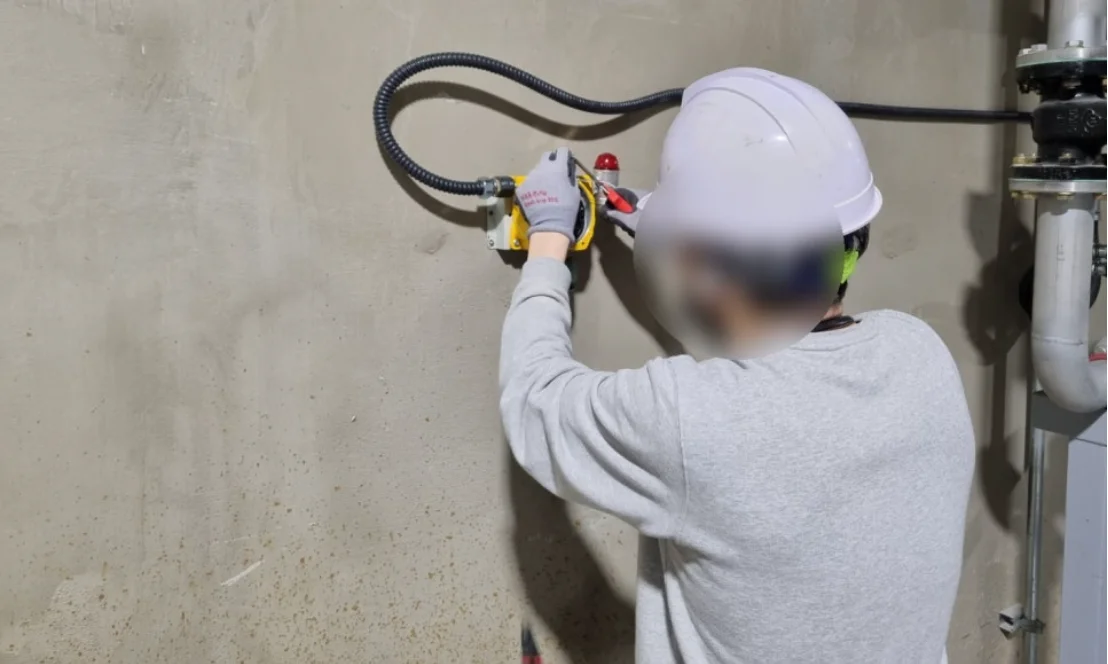
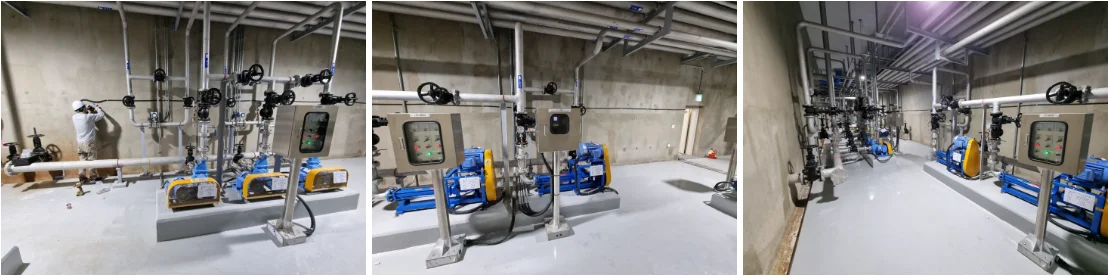
* Click an image to view a larger version.
The power and communication cables from the display board were routed through the caulked opening into the facility where the detector is installed.
Since the detector is located about 25 meters from the entrance, saddle clips were used to secure the cable run.
Installation Complete
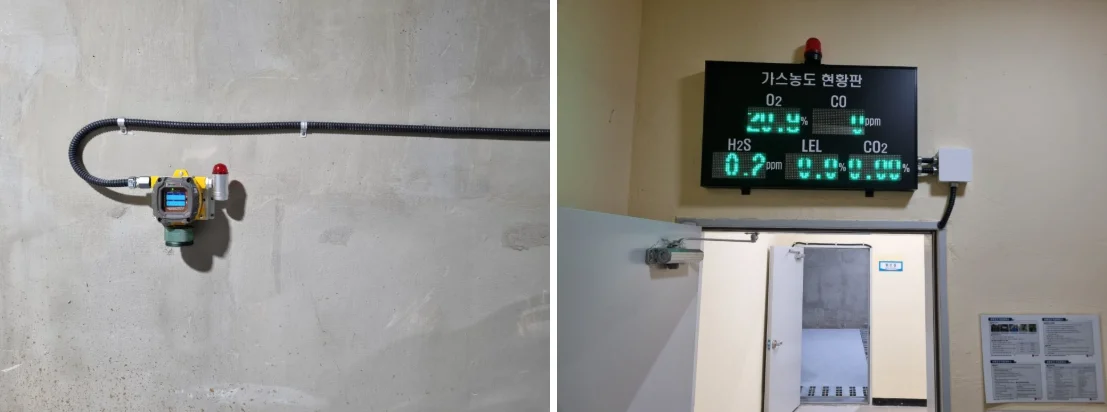
The installation has been completed.
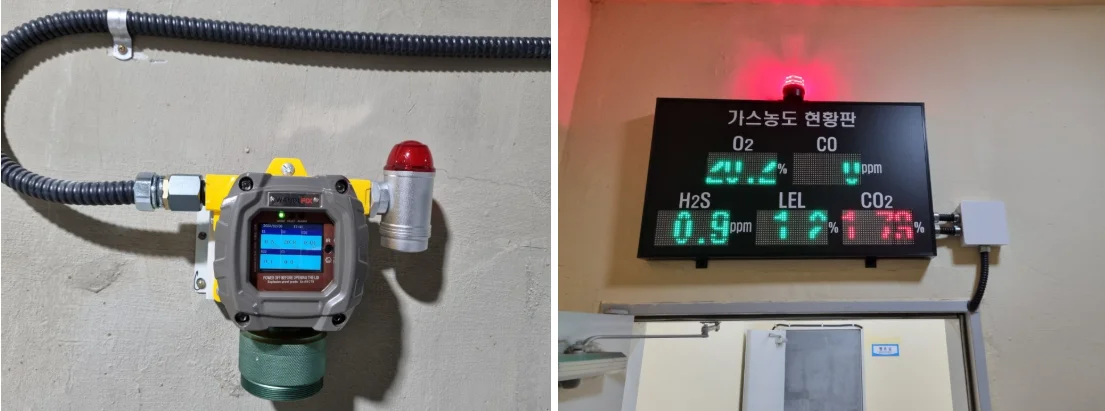
Using a test gas, we confirmed that the alarms triggered correctly at the configured setpoints and that the readings on the detector matched those on the display board.
We explained the FIX800's product details and maintenance, demonstrated its operation to the on-site personnel, and completed the visit.
Today, we installed a 5-gas confined-space detection system in a food waste treatment facility, in line with Korea's Occupational Safety and Health Act.
Although the food waste had already gone through some processing, the site still had a strong odor, as it was mid-process.
Before installation, ventilation relied on workers subjectively judging when the odor was strong enough to act. After installation, the facility can check gas concentration readings directly from outside and ventilate accordingly — a clear improvement to the site's safety system.
When you're unsure what gases may occur in your environment, or you know the gases but still need to pin down the right concentration range, choosing equipment before purchase can be difficult.
A thorough consultation with a specialist — factoring in the environment, the gases involved, frequency, and concentration — is the safest way to select a gas detector with the correct measurement range.
Beyond simple product sales, RS Korea is a gas-detection specialist offering in-house calibration, domestic repair (A/S), custom manufacturing, and installation services. Drawing on our experience across a wide range of environments — demonstrations, site surveys, delivery, repair, and installation — we provide tailored, one-on-one solutions for your gas monitoring needs.
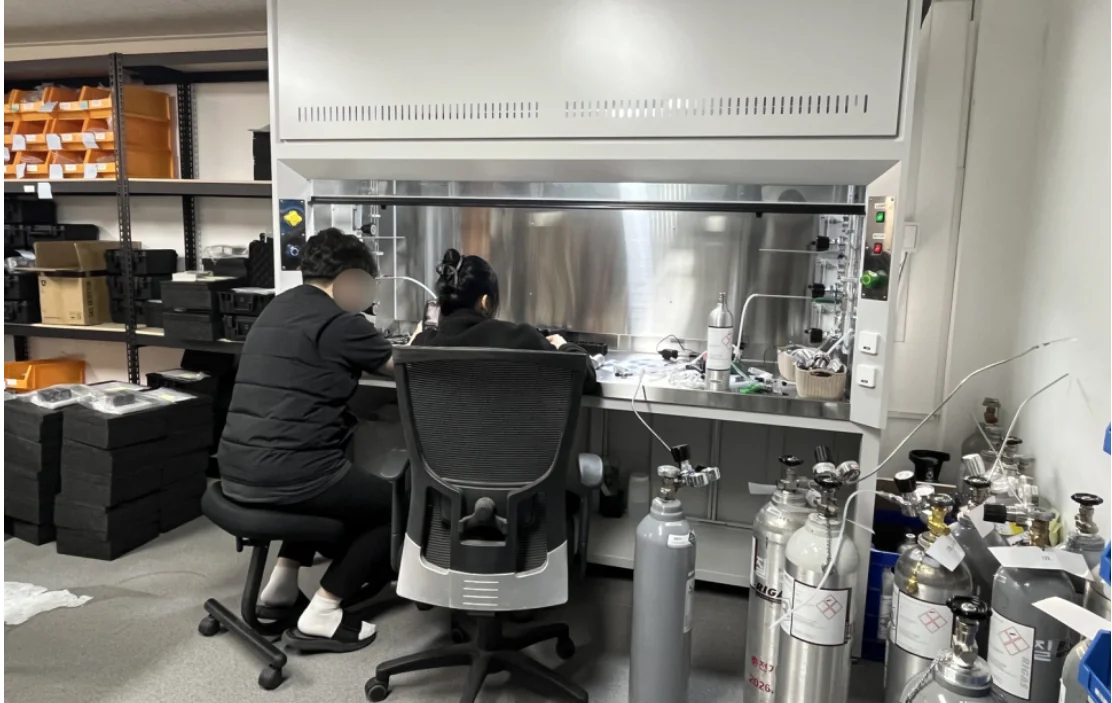
In our next post, we'll introduce a new item from RS Korea's technical team — fume hoods!
If you have any questions about your gas monitoring environment, gas detectors, or other environmental instruments, please contact us at the number below.
☎ 031-340-6952
This has been RS Korea. Thank you.
Frequently Asked Questions (FAQ)
What gases does the FIX800 detect in this installation?
In this installation, the FIX800 was configured for five gas types — O2, CO, H2S, LEL, and CO2 — to meet the confined-space gas monitoring items required for food waste wastewater facilities under Korea's Occupational Safety and Health Act.
Why was a separate gas concentration display board installed with the detector?
The display board lets personnel check the gas readings inside the confined space from outside — for example, at the entrance or building exterior — before entering, so they can respond immediately if a hazardous condition is detected. It's recommended whenever a confined space isn't staffed around the clock.
How was the cabling routed between the display board and the detector?
The power and communication cables from the display board were organized with flexible conduit and a pull box, then routed into the facility through a caulked wall opening — used instead of concrete drilling because the wall was too thick — and secured with saddle clips over the roughly 25-meter cable run to the detector.
How is the FIX800 tested after installation?
After installation, a test gas is applied to confirm that the detector's alarms trigger at the configured setpoints and that the readings on the detector and the remote display board match, before the system is handed over to on-site personnel.
What support does RS Korea provide beyond installation?
RS Korea provides in-house calibration, domestic repair (A/S), custom manufacturing, and installation services, along with one-on-one consultation to help select the right detector and measurement range for each customer's specific gas environment.