Project Details
Hello, this is RS Korea.
Today, we installed an oxygen concentration detector in a Halon gas fire suppression agent room to detect gas leaks and to prevent worker asphyxiation caused by any leak.
About Halon Gas
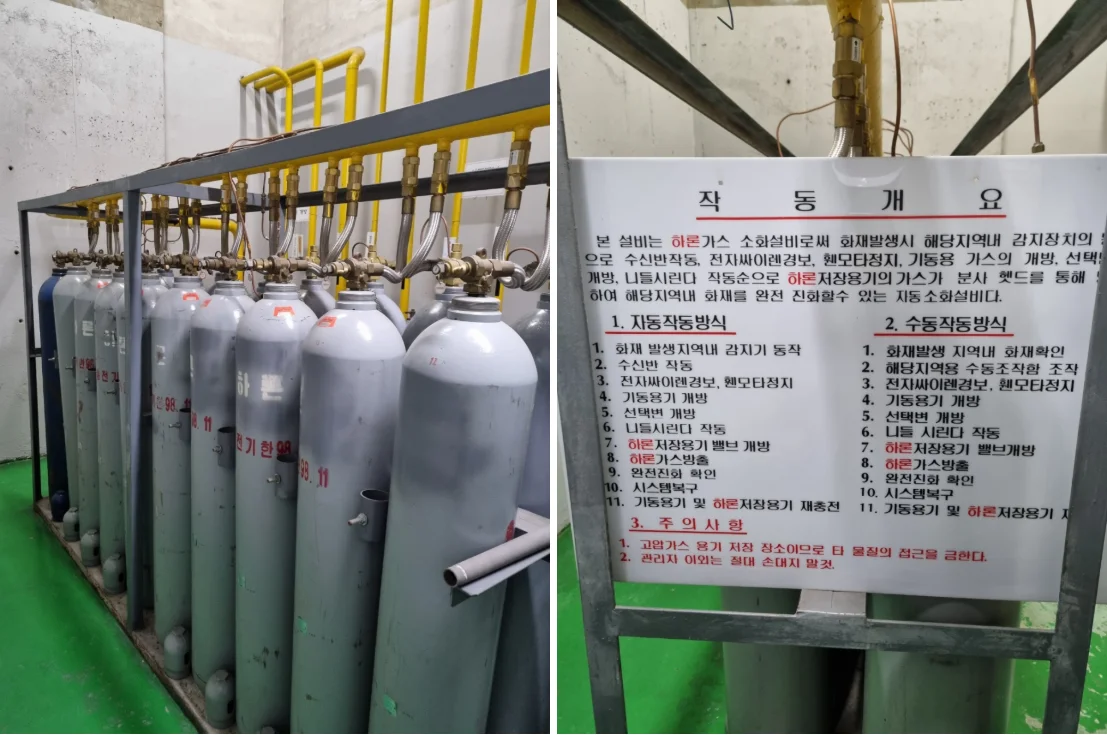
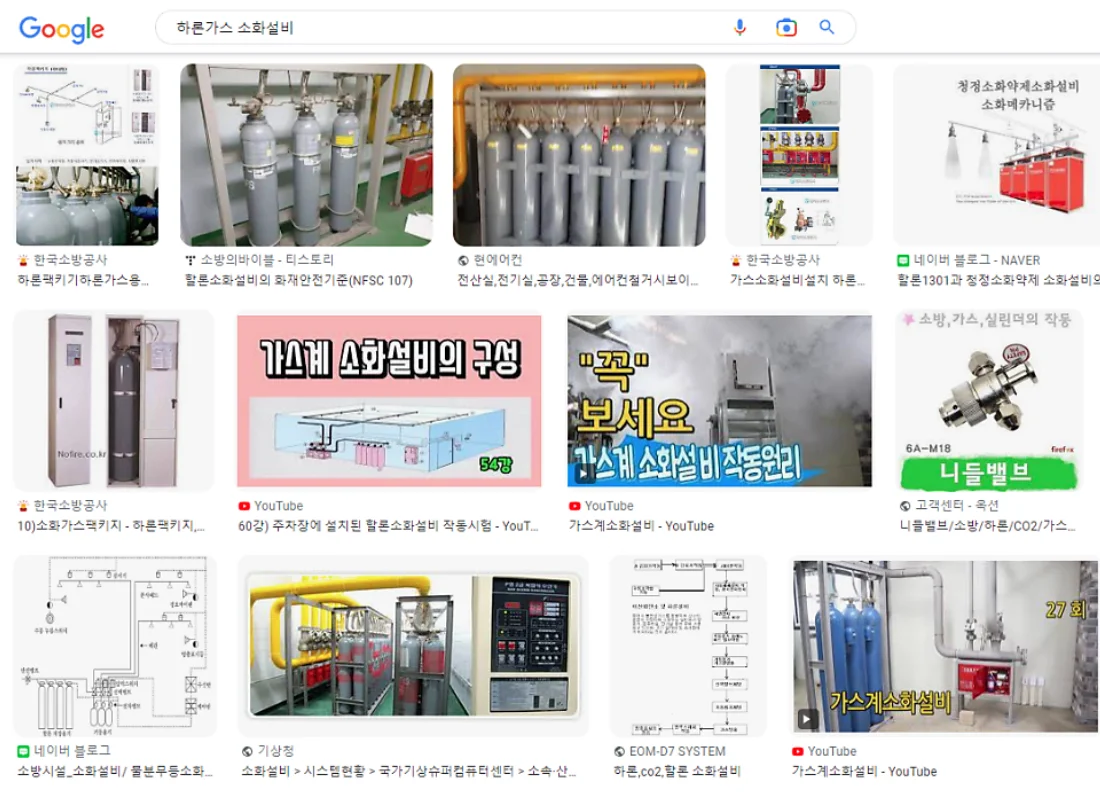
Halon is a halogenated fire suppression agent that works by inhibiting the chain reaction of combustion. Halogenated compounds are produced by substituting halogen elements — fluorine (F), chlorine (Cl), and bromine (Br) — into saturated aliphatic hydrocarbons (CnH2n+2, mainly methane CH4 and ethane C2H6). This substitution gives Halon its strong flame-inhibiting properties, which is why it is used as a fire suppression agent.
Halon has long been regarded as one of the most effective fire suppression agents in the world. However, because it is an ozone-depleting substance, it is now subject to regulation. It is chemically similar to Freon, but contains bromine in place of the chlorine found in Freon. Because bromine resists combustion, this non-flammable property is what makes Halon effective as a fire suppression agent.
Why Halon Gas Is Still Used as a Fire Suppression Agent
Most of the fire suppression agent rooms we have visited or been asked about use carbon dioxide (CO2) or clean agents (IG-series, HFC-series). We knew Halon was still used as a fire suppression agent, but this was our first time working with it directly, so we took the opportunity to look into why it is still used.
Halon gas has many advantages and was once widely used in dry powder extinguishers and other fire suppression products. However, due to ozone depletion concerns, the United States and Europe restricted its production starting in 2010 under the 1989 Montreal Protocol, and sales limitations have made it considerably more expensive today.
Advantages of Halon as a fire suppression agent:
- Strong flame-inhibiting effect through a catalytic suppression mechanism, giving it excellent extinguishing performance on flammable liquid fires
- Low corrosiveness to common metals combined with high volatility
- No corrosion, damage, or contamination to protected equipment after discharge
- Stable in storage with no degradation or decomposition, allowing long-term storage
- Non-conductive, making it safe for use around electrical equipment
- Clean discharge with no residue, reducing the cleanup costs typically incurred after a fire
Because of these advantages, and because the facility already has dedicated Halon piping in place, continuing to use Halon is more cost-effective from a maintenance standpoint than replacing the piping for another agent — which is why it remains in use in this fire suppression agent room.
Installed Products
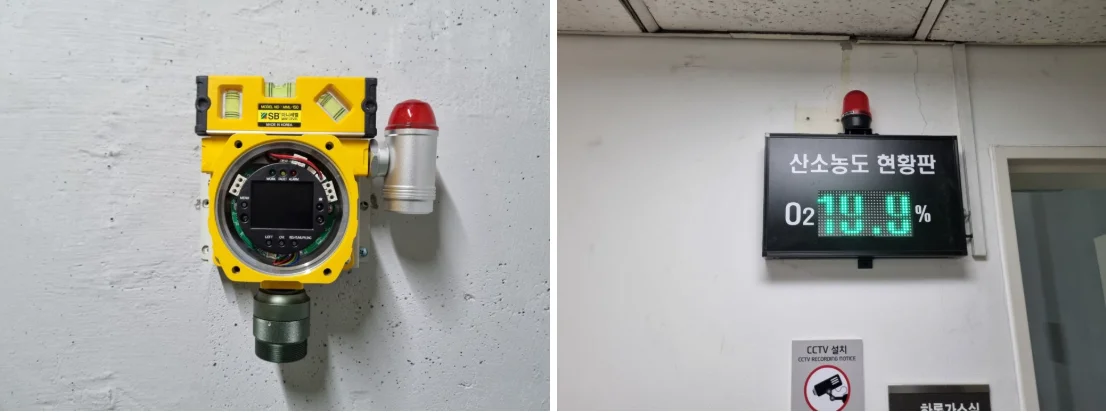
These are the products installed in this Halon fire suppression agent room.
On the left is the FIX800, a fixed-type gas detector from WANDI, a specialist gas detection brand, shown here being leveled before installation.
The FIX800 can be configured from a single gas up to the 5 gases required for confined space monitoring under Korea's Occupational Safety and Health Act — oxygen, carbon monoxide, carbon dioxide, hydrogen sulfide, and combustible gas. It is a user-configurable detector that lets users select the gases and measurement ranges they need from a list of more than 40 gases.
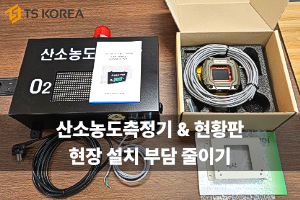
On the right is the remote gas concentration display board, which allows the values measured by the FIX800 to be checked from outside the room.
Installation Points
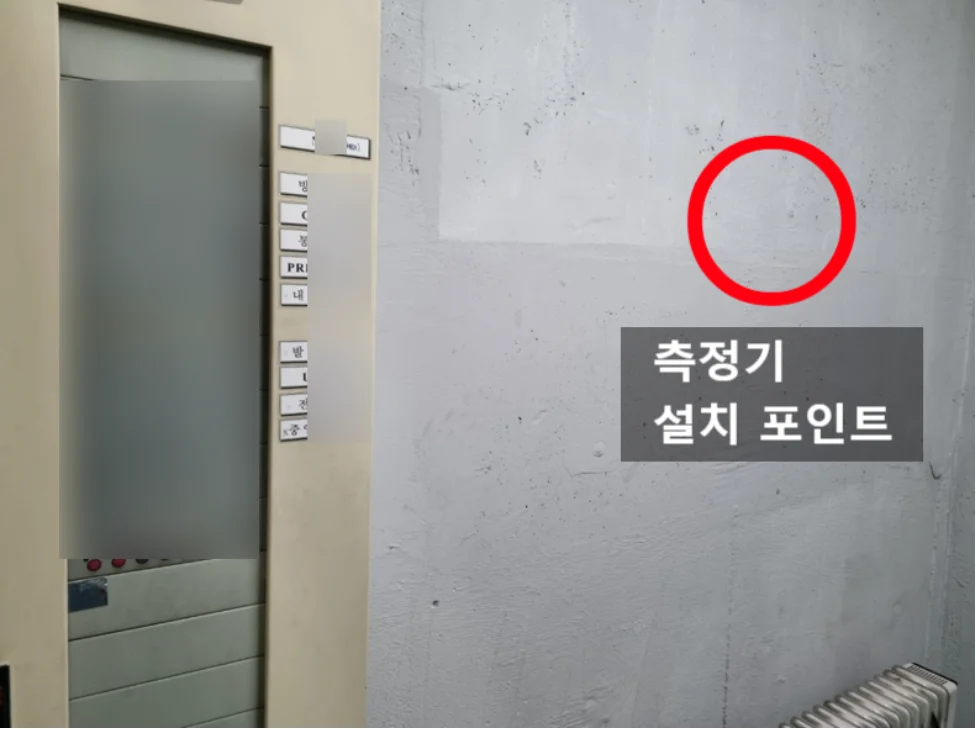
This shows the installation point for the FIX800 gas detector.
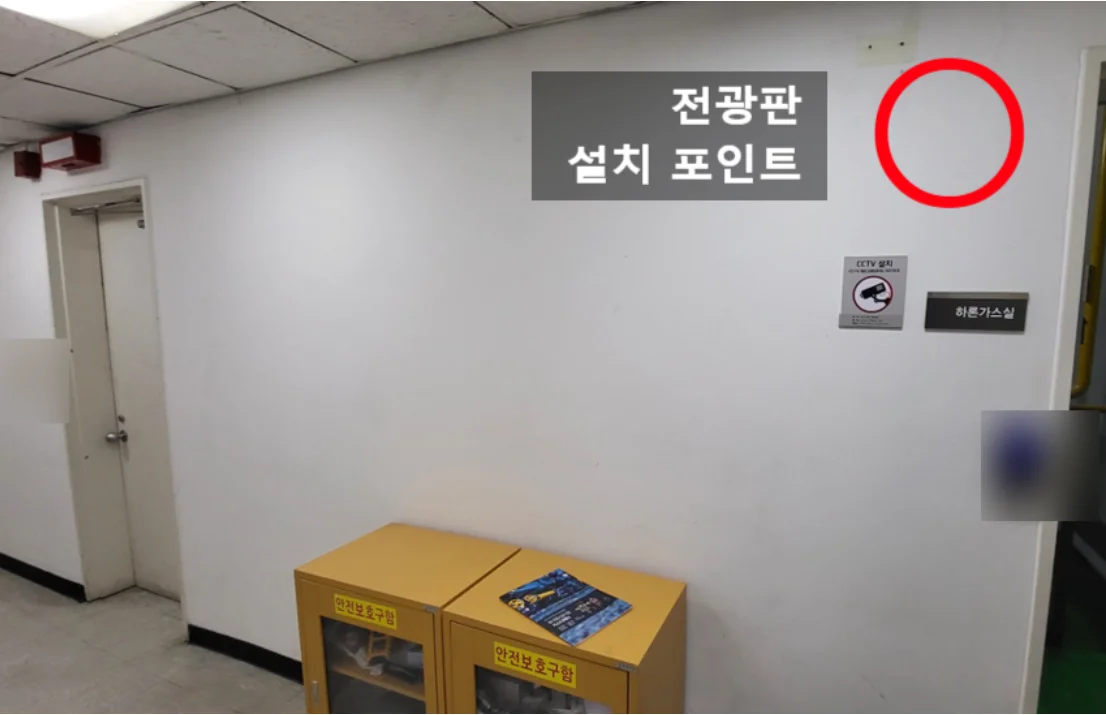
This shows the installation point for the gas concentration display board, located outside the entrance on the left-hand side.
Installation
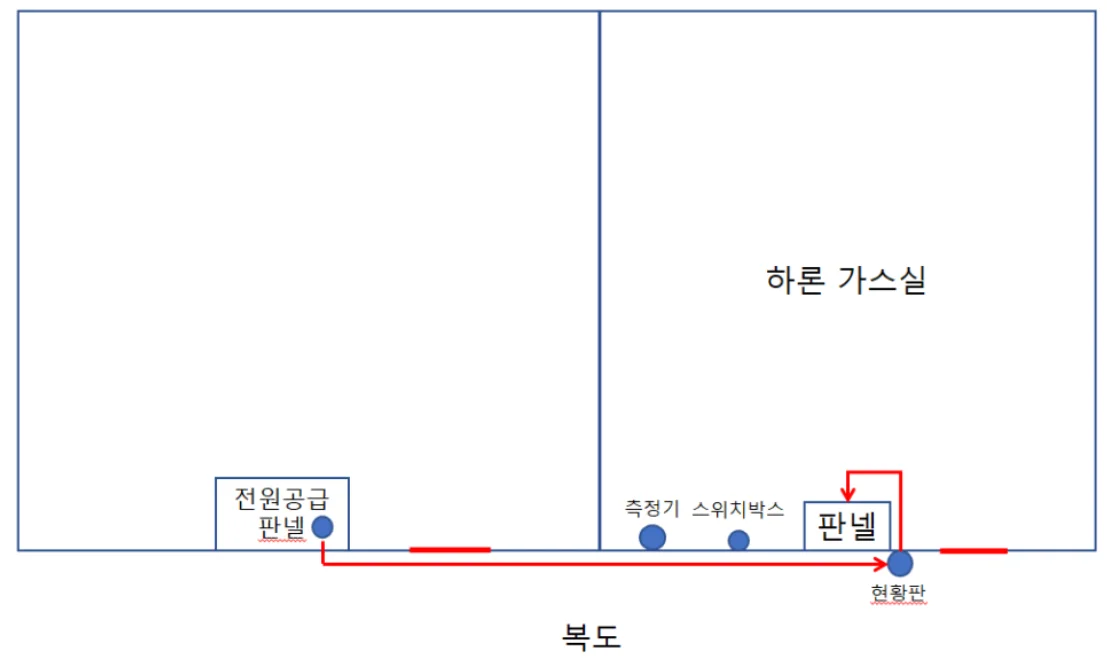
We sketched out the building layout for the installation. The room housing the power supply panel is located right next to the Halon fire suppression agent room, separated only by a partition wall.
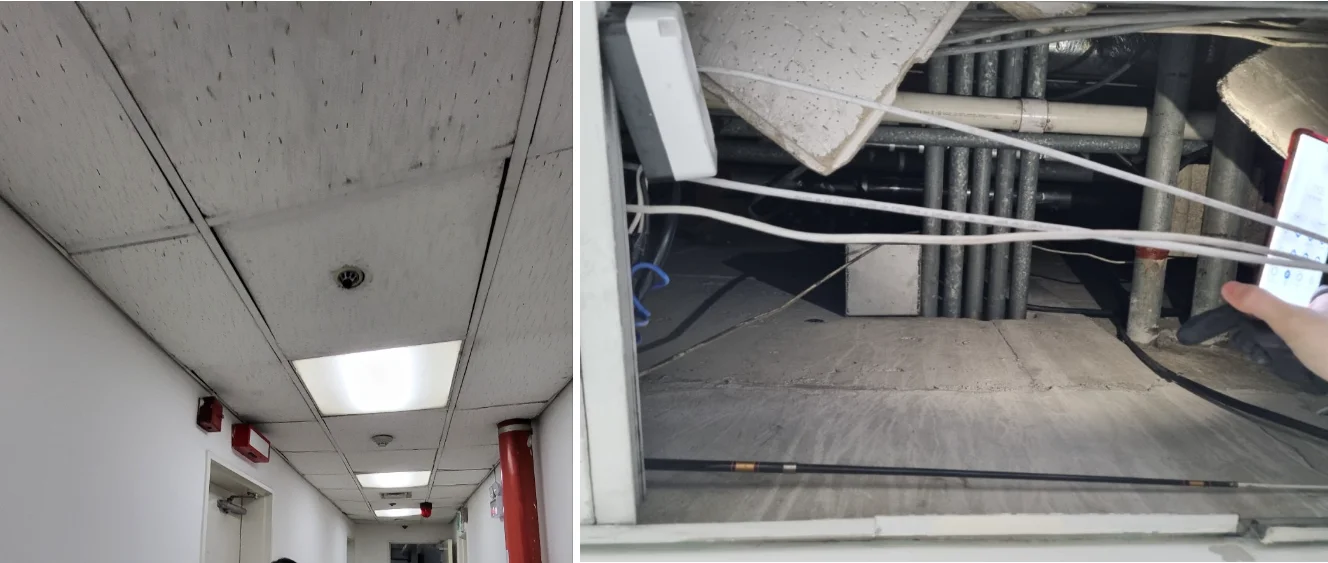
The plan was to route the power cable through the easily accessible ceiling tiles to supply power to the display board — running the 24V power line from the display board, through a ceiling pipe connecting the power panel room to the agent room, to the FIX800.
As is often the case on site, however, unexpected issues came up. When we lifted a ceiling tile that looked ready to fall, we traced the pipe to its end point, only to find that it led all the way down to the ground floor rather than to an accessible junction.
There was no accessible point to connect the power and communication lines to the FIX800.
Unexpected issues like this no longer catch us off guard. After reporting to the site manager that we would need to drill through the pipe, we brought out the drilling equipment and got to work.
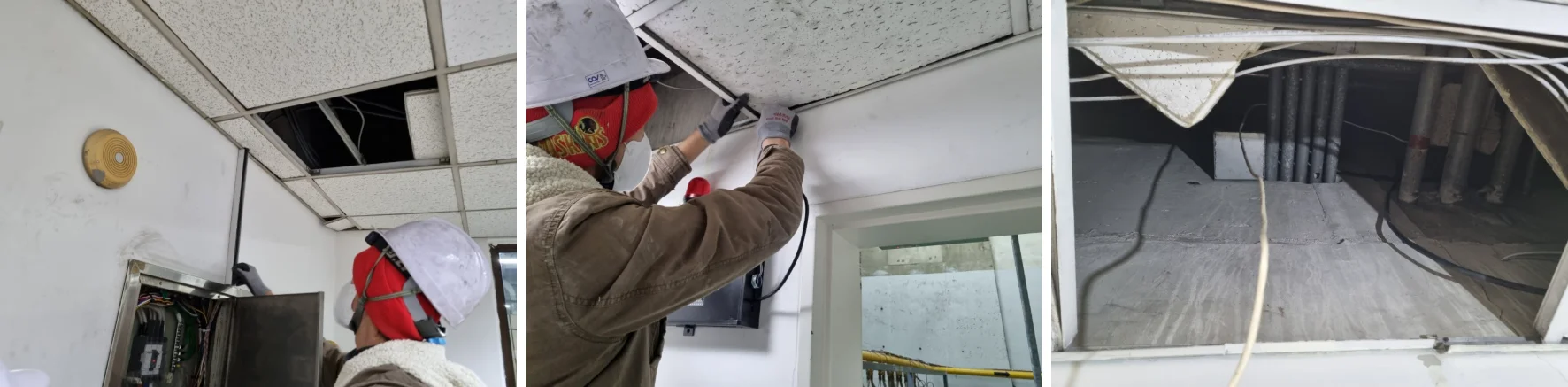
Once the power and communication connection was resolved, the rest of the installation proceeded smoothly.
Installation Complete
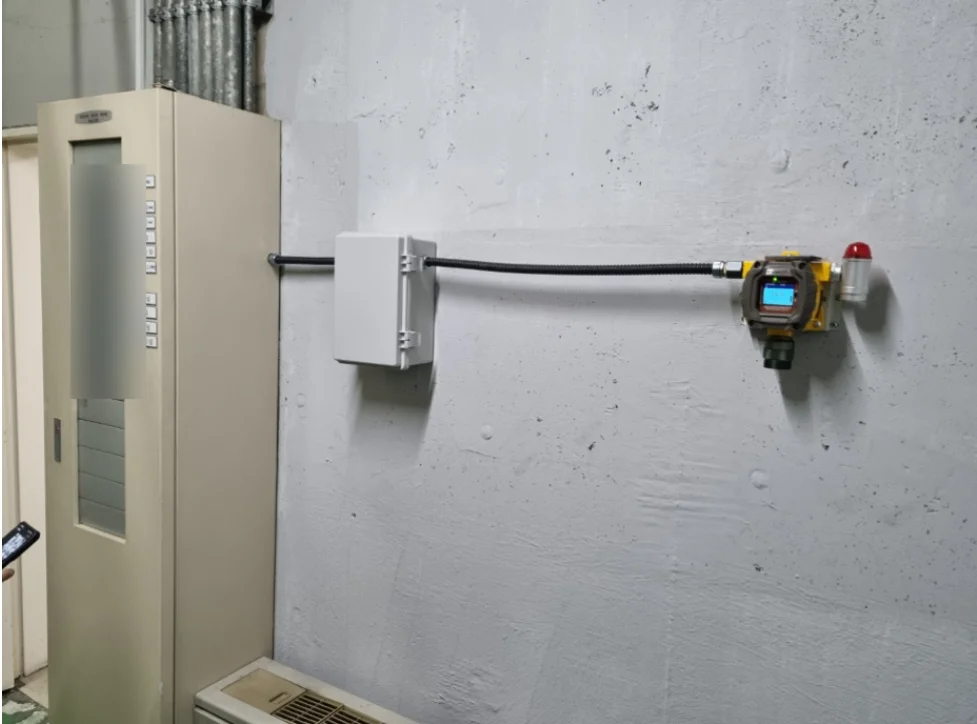

Both the detector and the display board were installed successfully, and the earlier power-routing issue was fully resolved without further problems.
Additional Notes
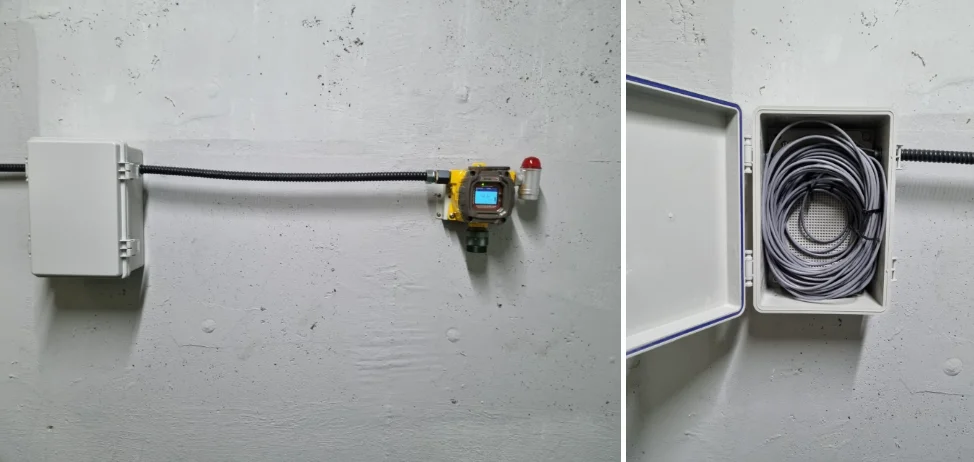
We fabricated a high-box enclosure to neatly organize and house the contact wiring between the detector and the display board.
Contact Output (Relay Function)

A contact output refers to a set of contact points that repeatedly open and close. On the FIX800, when a gas concentration above the alarm setpoint is detected, the contacts close, which is what triggers the beacon light.
Why use a contact output? The FIX800 already has its own beacon light, and the external display board also provides a visual alert. However, the contact output allows a separate beacon to be wired into the disaster-prevention control room, so that staff there can also be alerted whenever a hazardous gas concentration is detected in the gas room.
The installation was completed successfully, and we finished by walking the site staff through the product's operation.
Beyond simply selling products, RS Korea is a gas-specialized company offering in-house calibration, domestic repair (A/S), custom manufacturing, and installation services.
Based on our experience across a wide range of demonstrations, site surveys, deliveries, repairs, and installations, we provide tailored, one-on-one solutions for every gas measurement environment.
If you have any questions about site surveys, installation, gas detectors, or other environmental monitoring equipment, please feel free to contact us at the number below.
☎ 031-340-6952
This has been RS Korea. Thank you.
Frequently Asked Questions (FAQ)
What is Halon gas, and why is it still used as a fire suppression agent?
Halon is a halogenated fire suppression agent that inhibits the chain reaction of combustion. Although it is now regulated as an ozone-depleting substance, many facilities continue to use it because it is highly effective, non-corrosive, leaves no residue, and can keep using existing dedicated Halon piping rather than replacing it with piping for another agent.
Why is a gas detector needed inside a Halon fire suppression agent room?
A gas detector is installed to detect any gas leak inside the room and to prevent worker asphyxiation that could result from exposure to a leak, especially in this type of confined space.
What gases can the FIX800 detect?
The FIX800 can be configured from a single gas up to the 5 gases required for confined space monitoring under Korea's Occupational Safety and Health Act — oxygen, carbon monoxide, carbon dioxide, hydrogen sulfide, and combustible gas — selectable from a list of more than 40 gases based on the site's requirements.
What is the purpose of the remote gas concentration display board?
The display board shows the gas concentration values measured by the FIX800 outside the room, so personnel can check the readings without having to enter the confined space.
What is the contact output (relay) function used for?
The contact output closes when a gas concentration above the alarm setpoint is detected. It can be wired to a separate beacon light in the disaster-prevention control room, allowing staff there to be alerted whenever a hazardous gas condition occurs inside the gas room.