Applied Markets
Installed Gases
Project Details
Hello, this is RS Korea.
Today's post covers the installation of a gas detector and display board at a fire-suppressant agent storage room.
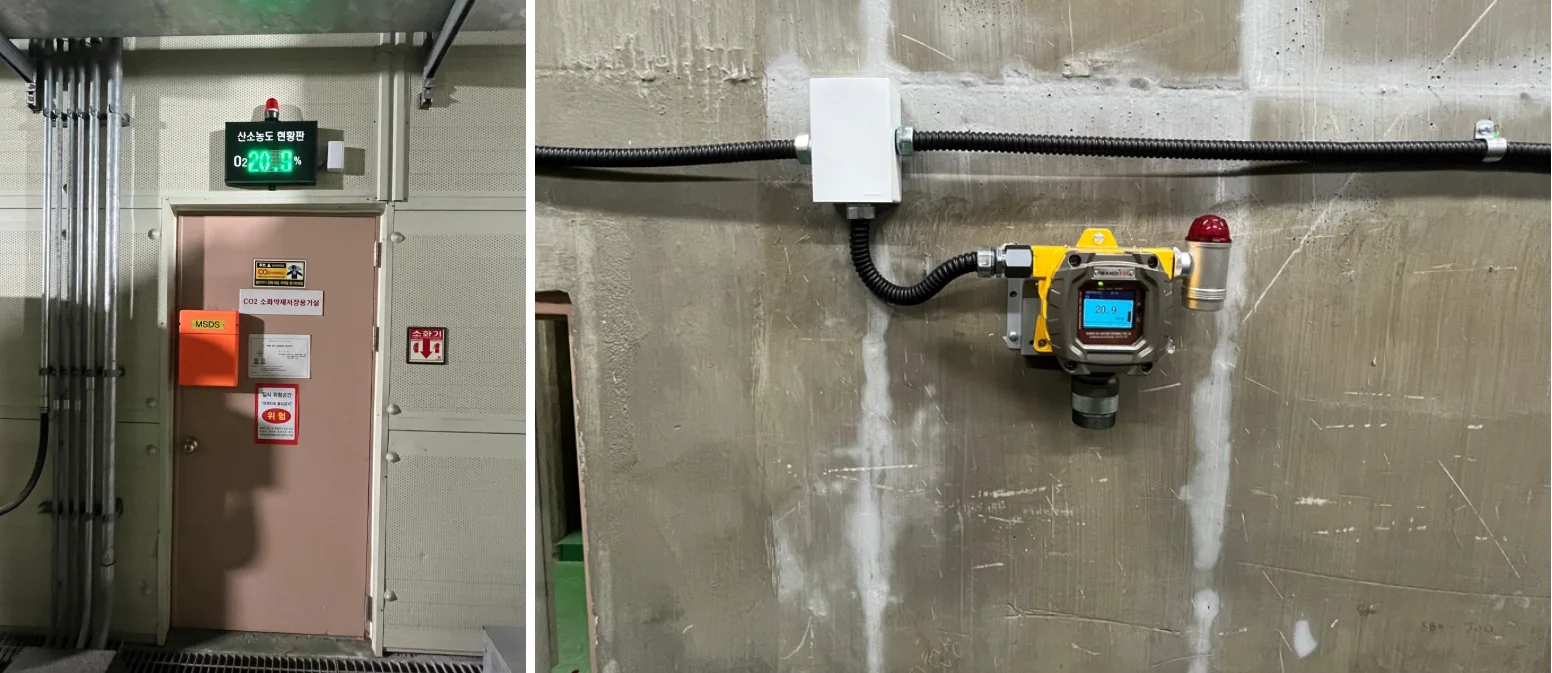
We visited this site last month for a site survey, and the installation has now been completed. (See our earlier post: Site Survey — FIX800 CO2 Detector & Display Board Installation, Fire-Suppressant Room, Energy Power Generation Facility, Public Institution, Mapo.)
To briefly summarize this project: a gas detector was installed inside the fire-suppressant agent room located in the basement of an energy power generation facility, to prevent asphyxiation accidents, along with a status display board and a warning light on the exterior of the room.
Principles of Fire Suppression
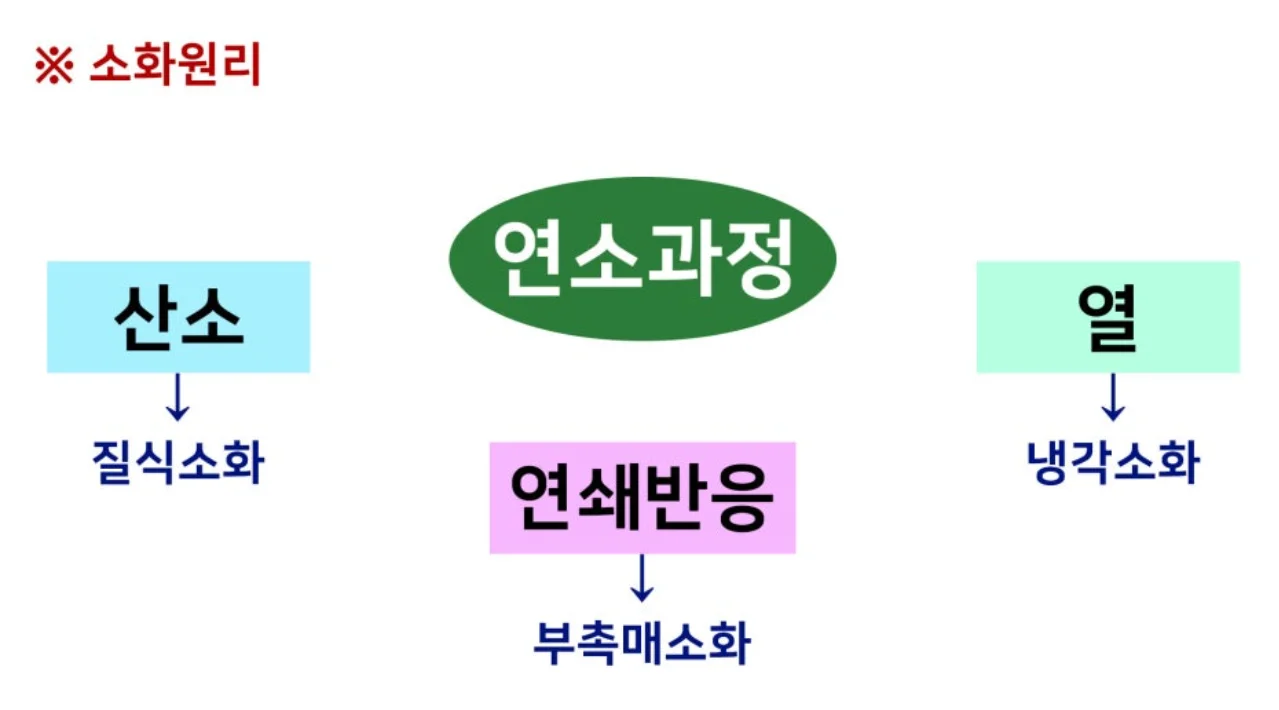
There are three basic principles of fire suppression: asphyxiant suppression (cutting off oxygen), cooling suppression (removing heat), and inhibition suppression (interrupting the chain reaction). This installation environment relates to asphyxiant suppression.
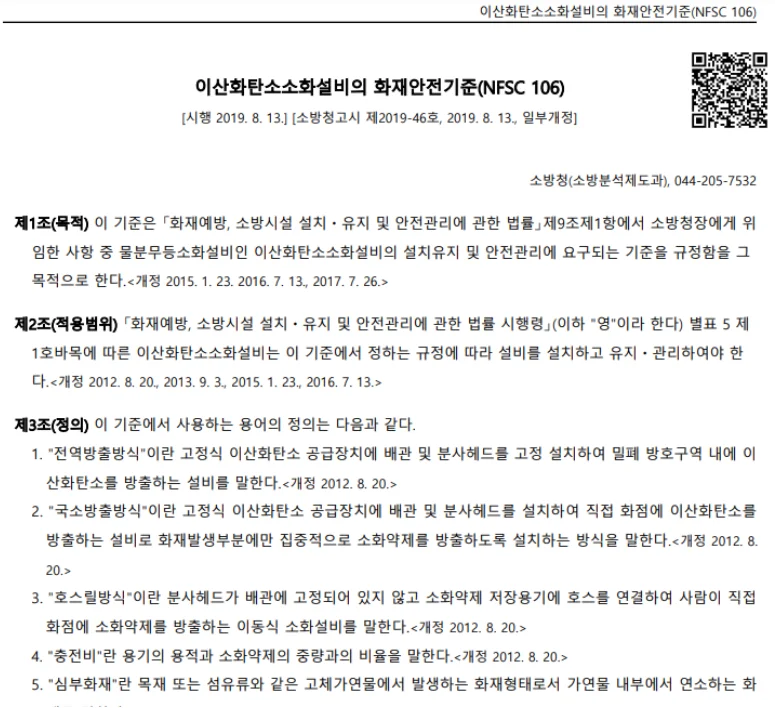
Under Korea's Enforcement Decree of the Act on Fire Prevention and Installation, Maintenance, and Safety Management of Fire-Fighting Systems, CO2 fire-suppression systems must be installed and maintained in accordance with the applicable standards.
Complying with the regulation is important, but installing a gas detector and continuously managing its readings is also essential purely for safety — to prevent asphyxiation, poisoning, and fatal accidents — because a CO2 leak alone can be enough to cause a fatal asphyxiation accident in this type of environment.
Installation Location and Product
Fire-suppressant agent room in the basement of the building, housing a CO2 fire-suppression system: installation of a WANDI FIX800 oxygen (O2) detector rated 0–30% for safety monitoring, along with a gas status display board and a warning light.
Installation Points
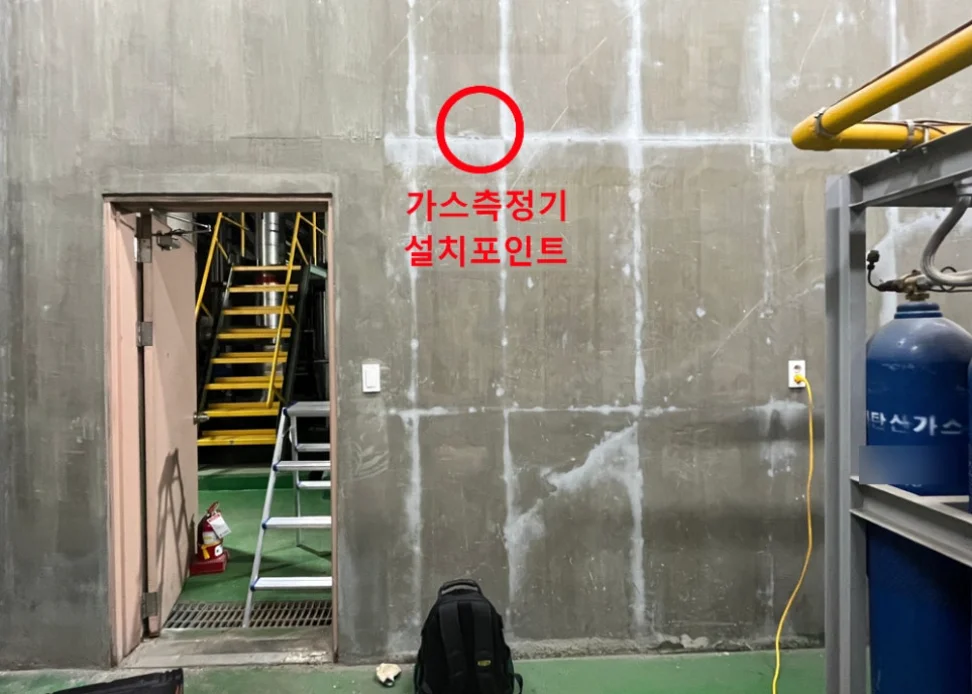
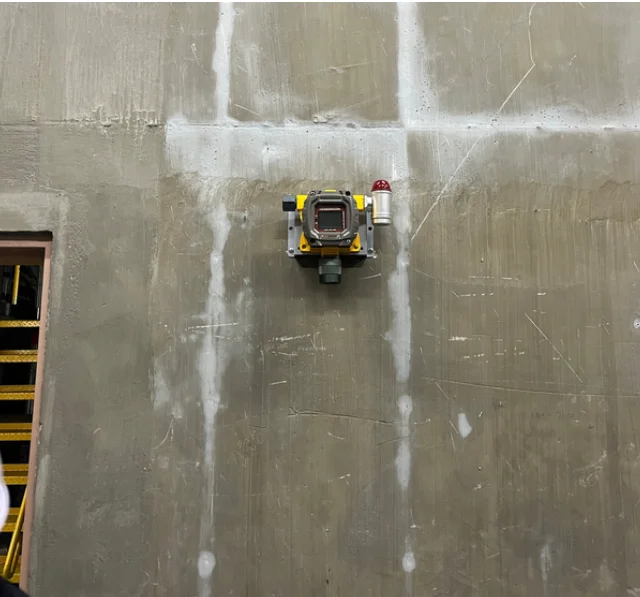
This is the installation point for the fixed-type FIX800 O2 (0–30%) detector. The installation point is a space containing a CO2 fire-suppression system, and CO2 is roughly 1.5 times heavier than oxygen. In theory, a CO2-related detector should be installed close to the floor, but since asphyxiation in practice tends to occur around human breathing height (roughly 1.5–2m), the installation point was set higher, at that level.
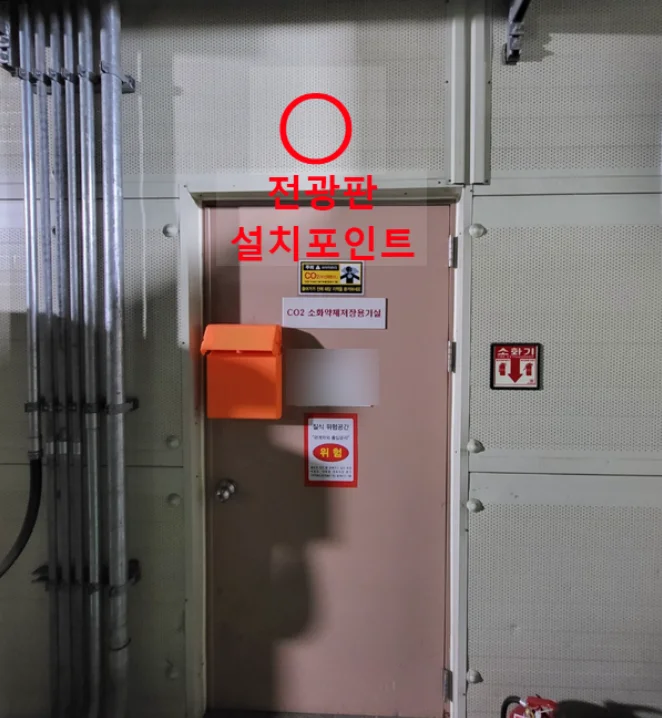
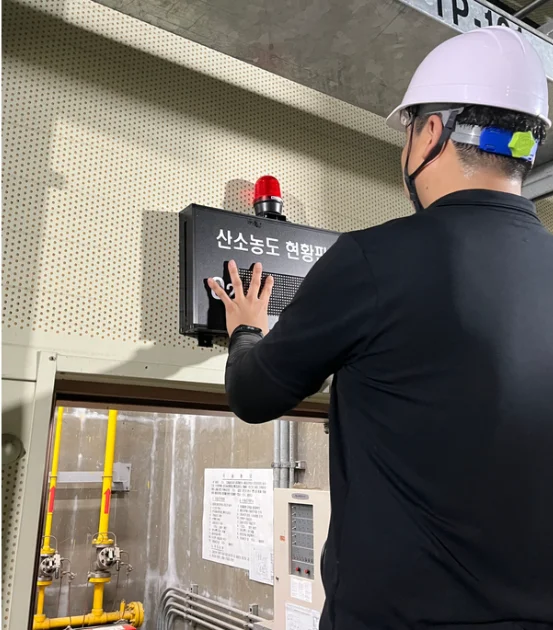
Gas status display board and warning light installation point: as during the site survey, the installation point was set at the top of the exterior of the fire-suppressant room entrance.
Installation
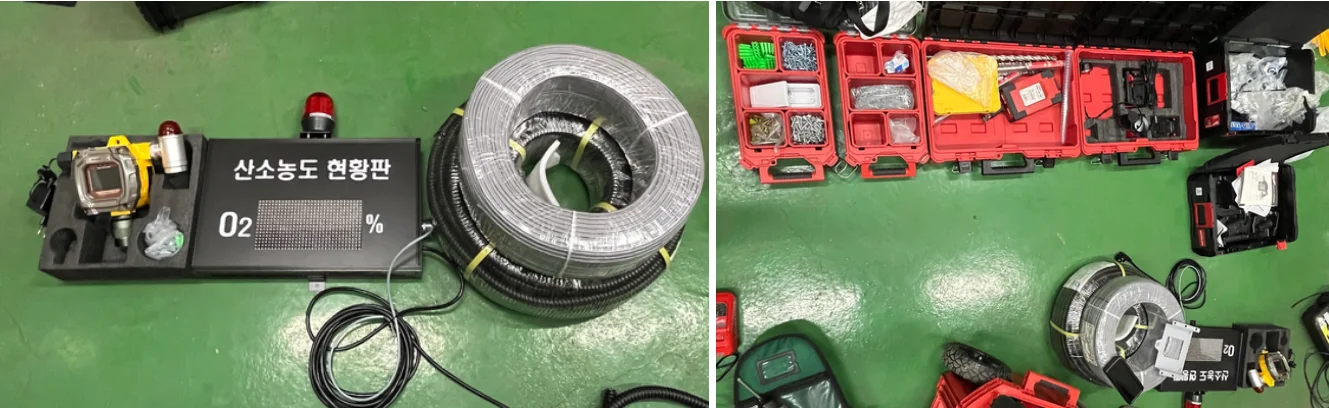
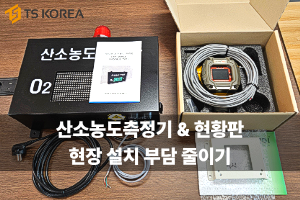
Here is today's installation equipment.
The installation positions for the gas detector and display board are marked out.
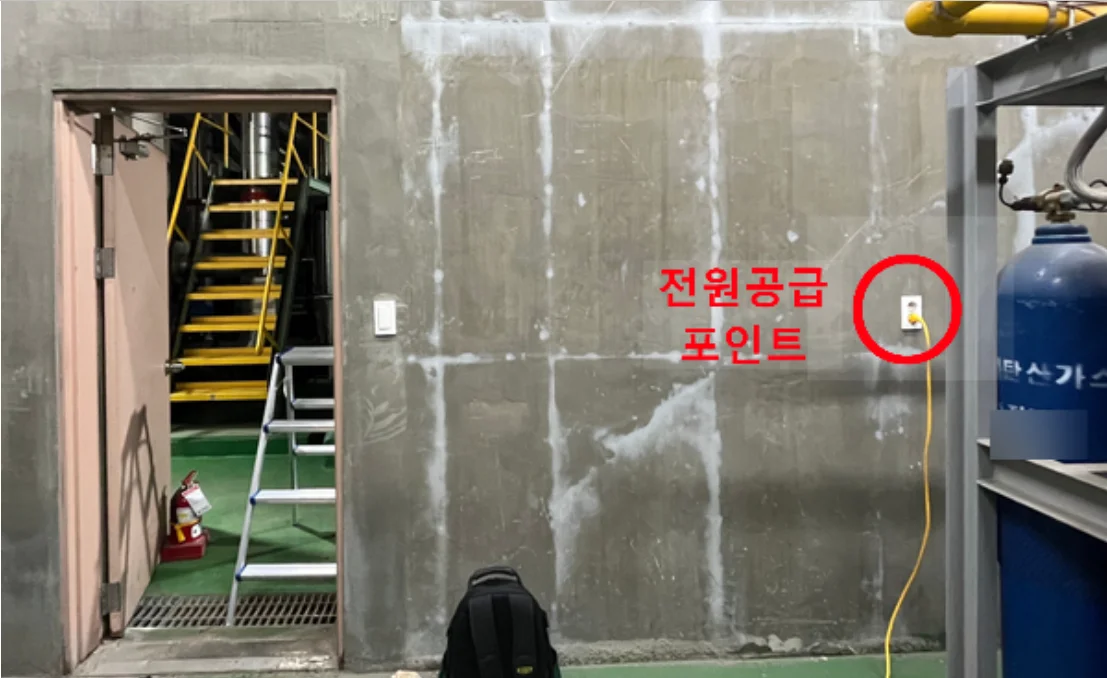
Power was supplied using the internal 220V outlet, requiring no separate electrical work.
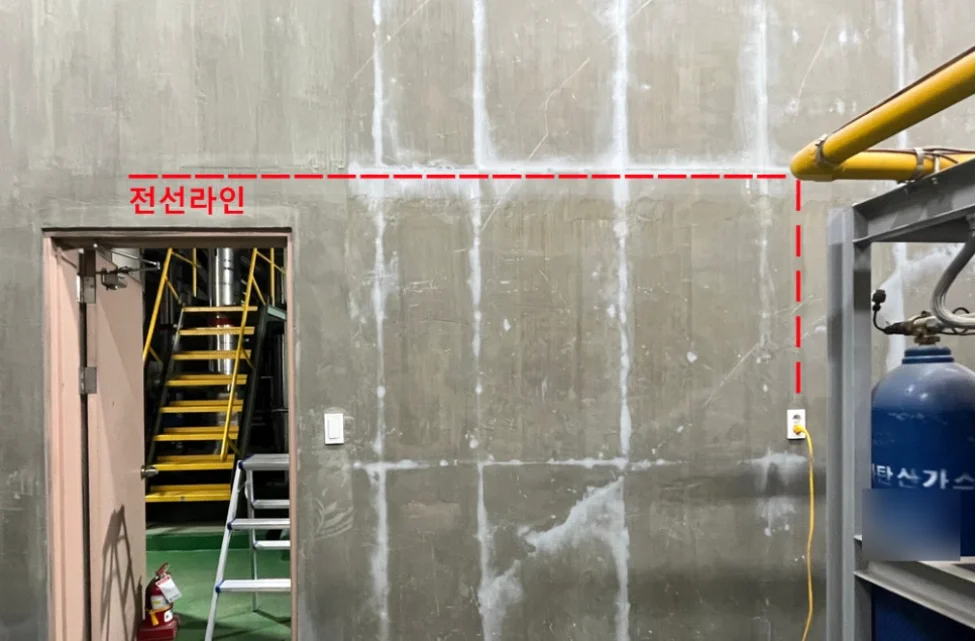
The two installation points are close to the power source, so the cable run is short. Waterproof corrugated conduit was used for the cable routing.
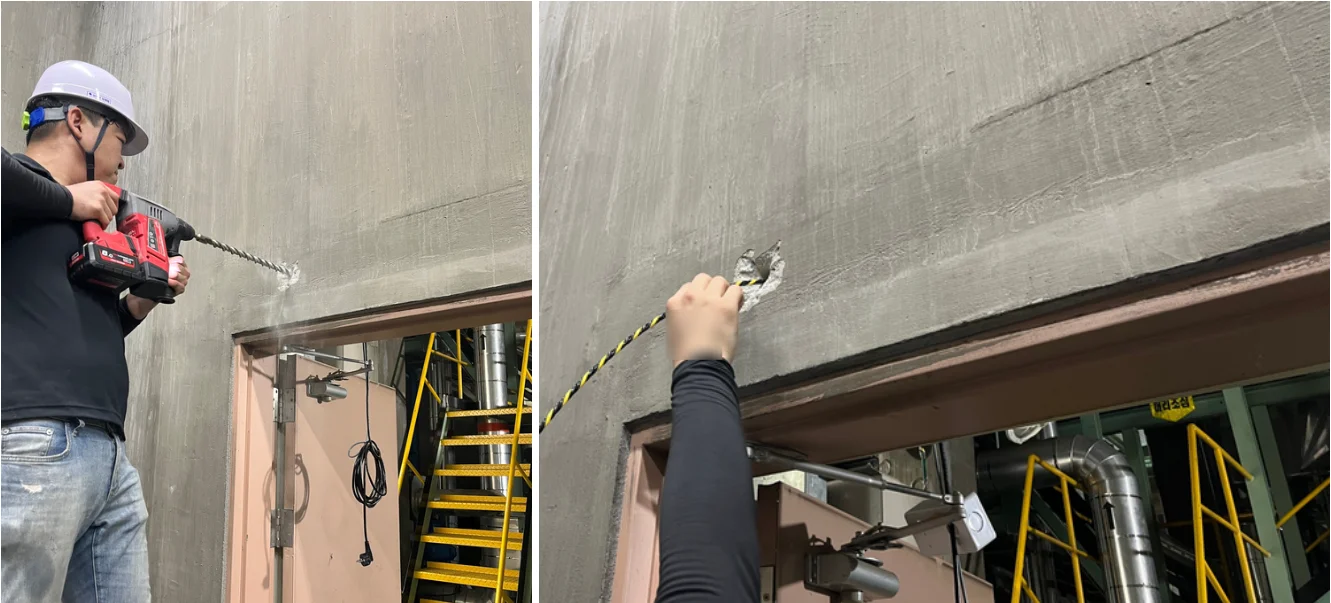
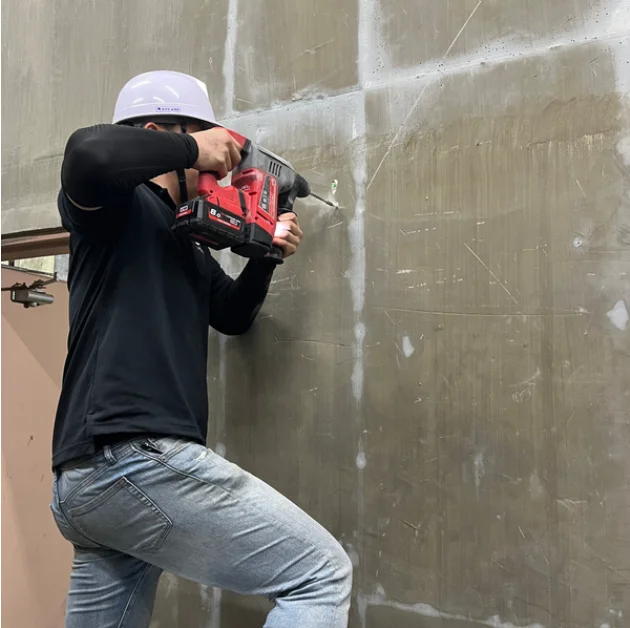
Because the 220V outlet is inside the room, concrete drilling was required to run power to the exterior display board. An unexpected steel plate was found inside the wall during the work, which added some difficulty, but the drilling was completed without issue.
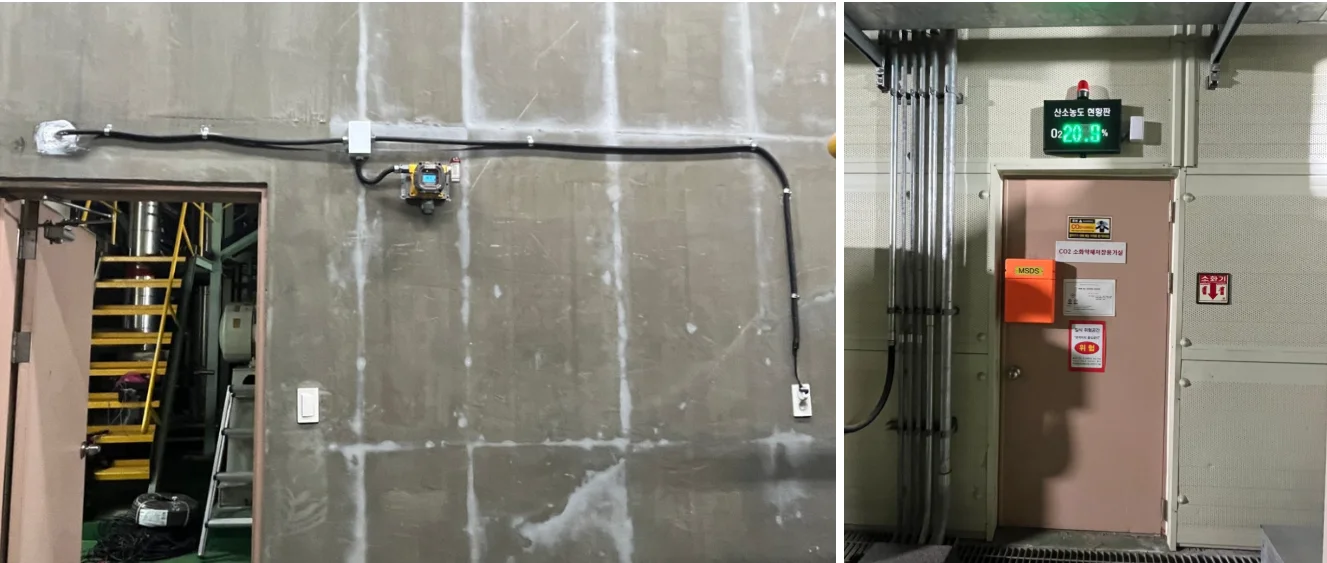
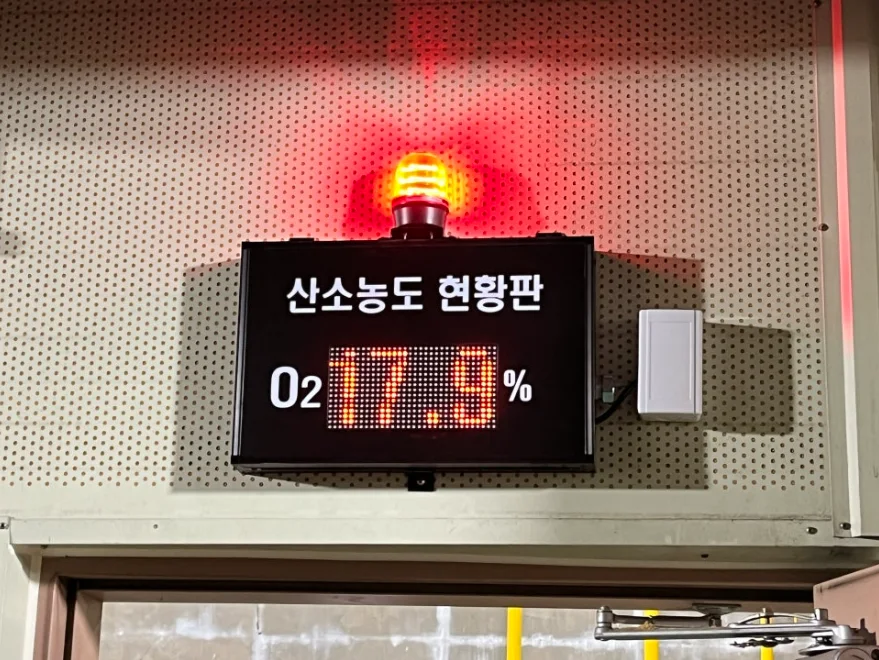
The installation is complete. Test gas was used to confirm the reading changes and the operation of the display board and warning light.
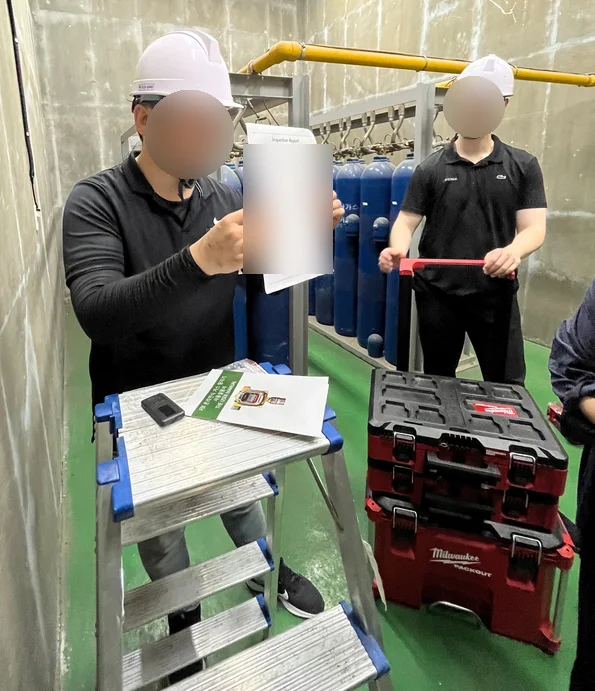
The installation was completed with a product briefing and training session for the facility staff.
This site was one we first visited for a site survey, which then led to this installation. Unexpected variables are common on-site, but conducting the survey beforehand helped minimize them here.
RS Korea operates an official Korean branch with complete in-house facilities for after-sales repair, calibration, and fabrication/shipping. Beyond simple sales, we are a gas-specialized company offering in-house calibration and domestic repair and fabrication. Drawing on our experience delivering and installing equipment across a wide range of environments, we configure 1:1 customized systems — including moisture and high-temperature pre-treatment units — to match each measurement environment.
Today's summary
Environment: Fire-suppressant agent room, energy power generation facility
Product: WANDI FIX800 O2 (0–30%), display board + warning light
Crew: 3 people, 4 hours
Notes: power supplied via an internal 220V outlet, requiring no separate electrical work; an unexpected steel plate inside the concrete added some difficulty during drilling; cable run was short; waterproof corrugated conduit used for cable routing.
If you have any questions about site surveys, installation, gas detectors, or other environmental monitoring instruments, please feel free to reach out to our team.
Frequently Asked Questions (FAQ)
Q1. Why was an oxygen (O2) detector installed instead of a CO2 detector?
The purpose of this installation is to monitor the oxygen level in the room where the CO2 fire-suppression system is stored, since any CO2 release would displace oxygen and create an asphyxiation risk — so an O2 detector was chosen for safety monitoring.
Q2. Why was the detector installed at eye level instead of near the floor?
Although CO2 is roughly 1.5 times heavier than air and theoretically settles near the floor, asphyxiation in practice tends to occur around normal human breathing height (about 1.5–2m), so the detector was installed at that height instead.
Q3. Was separate electrical work required for this installation?
No. Power was supplied using an existing internal 220V outlet, so no additional electrical construction was needed, though concrete drilling was required to route the connection to the exterior display board.
Q4. What regulation applies to CO2 fire-suppression systems in Korea?
CO2 fire-suppression systems must be installed and maintained in accordance with Korea's Enforcement Decree of the Act on Fire Prevention and Installation, Maintenance, and Safety Management of Fire-Fighting Systems.
Q5. How was the installation verified after completion?
Test gas was applied to confirm that the detector readings, the display board, and the warning light all responded correctly, followed by a product briefing and training session for the facility staff.
#WANDI #FIX800 #FireSuppressantRoom #OxygenDetector #AsphyxiationPrevention #GasDetectorInstallation #FixedGasDetector #DisplayBoard #CO2FireSuppression #PowerFacilitySafety