Applied Markets
Installed Gases
Project Details
Hello. This case covers a CO2 fire-suppressant gas room and its protection zone.
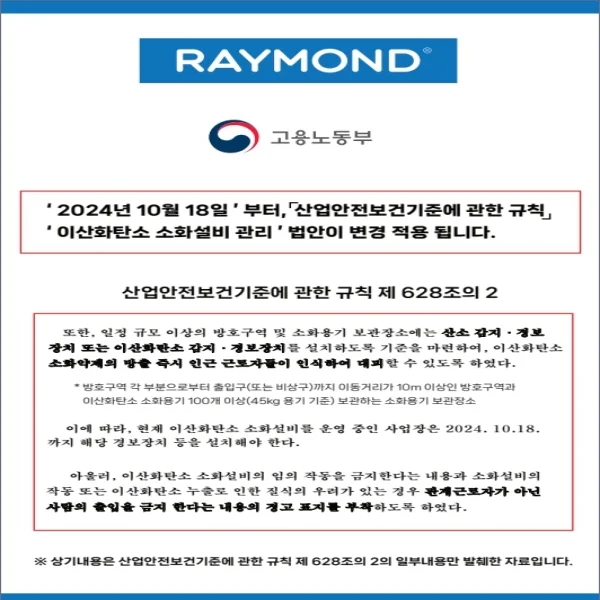
Since October 18, 2024, workplaces that use carbon dioxide (CO2) as a fire-suppression gas have been legally required to install gas alarms. Where a facility holds 100 or fewer CO2 storage containers (based on a 45kg standard), a gas alarm must be installed in the protection zone where the CO2 suppressant gas is released. Where 100 or more containers are held, a gas alarm must also be installed in the gas storage room itself.
This requirement exists because malfunctioning CO2 fire-suppression systems have repeatedly released high concentrations of the gas, leading to fatal asphyxiation among workers — most of these accidents proved fatal precisely because of the high concentration involved. Let's take a closer look at the regulation.
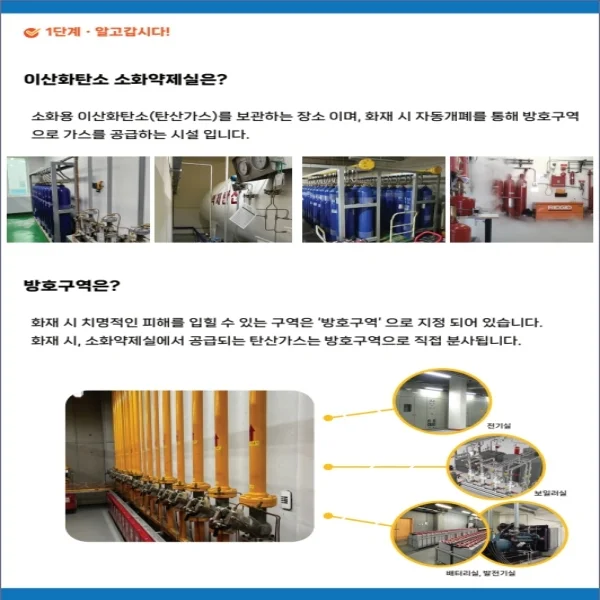
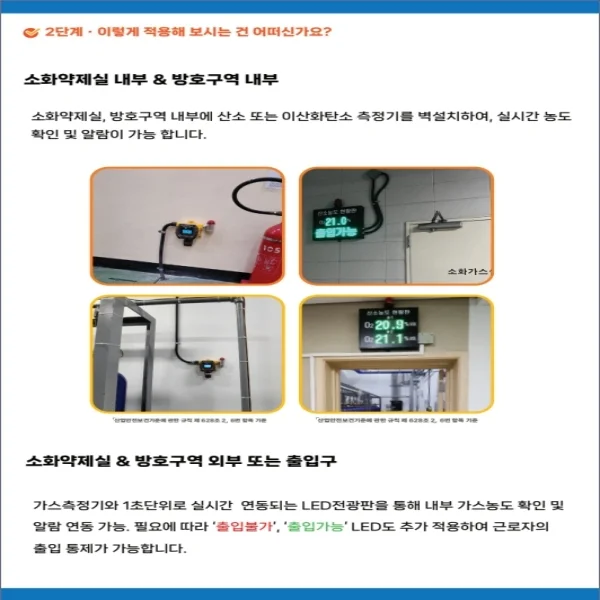
A CO2 fire-suppressant agent room is, quite literally, the room where the CO2 gas used for fire suppression is stored. A protection zone is the area into which that CO2 suppressant gas is actually released in the event of a fire.
CO2 fire-suppression systems are generally used only in critical facilities where a fire could be especially catastrophic — broadcasting stations, power plants, and oil-related facilities, for example. In these facilities, the electrical room, battery room, and generator room are typical protection zones where the suppressant gas would be released in a fire.
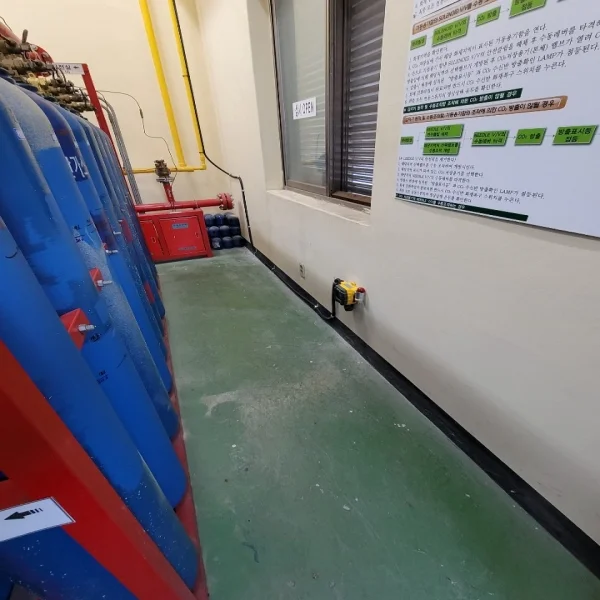
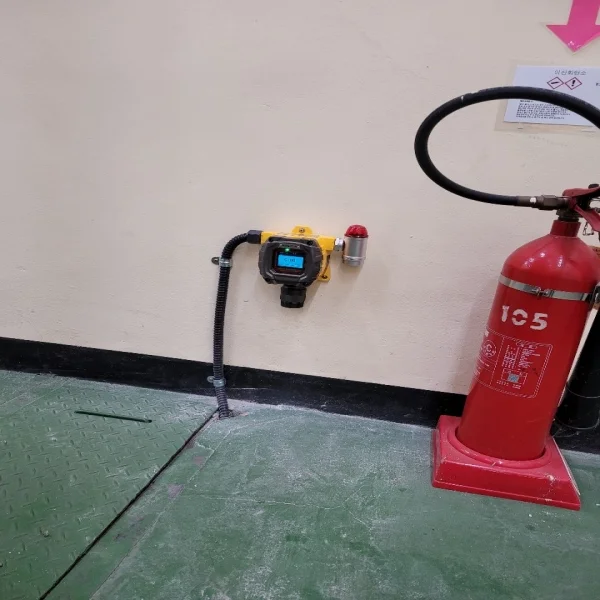
Since CO2 is heavier than air, we recommend installing the detector as close to the floor as possible. In the suppressant gas room, the ideal position is on the exhaust-side wall, or midway within the area where the suppressant gas is stored.
In the protection zone, the CO2 suppression gas piping is visible on the ceiling. The ideal installation position is roughly at the midpoint below that piping, or on the wall beneath it.
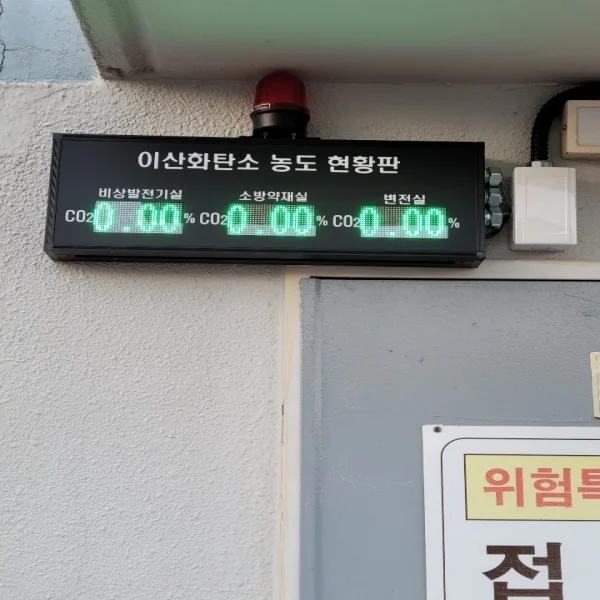
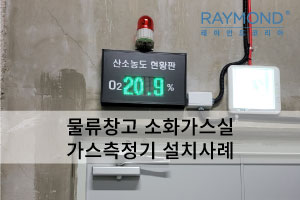
At this site, CO2 alarms were installed in both the gas storage room and the entire protection zone, and the system was configured with an integrated 3-channel display board so that all points could be monitored centrally from one location.
CO2 fire-suppression gas is highly effective at extinguishing fires, but because it works by rapidly lowering the oxygen concentration (asphyxiant suppression), a malfunction can be fatal to any worker present at the time. This concludes our case on the installation of fixed-type gas detectors in a fire-suppressant agent room and its protection zone.
We provide everything from a free on-site survey and solution design through installation, backed by dedicated after-sales service and ongoing support, as a gas detector sales and installation specialist.
Thank you.

Frequently Asked Questions (FAQ)
Q1. Why is a gas alarm required for CO2 fire-suppression systems?
Since October 18, 2024, workplaces using CO2 as a fire-suppression gas have been legally required to install gas alarms, because a high-concentration release can rapidly lower oxygen levels through asphyxiant suppression and cause fatal accidents.
Q2. What is the difference between a CO2 suppressant agent room and a protection zone?
The suppressant agent room is where the CO2 gas is stored, while the protection zone is the area into which that gas is actually released in the event of a fire.
Q3. Do the installation requirements differ depending on the number of CO2 storage containers?
Yes. With 100 or fewer 45kg-standard containers, an alarm is required only in the protection zone; with 100 or more, an alarm must also be installed in the gas storage room.
Q4. Where is the ideal location to install the gas alarm?
Since CO2 is heavier than air, install the detector as close to the floor as possible. In the suppressant room, the exhaust-side wall or the midpoint of the storage area works best; in the protection zone, the wall beneath the ceiling piping is ideal.
Q5. Can multiple installation points be monitored from a single location?
Yes. As in this project, an integrated multi-channel display board (3 channels here) allows readings from the gas storage room and the entire protection zone to be monitored centrally from one place.
#WANDI #CO2FireSuppression #FireSuppressantRoom #ProtectionZone #GasAlarm #CO2GasDetector #GasDetectorInstallation #IndustrialSafety #AsphyxiantGas #ConfinedSpaceSafety