What Are VOCs (Volatile Organic Compounds)? The Invisible Threat at Painting, Printing, and Chemical Sites
VOCs (Volatile Organic Compounds) is a collective term for hundreds of organic compounds including benzene, toluene, xylene, styrene, acetone, and ethylbenzene. They evaporate readily at room temperature and are inevitably generated at painting, printing, cleaning, adhesive-use, petrochemical, semiconductor, and woodworking sites. Most are colorless with a sweet or pungent odor, but odor alone makes it hard to judge a dangerous concentration.
💡 Key Hazard Characteristics of VOCs
Benzene is an IARC Group 1 carcinogen — exposure limit TWA 0.5 ppm (Korea MoEL) / toluene TWA 50 ppm / Indoor Air Quality Act TVOC standard 500 μg/m³ / risk of central nervous system paralysis and cardiac arrest at high-concentration exposure
Health Effects of VOCs on the Human Body
VOCs have serious health effects in both short-term acute exposure and long-term chronic exposure. Benzene in particular is a Group 1 human carcinogen designated by the International Agency for Research on Cancer (IARC) and has been confirmed to cause leukemia.
| VOC Type | Exposure Limit (TWA) | Acute Effects | Chronic Effects |
|---|---|---|---|
| Benzene | 0.5 ppm | Headache, dizziness, nausea | Leukemia (IARC Group 1 carcinogen) |
| Toluene | 50 ppm | Headache, fatigue, drowsiness | Neurotoxicity, liver/kidney damage |
| Xylene | 100 ppm | Eye/nose/throat irritation | Nervous system disorders |
| Styrene | 20 ppm | Headache, clouded consciousness | Central nervous system damage, possibly carcinogenic (IARC 2A) |
| Ethylbenzene | 100 ppm | Eye/skin irritation | Hearing damage, possibly carcinogenic (IARC 2B) |
| Formaldehyde (CH2O) | 0.5 ppm | Severe eye/nose/throat irritation | Nasopharyngeal cancer (IARC Group 1 carcinogen) |
※ Source: IARC Monographs Vol. 100F, Korea MoEL Work-Environment Exposure Limits (2024)
Real VOC Occupational Disease Accident Cases
🇰🇷 Group VOC Occupational Disease at a Furniture Plant in Gyeonggi (2019)
In 2019, at a furniture manufacturing plant in Gyeonggi Province, 11 workers were diagnosed with peripheral neuropathy and liver dysfunction after long-term exposure to benzene/toluene/xylene mixed paints. The plant had insufficient local exhaust ventilation, and with no device for continuous monitoring of workplace VOC concentration installed, the exposure went unrecognized for years. (Source: Korea MoEL industrial accident status, 2019)
🇰🇷 Toluene Poisoning Accident at a Seoul Printing Plant (2021)
In 2021, at a printing plant in Seoul, 3 workers showed acute poisoning symptoms (dizziness, nausea, fainting) during toluene-containing ink cleaning work and were rushed to the hospital. The cause was cleaning work conducted in a confined space without ventilation, and the analysis concluded that a fixed VOC detector would have raised an alarm at the early stage of the concentration rise. (Source: Seoul Fire & Disaster Headquarters accident investigation report, 2021)

What If VOC Accidents Could Have Been Prevented with the WANDI EDW500?
A Scenario If the EDW500 Had Been on Site
- 1Pre-work measurement: Before painting/cleaning work, check the work-zone VOC concentration in advance with the EDW500
- 2Primary alarm (when TWA is exceeded): The instant the set concentration is exceeded, a vibration/sound/light alarm fires — the worker recognizes it immediately
- 3Evacuation and ventilation: The instant the alarm is received, stop work, escape the confined space, and start the ventilation system
- 4Data record retention: Measurement history is automatically saved via cloud integration — evidence of the employer's legal-obligation compliance
- 5Re-entry judgment: After ventilation, re-measure the concentration with the EDW500 and resume work only after confirming safety
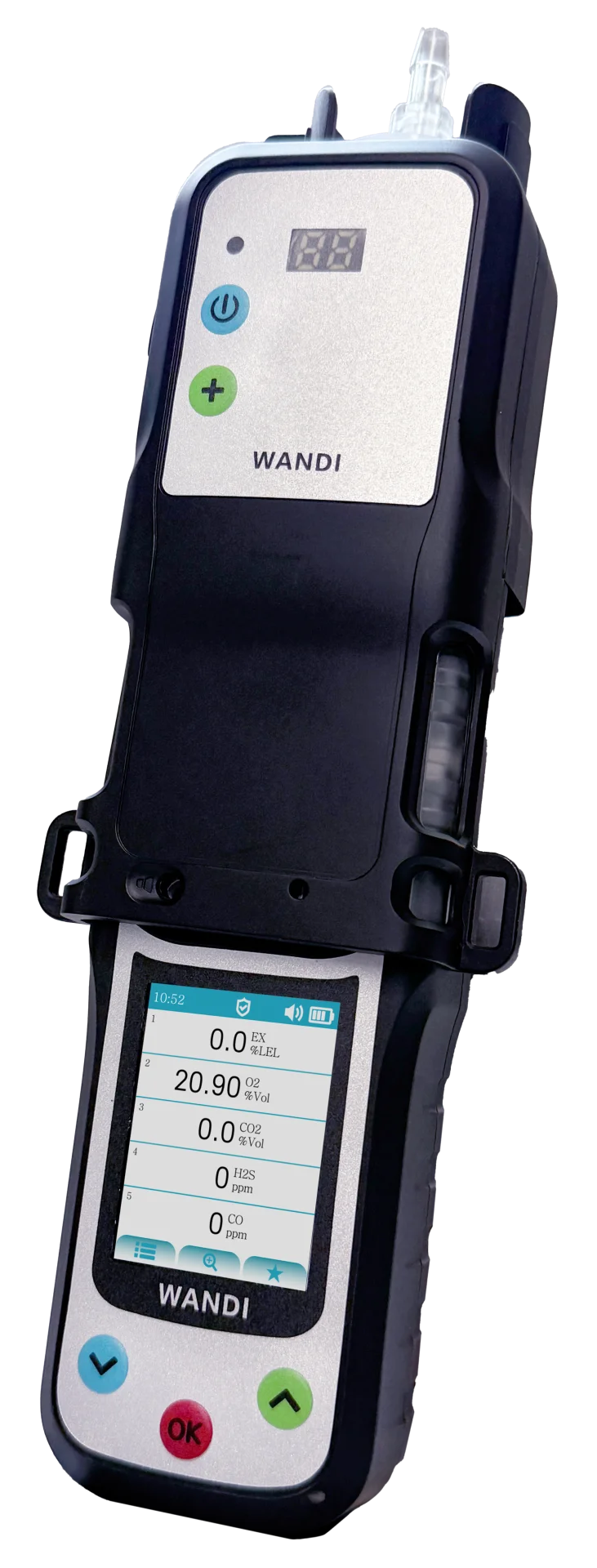
WANDI EDW500 Portable 5-Gas Detector — VOC Measurement Specifications
| Item | Specification |
|---|---|
| VOC sensor type | PID (photoionization detector) — ppb-level low-concentration measurement possible |
| Measurement range | 0~1,000 ppm (VOC/TVOC) |
| 5-gas simultaneous measurement | VOC + O2 + CO + H2S + LEL measured simultaneously |
| International explosion-proof cert. | IECEx TPS 25.0057X (TÜV SÜD certified) / Ex da ia IIC T4 Ga / Zone 0, EPL Ga |
| Alarm method | Sound (95dB) + vibration + visual LED (3-stage) |
| Water/dust protection | IP68 rating |
| Battery | 12+ hours of continuous use |
| Data storage | Internal memory + cloud integration |
🏅 IECEx International Explosion-Proof Certification
The EDW500 holds IECEx TPS 25.0057X (TÜV SÜD) international explosion-proof certification. At the Ex da ia IIC T4 Ga rating, it can be used safely even in Zone 0 (a zone where an explosive atmosphere is always present), making it reliable at painting rooms, printing rooms, and petrochemical sites where VOCs are generated.
VOC Detector Installation Cases
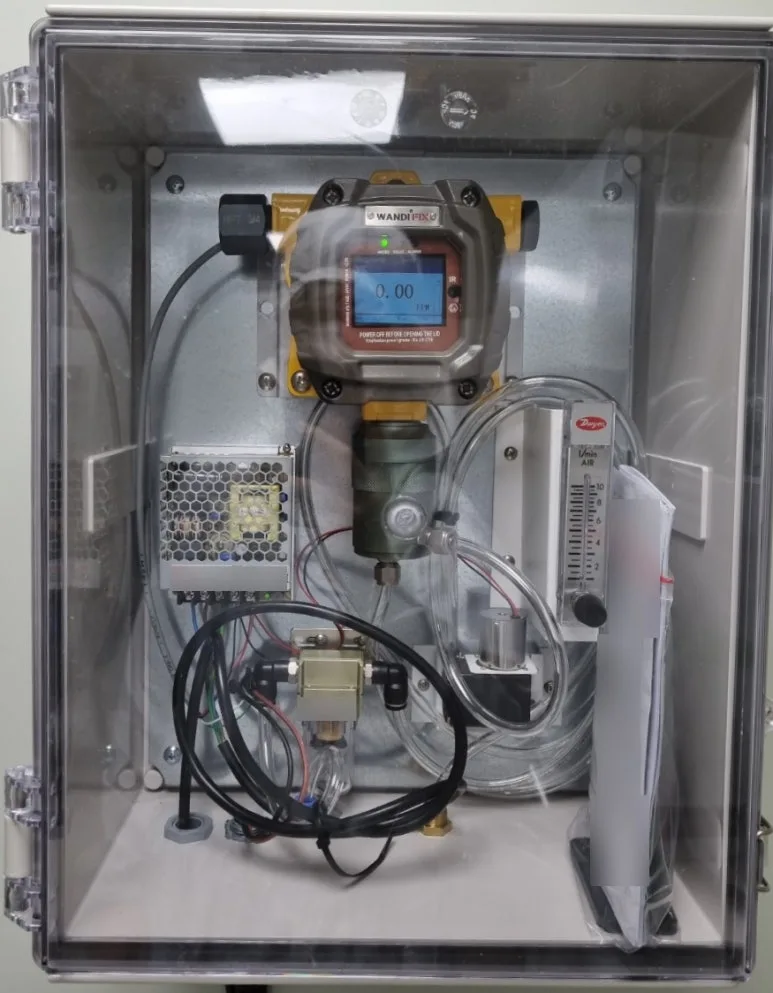
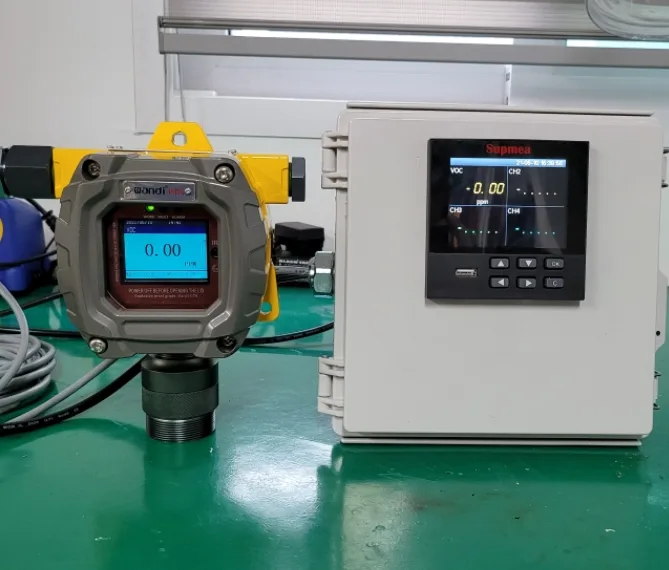
Major Industrial Environments Where VOCs Are Generated and EDW500 Application
| Industrial Environment | Major VOCs | EDW500 Use |
|---|---|---|
| Painting/coating sites | Toluene, xylene, benzene | Worn during work, TWA-exceedance alarm |
| Printing/publishing | Toluene, isopropanol | Real-time monitoring of ink/cleaner VOCs |
| Petrochemical/refining | Benzene, ethylbenzene, styrene | Pre-measurement before confined-space entry (Zone 0 certified) |
| Semiconductor/display | IPA, acetone, NMP | Cleanroom VOC ppb-level measurement |
| Wood/furniture manufacturing | Formaldehyde, acetaldehyde | Continuous monitoring of adhesive-use zones |
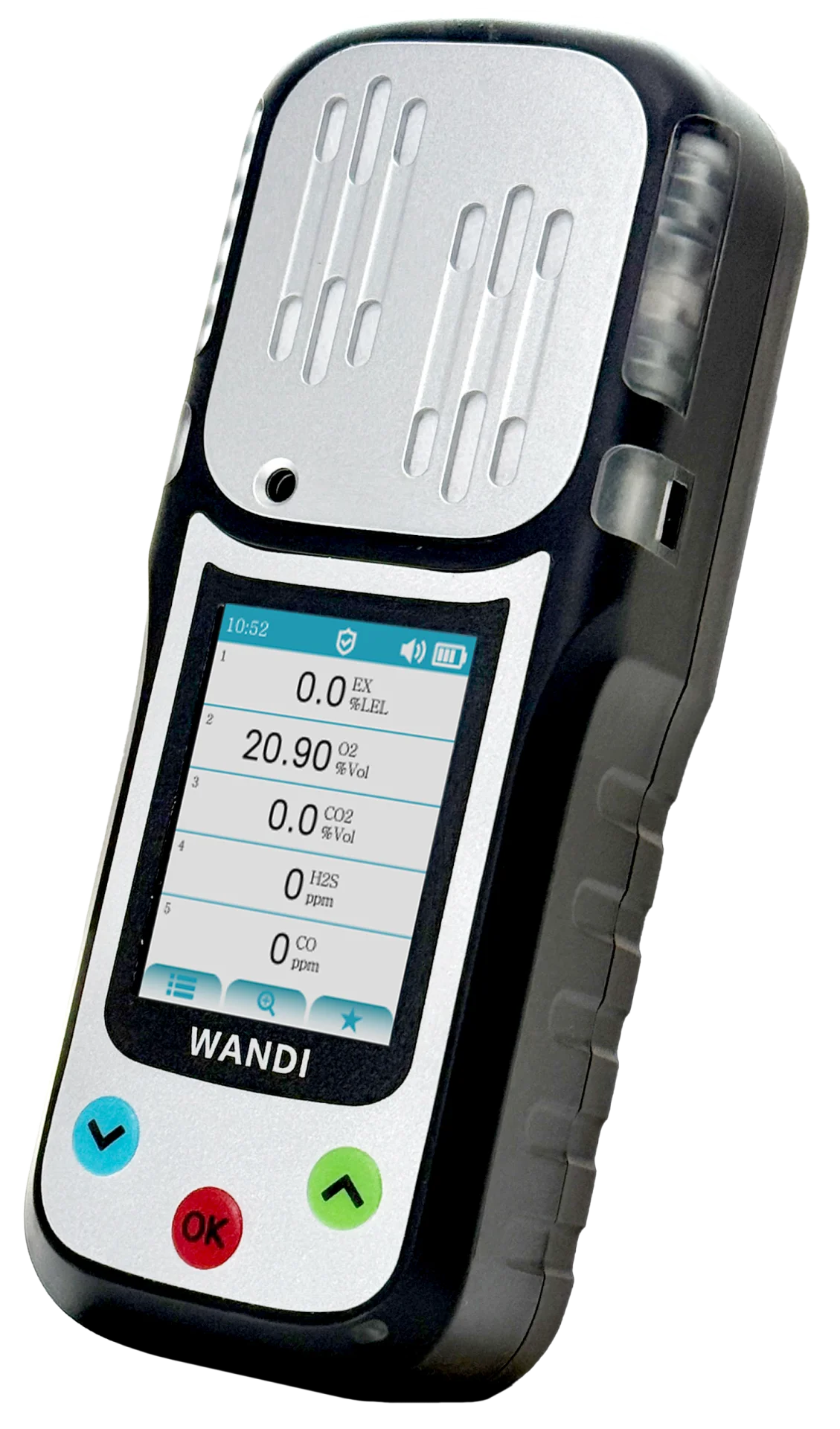
A Closer Look at the WANDI EDW500
Below are real photos of the WANDI EDW500 portable multi-gas detector and its use on site.