What Is HCl (Hydrogen Chloride)? A Fearsome Acidic Toxic Gas
Hydrogen chloride (HCl) is a colorless, corrosive, toxic gas with a pungent odor. When dissolved in water it becomes hydrochloric acid, and it is generated or used across a wide range of industries — semiconductor/chemical plants, metal cleaning, electroplating, waste incineration, and food processing. Korea's permissible limit is a ceiling value (C) of 5 ppm, and even a momentary high-concentration exposure can cause serious chemical burns.
💡 Key Point
HCl's pungent odor makes it detectable at low concentrations, but in high-concentration environments it causes immediate olfactory paralysis and airway damage. Working without a detector in semiconductor etching processes, plating plants, and the like is dangerous.
Health Effects of HCl Gas on the Human Body
| Exposure Concentration | Exposure Time | Health Effect |
|---|---|---|
| 1~5 ppm | Short-term | Eye/nose/throat irritation, coughing |
| 5 ppm | Ceiling value (C) | Korea exposure limit — evacuate immediately if exceeded |
| 10~50 ppm | Minutes to tens of minutes | Severe respiratory irritation, airway mucous damage, pulmonary edema |
| 50~100 ppm | Short-term | Airway edema, risk of respiratory failure |
| 1000 ppm | Immediately | Immediate threat to life, IDLH |
(Source: NIOSH Pocket Guide; Korea MoEL Chemical Exposure Standards; OSHA 29 CFR)
Major HCl Generation Sites
- Semiconductor/LCD etching processes: HCl gas generated during metal/oxide etching
- Plating plants: acid-pickling pretreatment of metal surfaces
- Chemical plants: organic chemical synthesis, chlorine compound manufacturing
- Waste incineration plants: when burning chlorine-containing waste such as PVC
- Metal cleaning plants: acid pickling processes

Real HCl Accident Cases
🇰🇷 HCl Leak at a Domestic Semiconductor Plant (2021)
In 2021, at a semiconductor-component manufacturer in Gyeonggi Province, an HCl gas pipe joint failed during an etching process, causing a leak; three workers suffered chemical respiratory burns and were transported to hospital. With no on-site fixed detector, the leak was recognized late. (Source: Korea MoEL industrial accident investigation report, 2021)
🇺🇸 HCl Leak at a U.S. Plating Plant (2018)
At a plating plant in Ohio, USA, a hydrochloric acid tank failure released a large volume of HCl gas, resulting in 12 nearby residents receiving hospital treatment. The absence of an early-detection system delayed the evacuation order. (Source: U.S. Chemical Safety Board Incident Database, 2018)
How to Prevent HCl Accidents with WANDI EDW500
EDW500 HCl Measurement Features
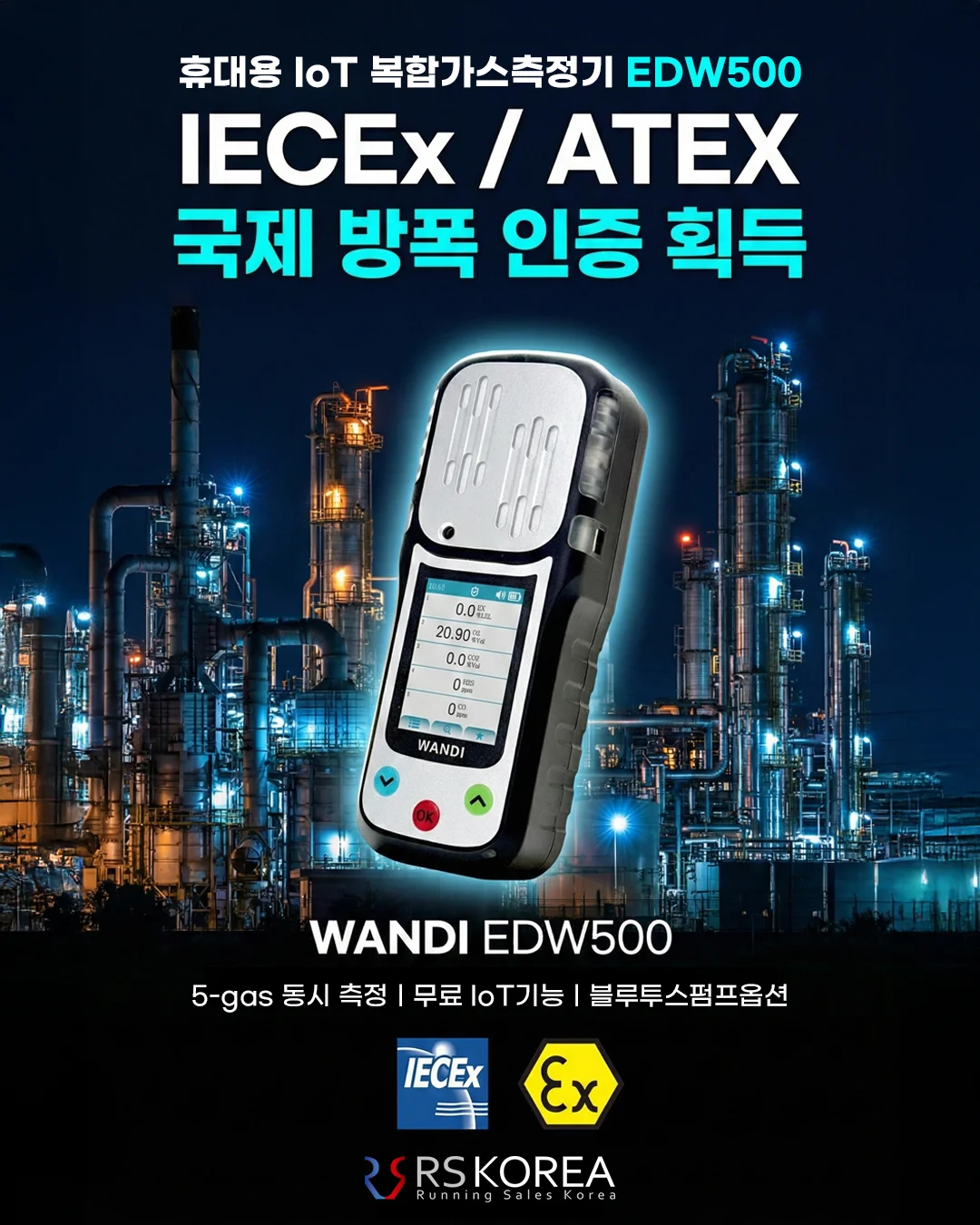
- IECEx international explosion-proof certification: IECEx TPS 25.0057X (TÜV SÜD certified), usable in Zone 0
- HCl electrochemical sensor: high-sensitivity measurement of 0.5~50 ppm, alarm configurable below 5 ppm (C)
- Simultaneous 5-gas detection: HCl, O₂, CO, H₂S, EX measured together
- IoT cloud integration: real-time data logging and remote alarm transmission
- Lightweight portable design: optimized for mobile work in etching/plating processes
EDW500 Prevention Scenario: Semiconductor Etching Process
- 1Before entering the process room: Pre-measure HCl concentration with the EDW500, confirming it is below 5 ppm (C)
- 2Continuous measurement during work: Wearing the EDW500 during the etching process, instantly detect an HCl rise
- 3Alarm above 5 ppm: Immediate alarm, with a simultaneous cloud alert to the manager
- 4Rapid evacuation: Stop work, start ventilation, move to a safe area
- 5History logging: All concentration data saved automatically, meeting Occupational Safety and Health Act record requirements
EDW500 IECEx Explosion-Proof Certification (HCl Process Application)
| Item | Detail |
|---|---|
| Certificate number | IECEx TPS 25.0057X |
| Certifier | TÜV SÜD (Germany) |
| Explosion-proof rating | Ex da ia IIC T4 Ga |
| Applicable Zone | Zone 0 — zone where combustible gas is continuously present |
📌 The Importance of Simultaneous HCl+EX Measurement
In chemical plants, combustible organic solvents often coexist with HCl. The EDW500's 5-gas simultaneous measurement monitors HCl and EX (combustible gas) at the same time, enabling response to compound-hazard situations.
A Closer Look at the WANDI EDW500
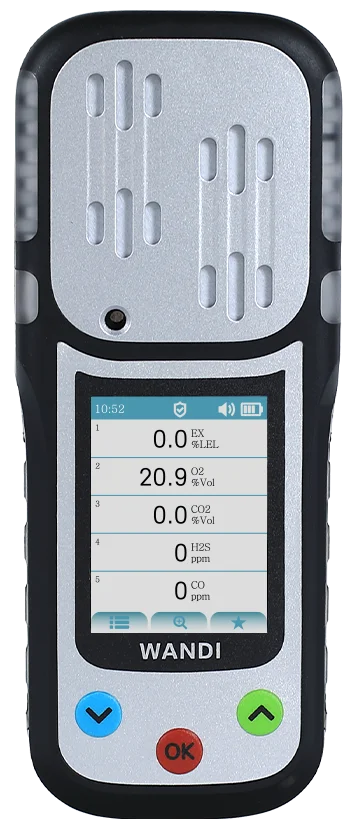
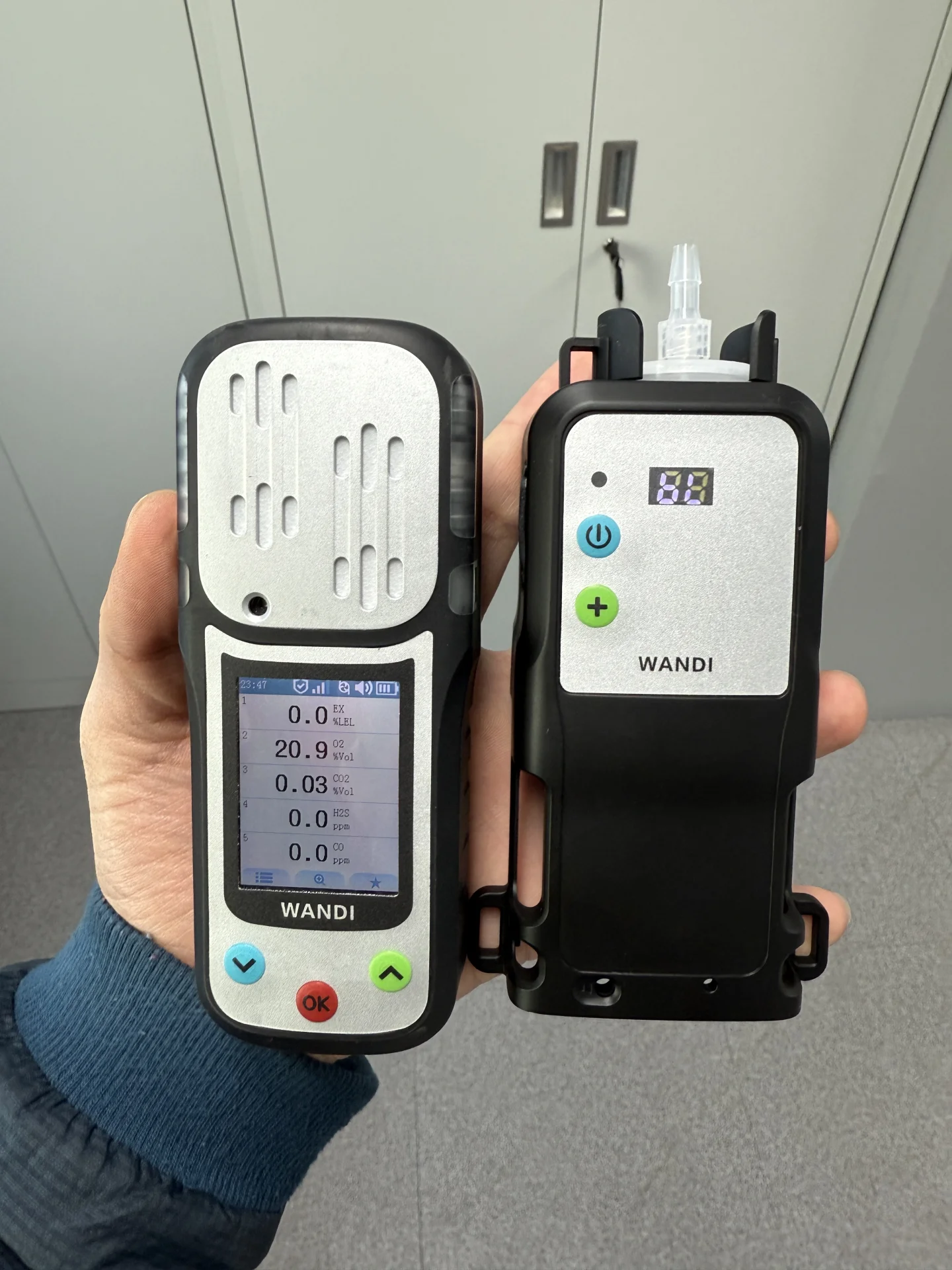
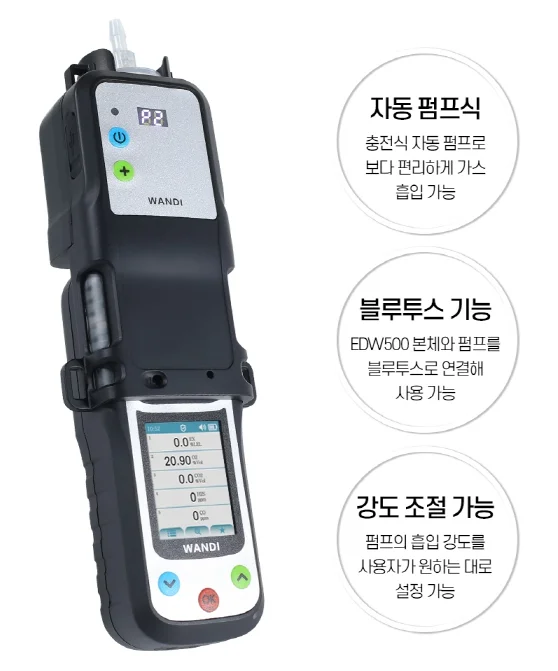
Below are real photos of the WANDI EDW500 portable multi-gas detector and its use on site.