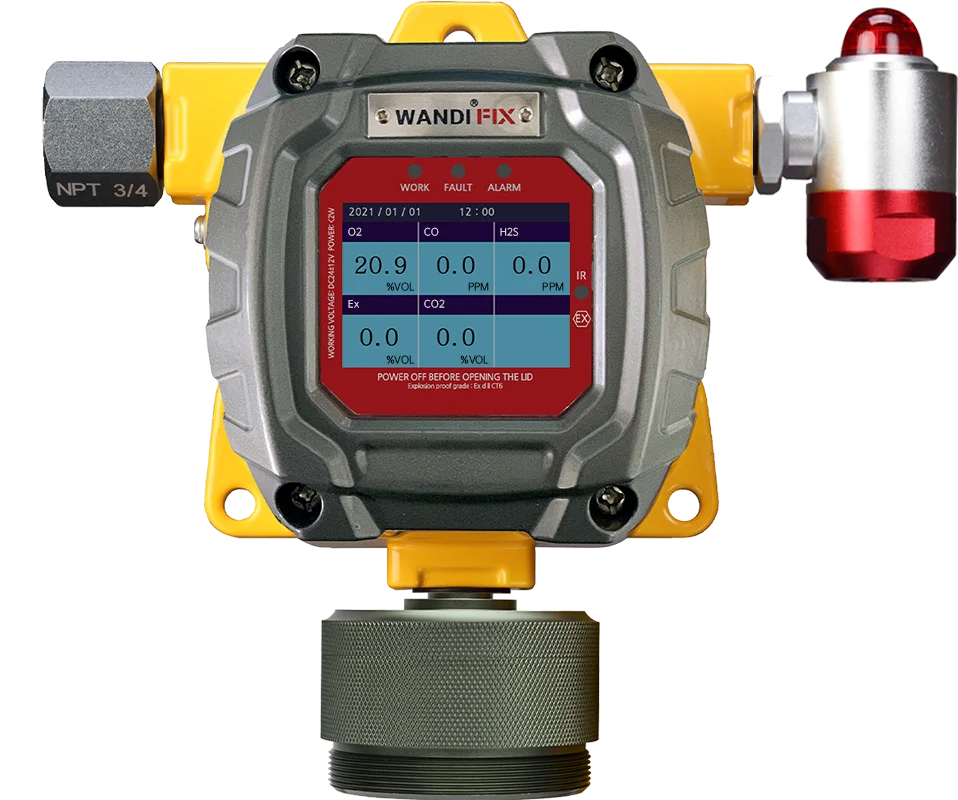
Hydrogen peroxide (H₂O₂) is a high-hazard oxidizer used continuously in semiconductor cleanrooms, pharmaceutical/bio sterilization equipment, food packaging lines, and bleaching processes. Such facilities often run 24 hours a day, so H₂O₂ leaks or abnormal concentration rises can occur even during unmanned night hours. The WANDI FIX800 fixed 5-gas detector performs 24-hour unmanned monitoring at facilities where H₂O₂ is used continuously, and automates emergency response the instant a leak occurs through FIX-DS display board integration and relay output.
Why You Need a Fixed H₂O₂ Detector
Semiconductor fabs, pharmaceutical GMP facilities, and food aseptic packaging lines repeatedly run VHP (vaporized hydrogen peroxide) sterilization cycles and high-concentration H₂O₂ cleaning processes. In this process, H₂O₂ vapor can accumulate from pipe-joint leakage, vaporizer malfunction, or poor ventilation. Because portable detectors alone struggle to respond to leaks during unmanned night and weekend hours, continuous monitoring with the fixed FIX800 is essential.
Health Effects of H₂O₂ Gas
| Concentration (ppm) | Exposure Standard | Health Effect |
|---|---|---|
| 1 ppm | TWA (8-hr average, ACGIH) | Chronic eye/airway irritation, corneal damage with long-term exposure |
| 5~10 ppm | Short-term danger concentration | Eye redness/pain, breathing difficulty, headache, dizziness |
| 50 ppm | NIOSH IDLH (immediate danger) | Lung irritation/damage, corneal chemical burns, skin redness/blisters |
| 75 ppm | OSHA IDLH | Pulmonary edema, severe chemical burns, reduced consciousness, risk of death |
| High-concentration liquid (30%+) contact | Direct contact | Skin whitening/necrosis, risk of eye blindness |
⚠️ Compound Hazards of H₂O₂ Industrial Sites
H₂O₂ vapor is colorless and hard to detect with human senses. At the same time, high-concentration H₂O₂ decomposes explosively on contact with organic matter or metals, carrying fire and explosion risk as well. A fixed continuous-monitoring system is essential for 24-hour facilities.

Major Facilities Using H₂O₂ and FIX800 Application
The FIX800 is installed to monitor H₂O₂ concentration 24 hours a day in semiconductor cleanrooms (wafer cleaning, around VHP sterilization chambers), pharmaceutical GMP facilities (bioreactors, aseptic filling zones), food aseptic packaging lines (Tetra Pak, PET-bottle sterilization tunnels), hospital/medical-device washing rooms (around endoscope washers), and wastewater treatment advanced oxidation processes (around AOP reactors).
Real Accident Case: Worker Harm from a Hydrogen Peroxide Leak
In 2019, at a domestic pharmaceutical company's sterilization process, a loosened pipe joint on a VHP generator leaked H₂O₂ vapor into the process room. The accident occurred during unmanned night operation, and a worker arriving the next morning was exposed to high-concentration H₂O₂ vapor and received hospital treatment for eye pain and breathing difficulty. The absence of a fixed detector and remote alarm system was analyzed as the main cause that amplified the harm. (Source: Korea Occupational Safety and Health Agency accident-case DB)
💡 If FIX800 Had Been Installed
Had the FIX800 been installed, it could have detected the H₂O₂ concentration rise the moment the nighttime leak occurred and sent a remote alert to an off-site manager along with the FIX-DS display board alarm. Via relay output, it could have automatically stopped the VHP generator and started the ventilation fan, fundamentally preventing the worker's exposure to the hazardous environment.
WANDI FIX800: Fixed 5-Gas Detector for H₂O₂ Sites
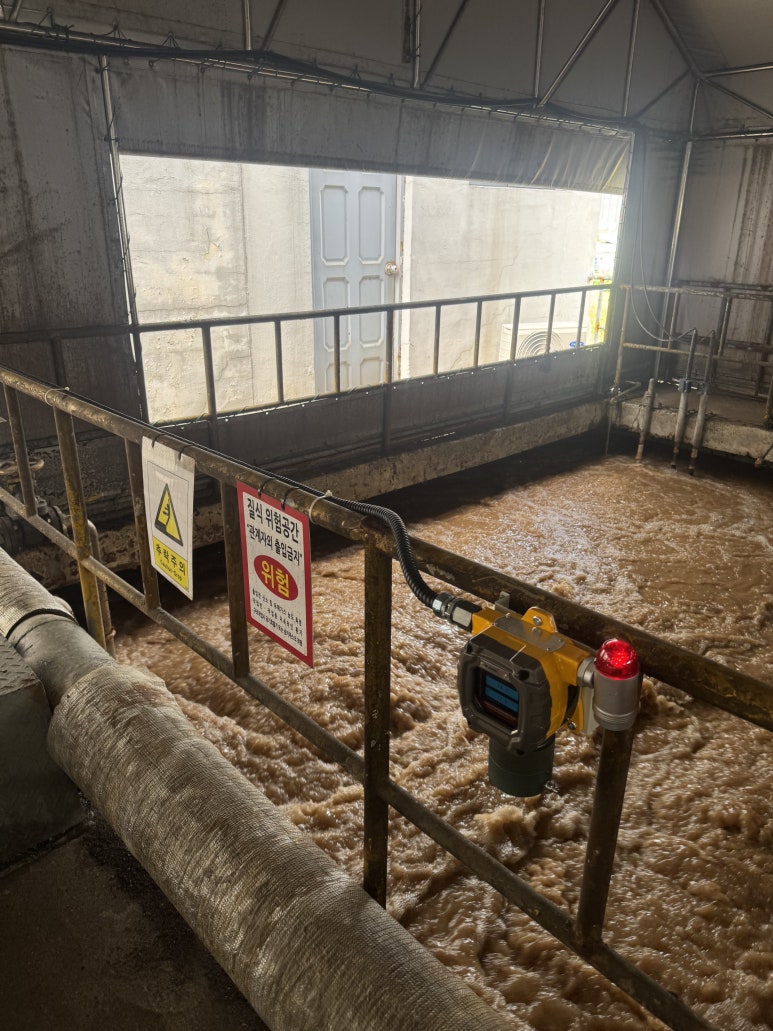
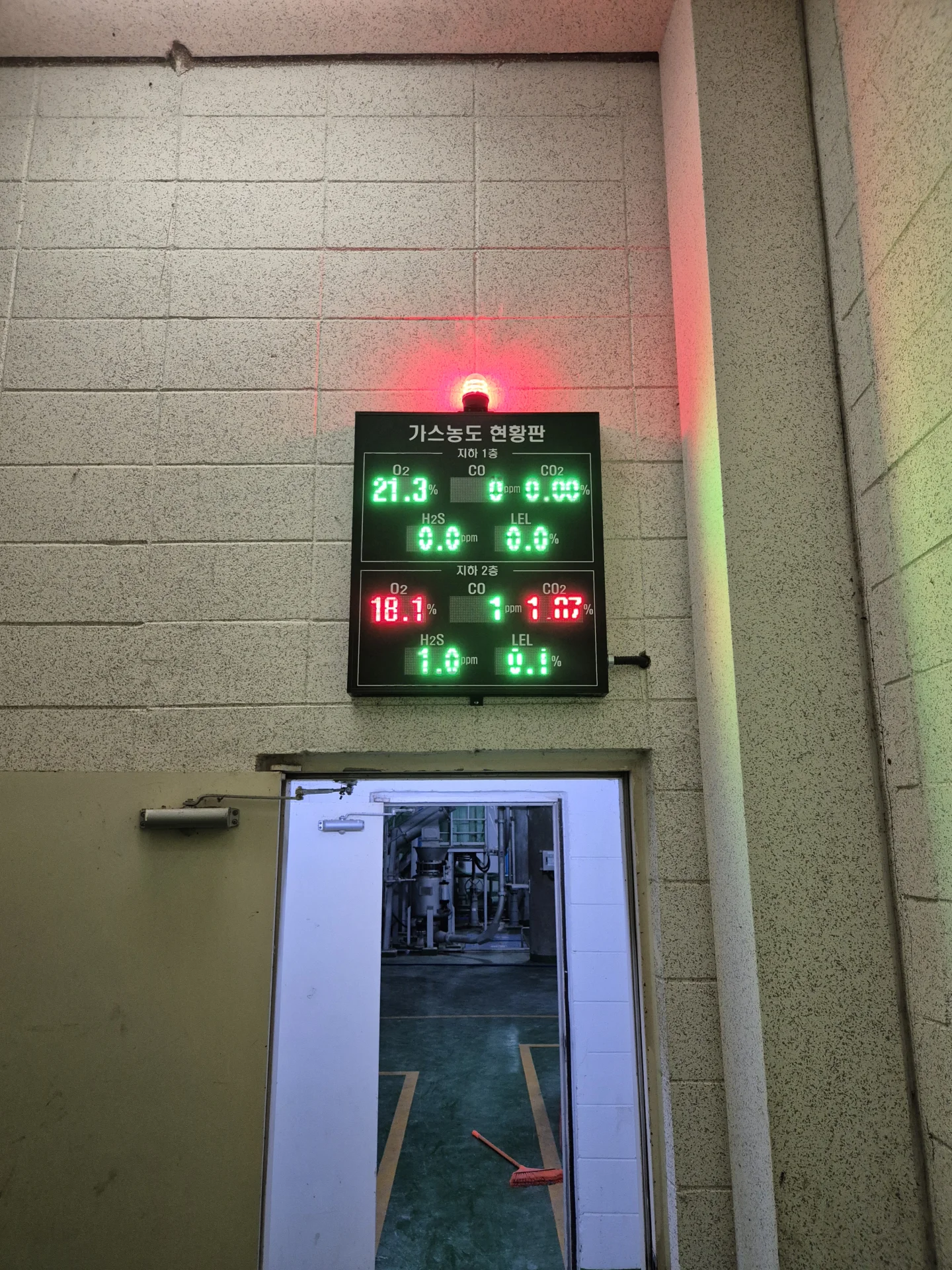
The WANDI FIX800 is a fixed gas detector that simultaneously measures up to 5 gases including H₂O₂. Integrated with the FIX-DS display board, it lets you check gas concentration in real time anywhere in the plant/facility, and via relay output it auto-links with external equipment for VHP shutdown, forced ventilation, emergency alerts, and more. Through cloud monitoring, managers can check status remotely even during unmanned nights and weekends.
WANDI FIX800 Installation Cases
A 4-Step Scenario to Prevent H₂O₂ Accidents with FIX800
- 124-hour continuous detection: The FIX800 detects the instant H₂O₂ exceeds the set alarm value (e.g., 1 ppm)
- 2Immediate alarm + remote alert: FIX-DS display board alarm fires, with an instant alert to the manager's smartphone/email via cloud
- 3Automatic emergency interlock: Via relay output, auto-stop the VHP generator, start the forced ventilation fan, and engage the locking mechanism
- 4Data retention and analysis: Alarm history and concentration data saved automatically, used for GMP audit response and process optimization

FIX800 Key Specifications and Features
| Item | Specification |
|---|---|
| Measured gases | Up to 5 gases simultaneously (H₂O₂, O₂, CO, H₂S, EX, CO₂, etc. combinable) |
| Detection method | Electrochemical (H₂O₂, CO, H₂S, O₂), catalytic (combustible), infrared (CO₂) |
| Output | 4~20mA, relay (interlock for shutoff/ventilation/VHP stop), RS-485 |
| Linked display board | FIX-DS (real-time concentration & alarm status display) |
| Monitoring | Cloud web/app real-time check, remote alarm alerts, history logging |
| Installation | Wall/pipe fixed-mount, 24-hour unmanned operation |
📌 Recommended FIX800 × H₂O₂ Sensor Configuration
A dedicated H₂O₂ electrochemical sensor + O₂ (oxygen-deficiency monitoring) combination is the baseline. Around VHP sterilization chambers, H₂O₂ alone is recommended; for cleaning/wastewater processes, an H₂O₂ + CO + O₂ combination. For facility-specific custom design, contact the WANDI technical support team.
A Closer Look at the WANDI FIX800
Below are real photos of the WANDI FIX800 fixed multi-gas detector.