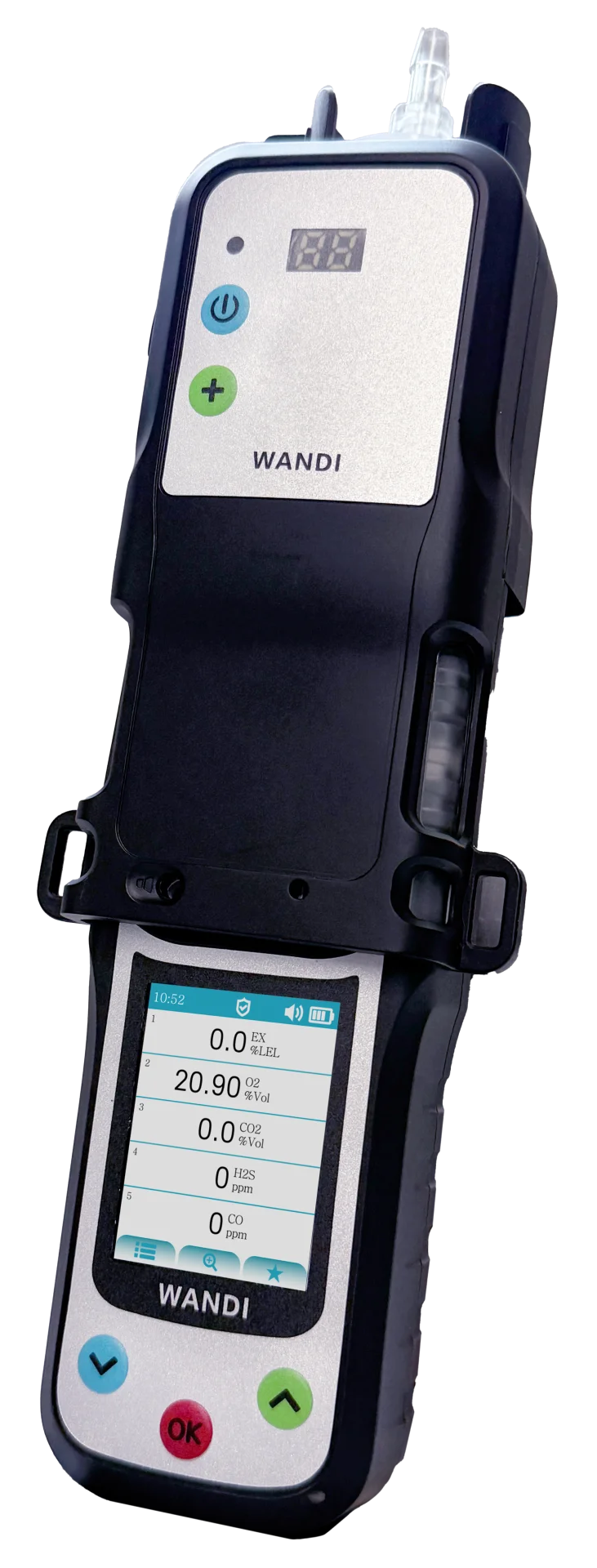
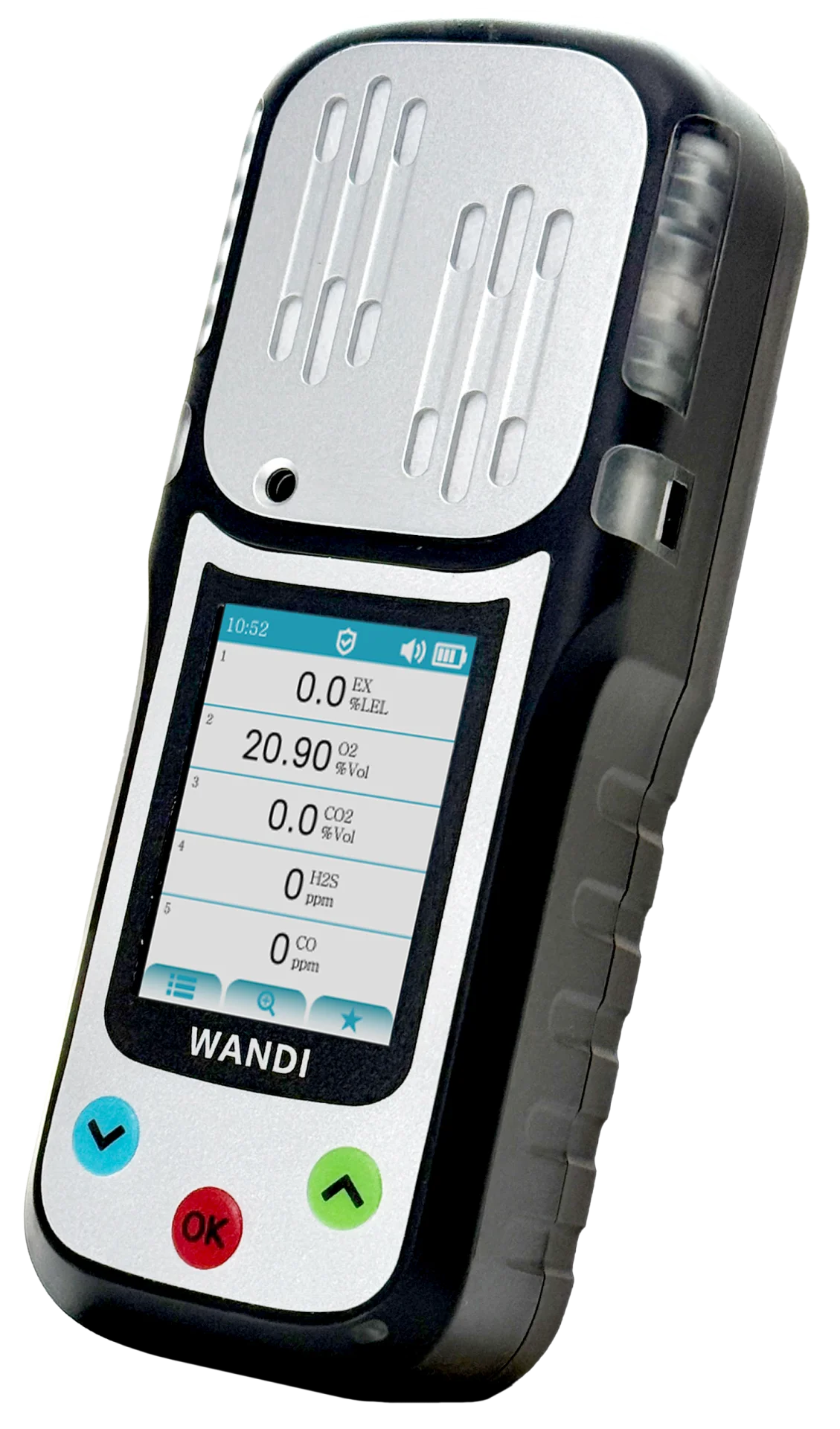
Phosgene (COCl₂) caused over 80% of all chemical weapon deaths in World War I. Although banned as a weapon, it is still used in large quantities as a key intermediate in polyurethane, polycarbonate, isocyanate, and pesticide synthesis. Even at 0.1 ppm, it can cause delayed pulmonary edema, with life-threatening symptoms appearing 4–24 hours after exposure — making on-site detection before human senses respond absolutely critical. WANDI EDW500, certified under IECEx (IECEx TPS 25.0057X, TÜV SÜD), simultaneously detects up to 5 gases including phosgene.
What is Phosgene (COCl2)?
Phosgene has the chemical formula COCl₂ and molecular weight 98.9. It is a colorless gas at room temperature with a distinctive fresh hay odor. It liquefies when cooled and reacts with water to produce hydrochloric acid (HCl) and carbon dioxide (CO₂). It is used as a key raw material in isocyanate (MDI, TDI), polycarbonate, and carbonyl chloride compound synthesis.
⚠️ Warning: Delayed Toxicity
Phosgene symptoms may be mild or absent immediately after exposure, leading workers to falsely believe they are safe. However, fatal pulmonary edema can develop rapidly 4–24 hours later. This means detector-based detection before human senses respond is the only reliable protection.

Health Effects of Phosgene on the Human Body
| Concentration (ppm) | Exposure | Health Effect | Hazard Level |
|---|---|---|---|
| 0.01 | Continuous | Fresh hay odor detectable | Caution |
| 0.1 | 8 hr TWA | Eye/nose/throat irritation, delayed lung damage onset | Warning |
| 1–3 | Short-term | Severe coughing, respiratory distress, early pulmonary edema | Danger |
| 3–10 | Short-term | Acute pulmonary edema, hypoxia | Severe Danger |
| 25+ | Immediately | Death possible within minutes (NIOSH IDLH: 2 ppm) | IDLH |
※ Source: ACGIH TLV-TWA 0.1 ppm (Ceiling), NIOSH IDLH 2 ppm, OSHA PEL 0.1 ppm
Real Accident Case
Bhopal MIC Gas Disaster — Phosgene Chain Reaction (India, 1984)
In 1984, a massive methyl isocyanate (MIC) leak at the Union Carbide pesticide plant in Bhopal, India triggered a complex reaction involving water, isocyanates, and phosgene. Over 3,000 people died immediately, and more than 500,000 suffered long-term health effects — making it the worst industrial disaster in history. This accident cemented the global need for real-time gas detection systems when handling isocyanate- and phosgene-class chemicals.
※ Source: Union Carbide Accident Report / U.S. EPA Bhopal Gas Tragedy Documentation
WANDI EDW500 — IECEx-Certified 5-Gas Simultaneous Detection
(TÜV SÜD / IECEx TPS 25.0057X)
simultaneously monitored
(1/5 of TLV)
The EDW500's explosion-proof rating of Ex da ia IIC T4 Ga (Zone 0, EPL Ga) makes it safe for use in isocyanate and polyurethane synthesis plants where phosgene and flammable gases coexist. With phosgene sensors combined with O₂, CO, H₂S, and EX, it provides comprehensive protection in complex hazardous environments.
Prevention Scenario: What if WANDI EDW500 Had Been Used?
- 1Pre-entry measurement: Check COCl₂ concentration with EDW500 before entering phosgene-handling processes.
- 2Immediate alarm: The moment ≥0.02 ppm is detected, a 95 dB alarm + vibration + LED alert fires — warning the worker before the nose can smell the danger.
- 3Evacuation and notification: Worker evacuates immediately; supervisors receive real-time IoT cloud notification.
- 4Medical action: Due to phosgene's delayed toxicity, any potentially exposed worker must receive immediate medical observation; measurement records serve as critical evidence for medical decisions.
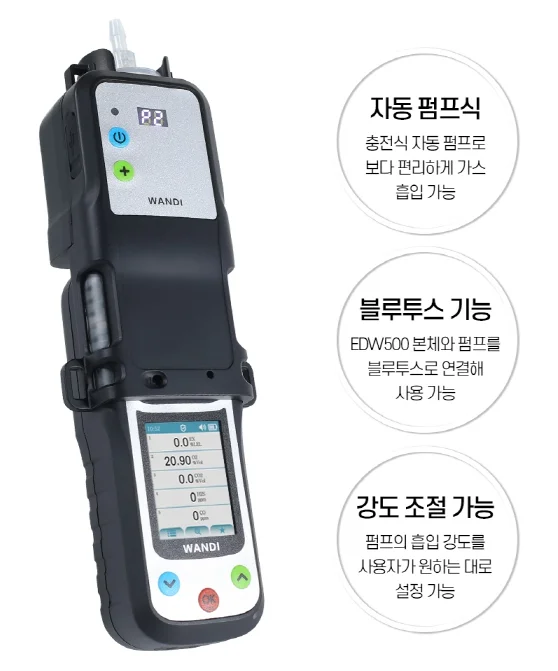
A Closer Look at the WANDI EDW500
Below are real photos of the WANDI EDW500 portable multi-gas detector and its use on site.