⚠️ A Tragedy That Repeats Every Year
According to KOSHA statistics, an average of 20+ workers die annually in confined-space asphyxiation accidents in Korea. Most of these incidents share one common factor: a gas detector was on site, but no one was there to hear the alarm.
Why Do Gas Detectors Need IoT?
"Doesn't a gas detector just need to measure gas concentration accurately?" This is the most common question we hear from site managers. But when you examine actual accident reports, an overwhelming pattern emerges — gas detectors were present, yet they failed to prevent the accident.
The answer is simple: "measuring" and "alerting" are two different problems.
Real Accidents That Reveal the Limits of Traditional Gas Detectors
📋 Case 1: Chain Asphyxiation During Septic Tank Work
During septic tank cleaning in a large building's basement, Worker A entered and immediately collapsed from H₂S exposure. Coworker B entered to rescue and also collapsed. Then C followed and all three were found together. There was a portable gas detector on site.
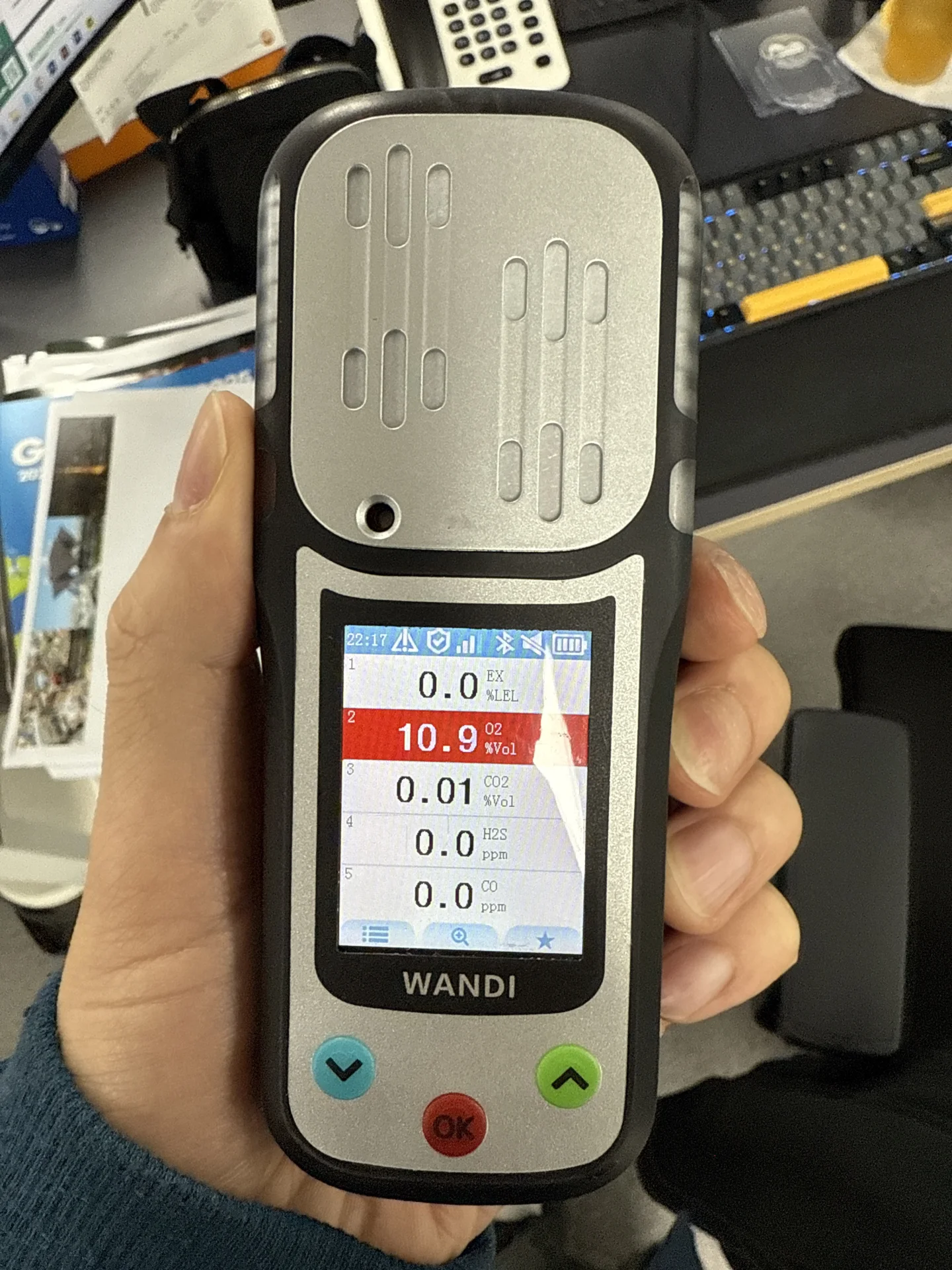
Why didn't the detector save them? Portable detectors only warn the person carrying them. Once unconscious, no one can hear the alarm. Surface managers had no way to monitor what was happening inside.
📋 Case 2: Gas Leak in an Unmanned Facility at Night

A gas leak occurred during night-time unmanned operation at a chemical plant. The on-site detector sounded its alarm — but at 3 AM, nobody was there. When a worker arrived the next morning, gas concentration had reached explosive levels.
The lesson is clear: without people present, any alarm becomes meaningless.
📋 Case 3: Dry Ice and CO₂ Asphyxiation
A worker lost consciousness inside a dry-ice transport container due to surging CO₂ levels. 1 kg of dry ice produces approximately 540 liters of CO₂ when sublimating — concentrations can reach lethal levels within minutes in enclosed spaces.
5 Accident Types That IoT Gas Detection Can Prevent
| Accident Type | Traditional Detector Limitation | How IoT Solves It |
|---|---|---|
| Confined-space asphyxiation | Useless once entrant loses consciousness | Real-time alerts to external managers |
| Night/unmanned operation | No one to hear alarm | 24/7 smartphone and PC alerts |
| Secondary rescue accidents | Rescuers unaware of gas levels | Pre-entry concentration check |
| Multi-site management failure | Must inspect each site individually | Unified dashboard view |
| Legal liability gaps | No data records — no proof | Automatic cloud-based logging |
The Serious Accident Punishment Act Era — IoT Is No Longer Optional
Korea's Serious Accident Punishment Act (effective January 2022) has fundamentally changed how gas detection must be operated. Simply "having a detector installed" is no longer sufficient to discharge an employer's legal duty.
To comply, businesses need: real-time monitoring systems, data preservation, demonstrable safety measures, and multi-level alerting. All of these requirements are practically impossible to meet without an IoT-based gas detection system.
IoT Gas Detector — How Is It Different?
An IoT-equipped gas detector goes beyond on-site alarms. It transmits smartphone notifications, stores all data in the cloud, allows unified multi-site monitoring, supports legal evidence preservation, and enables instant response within seconds — regardless of where the manager is located.
Closing — The Era of "Just Measuring" Is Over
Gas detectors are no longer "devices that display gas concentration on site." They have evolved into comprehensive safety systems that transmit risks in real time, accumulate data, and actively prevent accidents.
The confined-space asphyxiation accidents, the night-time gas leaks, the failed multi-site management — these tragedies are all preventable with IoT-based gas detection systems.
Is your current gas detector doing more than just "measuring"?
📞 Free IoT Gas Detection Consultation
We design IoT gas detection systems tailored to your specific site environment.
wandi.co.kr
View installation cases: wandi.co.kr/en/construction-cases
📷 IoT Gas Detection with EDW500 — Photo Gallery
See how EDW500's IoT cloud monitoring prevents accidents that traditional detectors cannot.