Applied Markets
Installed Gases
Project Details
Hello.
Today we're sharing an installation case for a fixed-type carbon dioxide detector in a fire suppression gas room.
We've mostly uploaded only installation site photos so far, so today we'll briefly introduce the detector with photos and explanation before sharing the installation case.
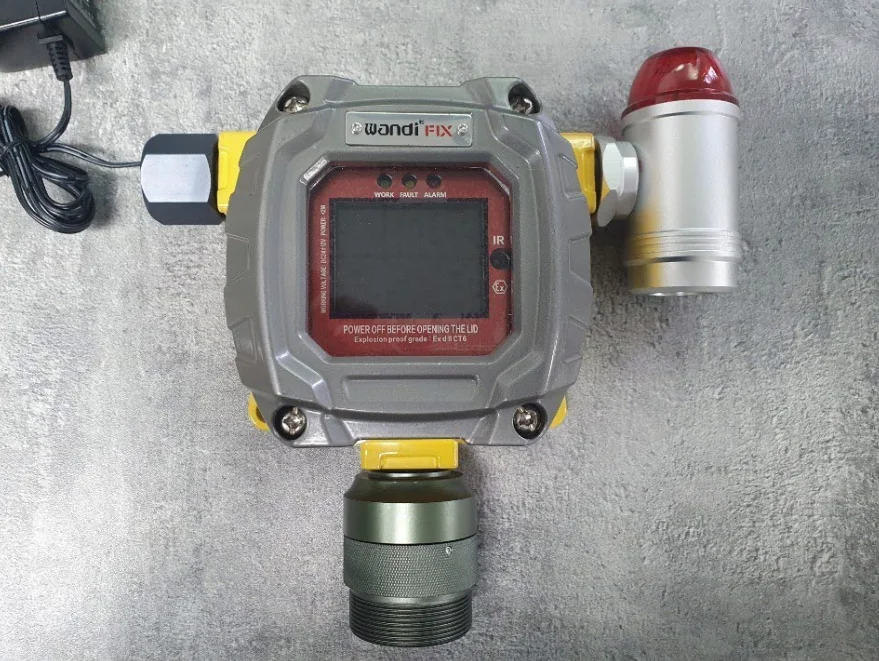
This is the fixed-type carbon dioxide detector FIX800. It's about the size of an adult's open palm and is typically fixed to a horizontal wall for use.
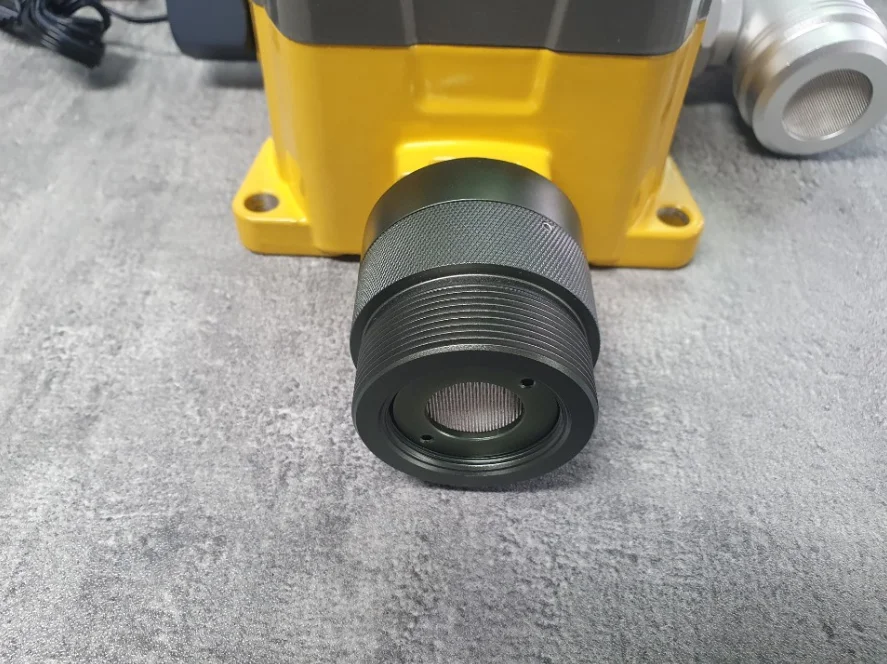
The CO2 sensor is located in the round part at the bottom of the FIX800. It measures the concentration of carbon dioxide in the air that reaches this part and displays the reading on the screen.
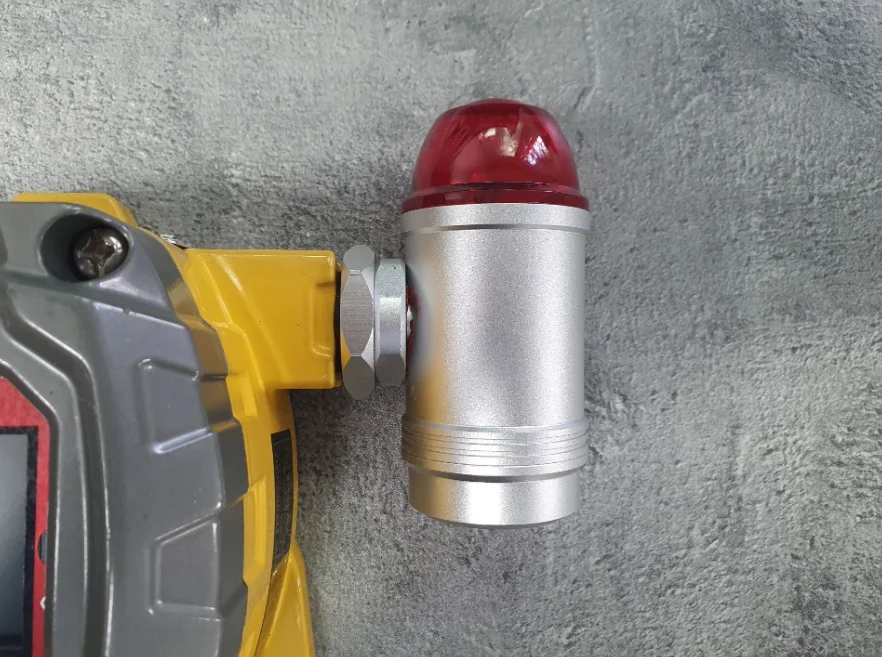
On the right side of the detector, a warning light is triggered when the detected CO2 concentration exceeds the set value, and a sound & light alarm occurs.
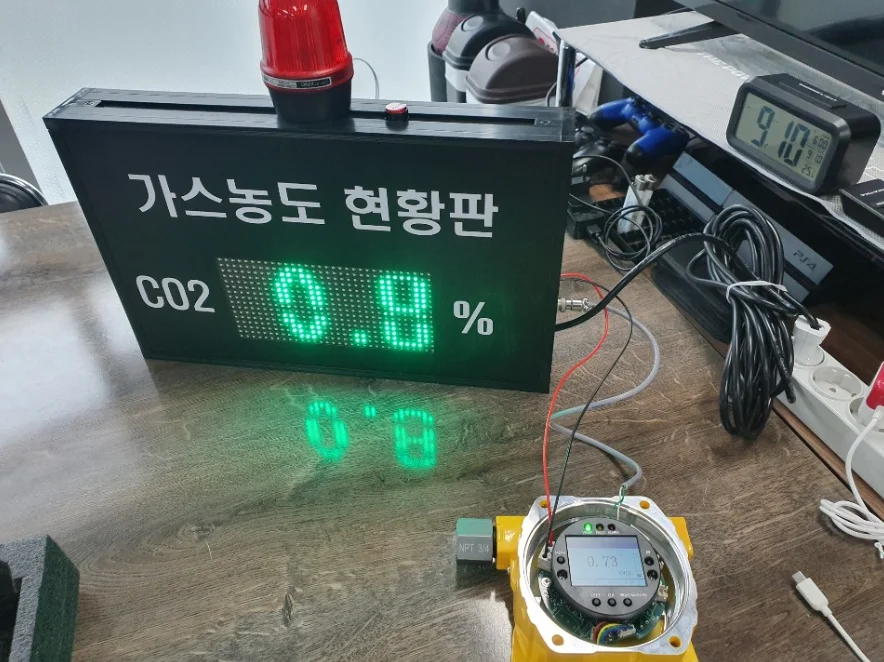
For this site as well, we configured the FIX800 CO2 detector together with a display board as an integrated monitoring system. This is a method where the CO2 concentration measured by the FIX800 is shown in real time on the display board.
Most fire suppression gas rooms are built with thick concrete walls, making it difficult to run power. When used together with a display board, power can be supplied from the display board to the detector, making installation much easier.
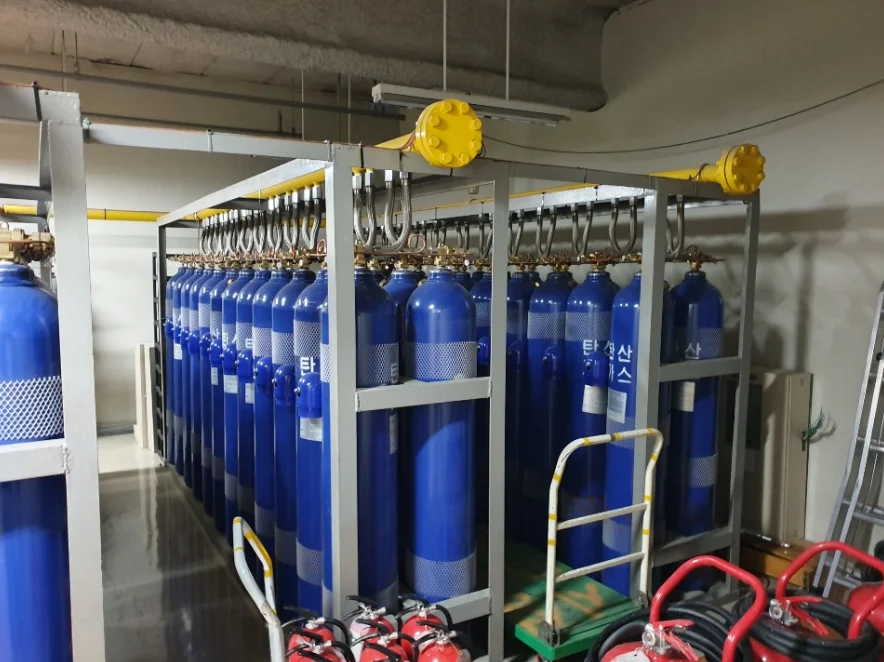
This is a fire suppression gas room site we worked on. Most buildings and facilities today have a basement fire suppression gas room stocked with CO2 extinguishing gas.
Since a high concentration of CO2 gas is stored there, a leak can lead to death by asphyxiation, so a detector must be installed for management.
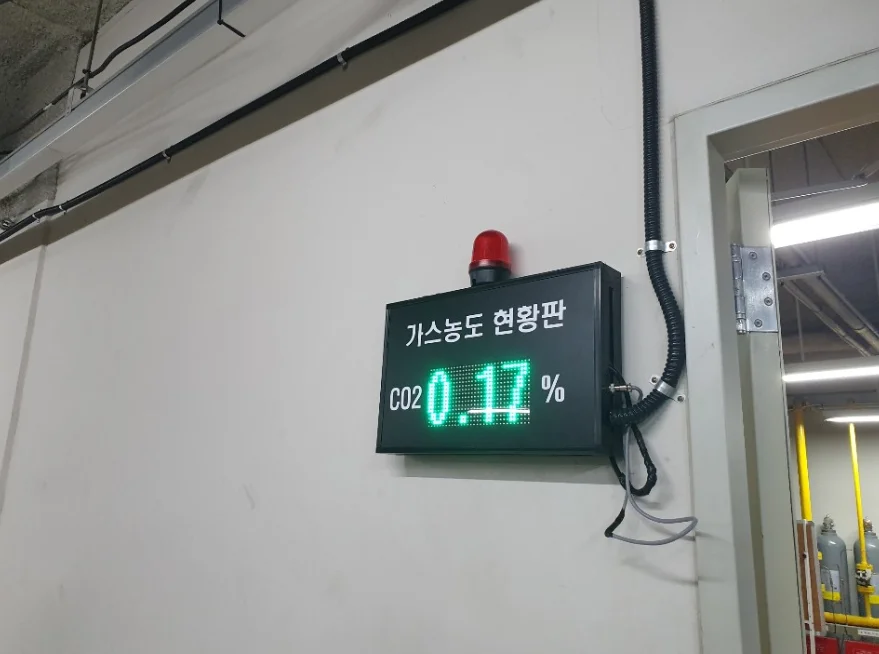
Inside the fire suppression gas room, we installed the CO2 detector FIX800, and then installed a display board at the entrance door of the room. This allows the concentration inside to be checked before entering, helping prevent death by asphyxiation.
Installation in a fire suppression gas room is an easy job, with up to 2 points possible per day.
This concludes the CO2 detector installation case.
Thank you.
Frequently Asked Questions (FAQ)
Q1. What equipment was installed in this case?
A fixed-type carbon dioxide detector FIX800 was installed inside a fire suppression gas room (CO2 gas room). It's about the size of an adult's open palm and is fixed to a horizontal wall.
Q2. How does the detector work?
The CO2 sensor at the bottom of the detector measures the carbon dioxide concentration in the air and displays it on screen. A warning light on the right side of the detector triggers a sound & light alarm when the set threshold is exceeded.
Q3. What's the benefit of linking it with a display board?
Configuring the FIX800 together with a display board as an integrated monitoring system allows the measured CO2 concentration to be shown in real time on the board. Since most fire suppression gas rooms have thick concrete walls that make running power difficult, using a display board lets power be supplied to the detector directly, making installation much easier.
Q4. Why is a fire suppression gas room dangerous?
Most buildings and facilities have a basement fire suppression gas room stocked with CO2 extinguishing gas. Since a high concentration of CO2 is stored there, a leak can lead to death by asphyxiation, so a detector must be installed for management.
Q5. What role does the display board play?
A display board installed at the entrance door allows the concentration inside the room to be checked before entering, helping prevent death by asphyxiation. Installation in a fire suppression gas room is an easy job, with up to 2 points possible per day.
#WANDI #FIX800 #CO2Detector #CarbonDioxideDetector #FireSuppressionGasRoom #AsphyxiationPrevention #GasConcentrationDisplayBoard #IndustrialSafetyEquipment #FixedGasDetector #OccupationalSafety
![[레이먼드] 오,폐수 처리실 유해가스 모니터링](https://wandi.co.kr/storage/construction-cases/YxFUQVBZ8Unnk7pJzzfsmezr6xNe0LZvQRDmt7TL.jpg)
![[브이피이코리아] 종합병원 지하 밀폐공간 가스 측정기 설치_FIX800 & FIX-DS](https://wandi.co.kr/storage/construction-cases/gNOA28xSlEy5uU3AOxyHDRH5UfAe0TpMTgAt4Uag.jpg)

