What Is HCN (Hydrogen Cyanide)? The Fastest Toxic Gas
Hydrogen cyanide (HCN) is a colorless, extremely toxic gas with an almond odor, generated at industrial sites and in fire smoke. It works through a "cellular asphyxiation" mechanism — interfering with cellular respiration so that cells cannot use oxygen even when it is supplied. The U.S. IDLH is 50 ppm, and Korea's permissible limits are extremely strict at 10 ppm (TWA) / 4.7 ppm (short-term).
💡 Key Point
Some people have an olfactory deficit that prevents them from smelling HCN's almond odor (about 40% of the population). Never judge safety by smell alone — always use a gas detector.
Health Effects of HCN on the Human Body
| Exposure Concentration | Exposure Time | Health Effect |
|---|---|---|
| 2~5 ppm | Long-term | Headache, dizziness, palpitations |
| 10 ppm | 8-hr TWA | Korea exposure limit — headache, nausea |
| 25~40 ppm | Tens of minutes | Severe headache, vomiting, precursor to convulsions |
| 50 ppm | 30 min ~ 1 hr | Life-threatening — IDLH |
| 100~300 ppm | Immediate ~ minutes | Loss of consciousness, convulsions, cardiac arrest, sudden death |
(Source: NIOSH Pocket Guide to Chemical Hazards; Korea MoEL Chemical Exposure Standards; OSHA 29 CFR 1910.1000)
Major HCN Generation Sites
- Electroplating plants: HCN generated when cyanide plating processes contact acid
- Smelting/metallurgy plants: cyanide metal smelting processes
- Chemical plants: acrylonitrile, nylon synthesis, etc.
- Building fires: large amounts generated when PVC, nylon, and polyurethane burn
- Gas chambers/confined spaces: organic decomposition or cyanide storage areas

Real HCN Accident Cases
🇰🇷 Cyanide Poisoning at a Domestic Electroplating Plant
At a domestic electroplating plant, sodium cyanide plating solution mixed with acidic wastewater generated HCN; in poorly ventilated conditions, two workers were poisoned and one died. With no gas detector present, early detection was impossible. (Source: Korea MoEL serious-accident statistics, multiple years)
🇺🇸 HCN Poisoning of Firefighters in a U.S. Warehouse Fire
In the U.S., during the suppression of a plastics warehouse fire, multiple firefighters were exposed to HCN and lost consciousness. Smoke inhalation generates CO and HCN simultaneously, and respirators that measured only CO failed to block HCN, causing severe harm. (Source: NFPA Fire Investigation Report, 2019)
How to Prevent HCN Accidents with WANDI EDW500
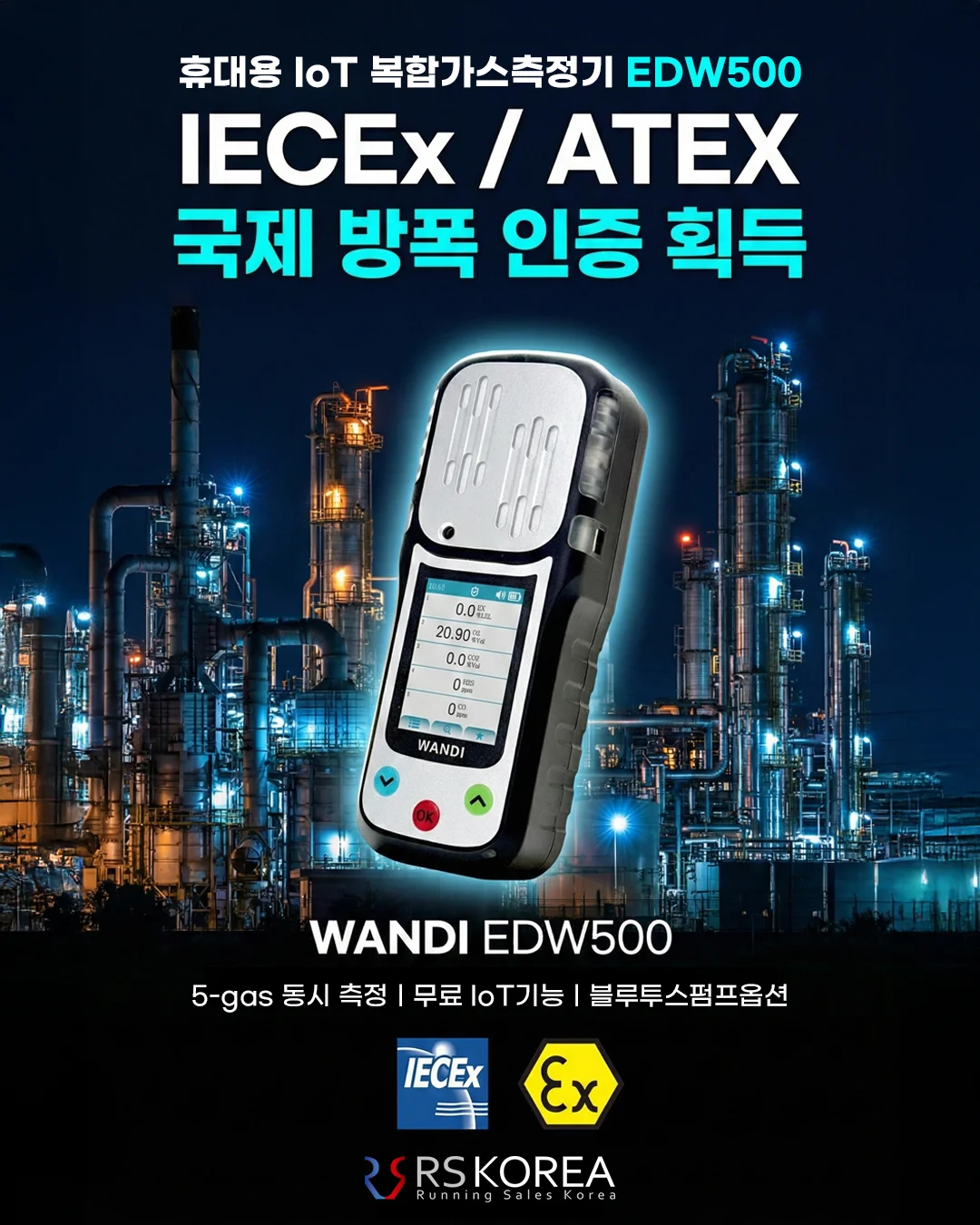
EDW500 HCN Measurement Features
- IECEx international explosion-proof certification: IECEx TPS 25.0057X (TÜV SÜD certified), usable in Zone 0
- HCN electrochemical sensor: high-sensitivity measurement of 0.5~30 ppm, alarm below 10 ppm (TWA)
- Simultaneous 5-gas detection: HCN, O₂, CO, H₂S, EX measured together
- IoT cloud integration: real-time data logging and remote alarms
- Simultaneous CO+HCN monitoring: both gases can be monitored together in fire smoke
EDW500 Prevention Scenario: Electroplating Process
- 1Before plating-bath work: Pre-measure HCN concentration with the EDW500, confirming it is below 10 ppm
- 2Continuous measurement during work: Instantly detect an HCN rise when the plating solution contacts acid
- 3Alarm above 10 ppm: Immediate alarm, with a simultaneous cloud alert to the manager
- 4Rapid evacuation: Prepare cyanide antidote, contact emergency medical services
- 5Cloud logging: Save the full measurement history, satisfying Occupational Safety and Health Act records
EDW500 IECEx International Explosion-Proof Certification
| Item | Detail |
|---|---|
| Certificate number | IECEx TPS 25.0057X |
| Certifier | TÜV SÜD (Germany) |
| Explosion-proof rating | Ex da ia IIC T4 Ga |
| Applicable Zone | Zone 0 (highest-risk zone) |
A Closer Look at the WANDI EDW500
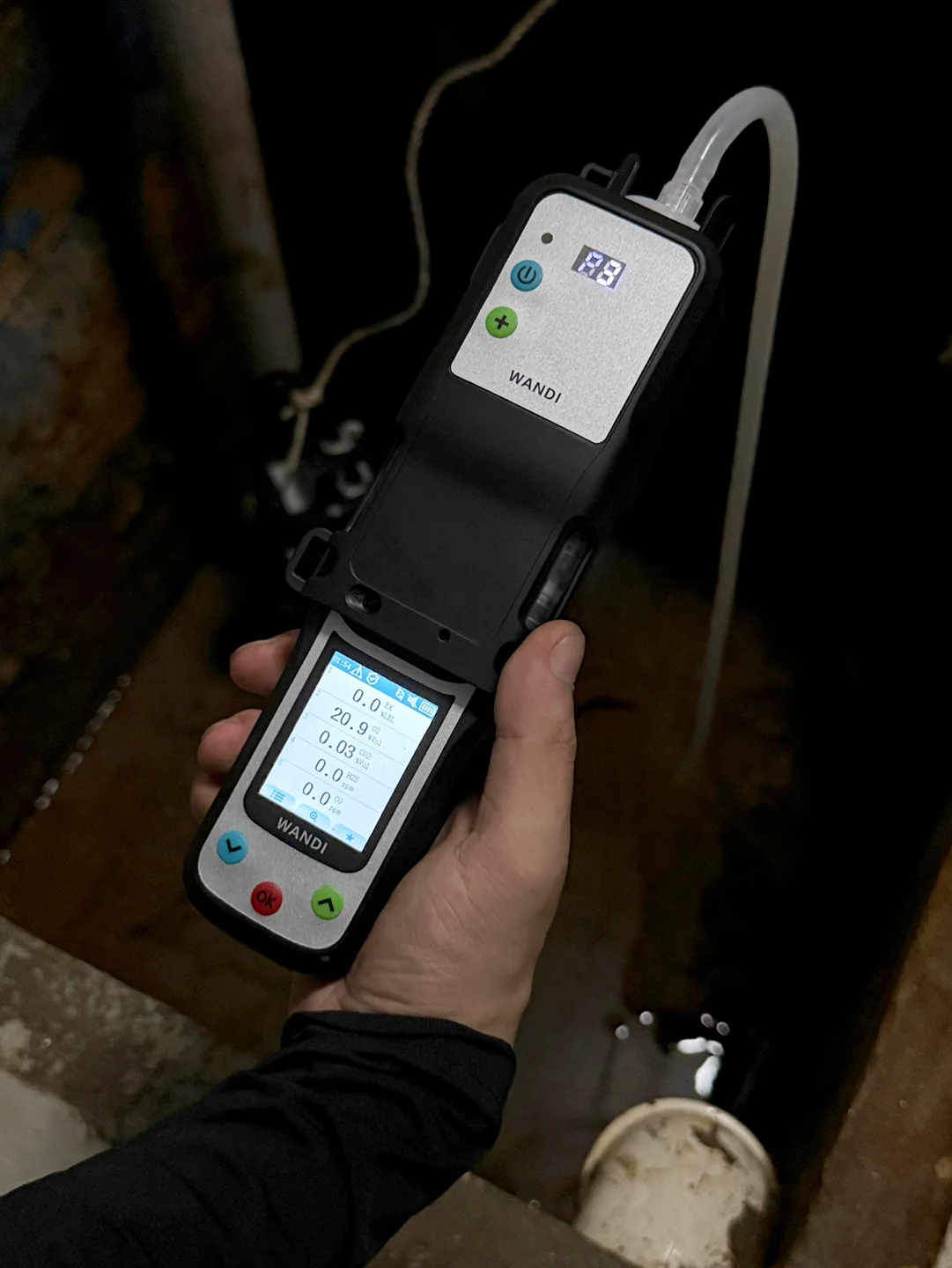
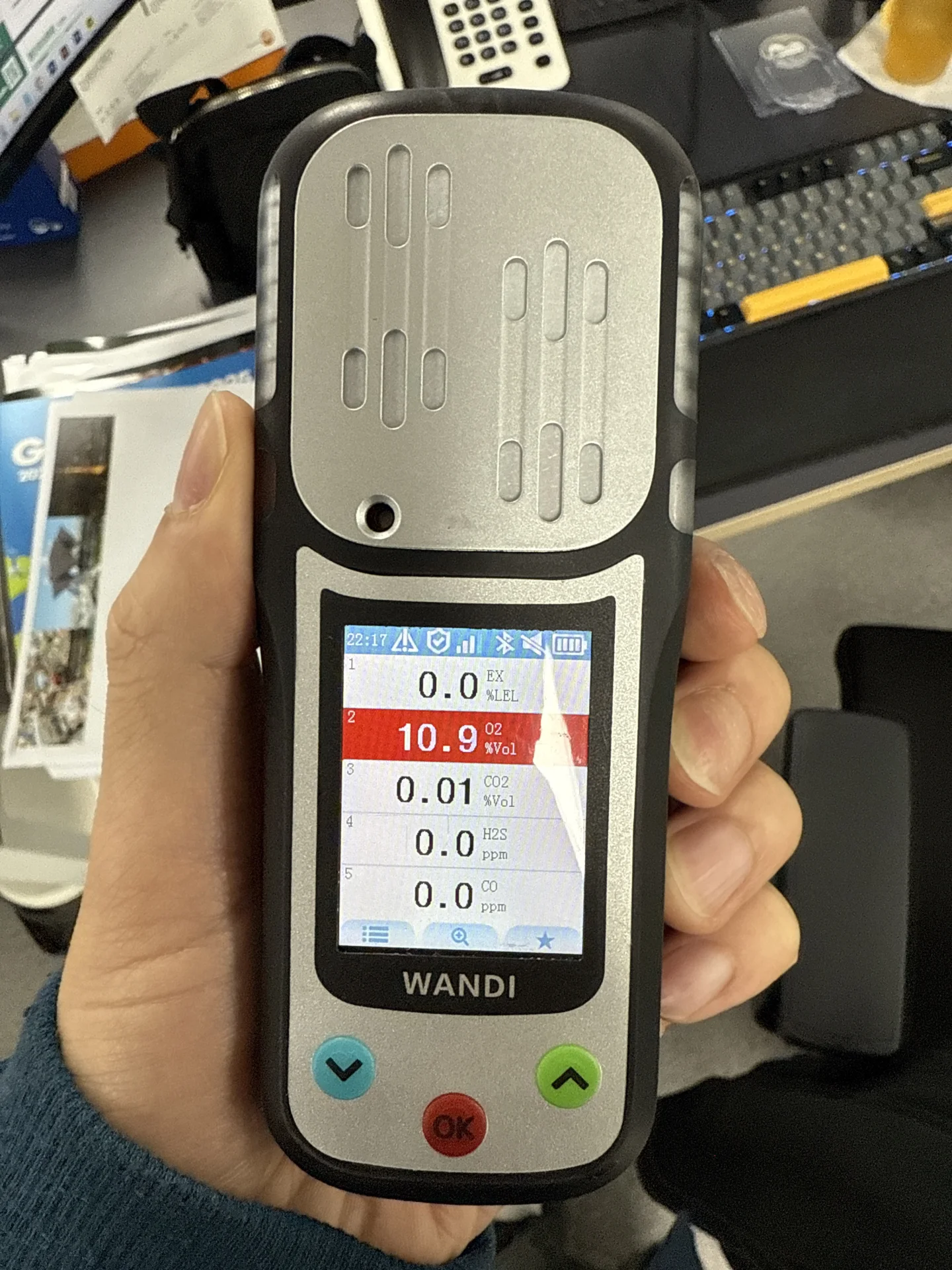
Below are real photos of the WANDI EDW500 portable multi-gas detector and its use on site.