📌 3 Key Takeaways
- Vertical shafts (ventilation shafts) in the Seoul Metro Dongbuk Line tunnel construction are classic confined spaces with almost no airflow to the surface, where oxygen deficiency, carbon monoxide, hydrogen sulfide and combustible gas risks persist at all times.
- At a vertical shaft site near Station 109 in Nowon-gu, built by major contractor Hyundai Engineering, the FIX800 4-gas detector (O₂·CO·H₂S·EX) and a dedicated 4-channel status display panel were installed, powered entirely from a standard 220V outlet with no separate electrical work.
- The system ran reliably for over a year in a dust-filled tunnel environment, and that track record led to a repeat order and relocation of units into the horizontal tunnel section as construction progressed.
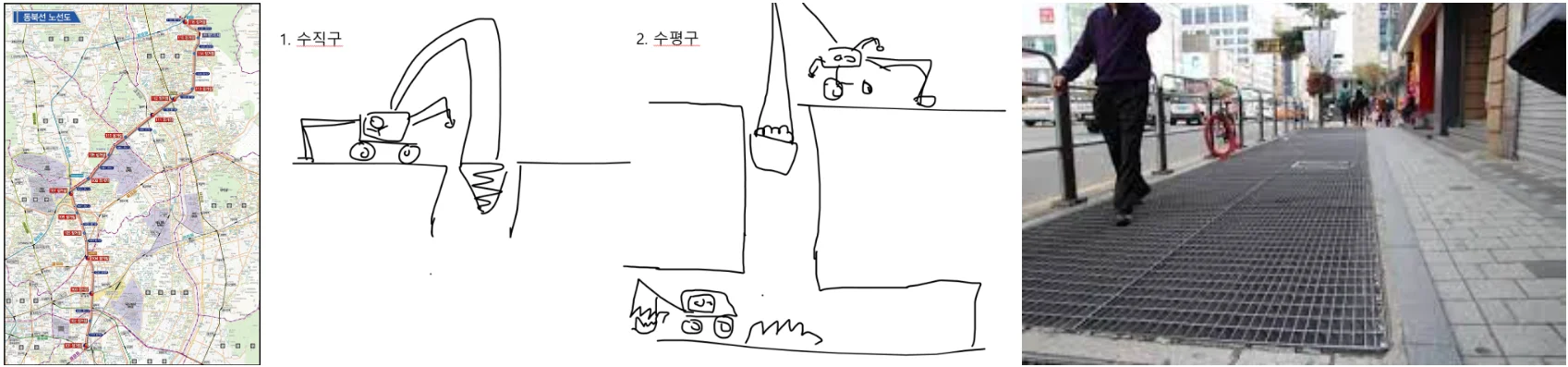
Have you heard the term "vertical shaft" on a subway construction site? It is a deep pit dug at intervals so heavy equipment can descend underground to bore the horizontal tunnel — and once construction is done, it becomes the ventilation shaft we walk past on the street. But while construction is underway, this vertical shaft is a deep, narrow confined space with almost no air exchange with the surface, where exhaust from heavy equipment and gas rising from the ground readily accumulates. This article covers a real installation case where WANDI's FIX800 4-gas detector was deployed at a Seoul Metro Dongbuk Line tunnel construction site to protect confined-space workers.
Why Vertical Shafts in Tunnel Construction Are Dangerous Confined Spaces
A vertical shaft is a deep pit bored from the surface down to the horizontal tunnel level so heavy machinery can be lowered underground. It can run dozens of meters deep and is narrow enough that natural ventilation barely occurs, so exhaust from excavation equipment and gas generated in the surrounding ground and soil easily settles at the bottom.
| Gas | Cause in vertical shafts and tunnel construction |
|---|---|
| O₂ deficiency | Poor natural ventilation in a deep, narrow structure; oxygen consumed by excavation equipment |
| CO (carbon monoxide) | Exhaust from excavation machinery and generators accumulating in a confined space |
| H₂S (hydrogen sulfide) | Decomposition of organic matter in soil and groundwater; inflow when passing through landfill layers |
| EX (combustible gas) | Landfill gas or methane trapped in soil layers, released during excavation |
Urban subway construction often passes through long-buried soil layers, so even seemingly simple earthwork can release unexpected hazardous gas. That's why Korea's Occupational Safety and Health Standards classify vertical-shaft and tunnel construction sections as confined spaces and require continuous gas measurement before and during work.
Site Overview — Vertical Shaft at Station 109, Seoul Metro Dongbuk Line
| Contractor | Hyundai Engineering (major general contractor) |
| Location | Nowon-gu, Seoul — ventilation shafts of the Seoul Metro Dongbuk Line construction (vertical shaft at Station 109) |
| Equipment installed | FIX800 4-gas detector (O₂·CO·H₂S·EX) + outdoor-rated enclosure + custom magnetic bracket + dedicated 4-channel status display panel |
| Installation date | February 15, 2023 (morning start) |
| Installation crew | 2 people |
The Problem — Deep Underground in the City, Where Even Electrical Work Is Difficult
This project followed an earlier installation of the FIX800 and display panel at another vertical shaft section for the same contractor that spring, which built enough trust to lead to a repeat order for the same equipment. The newly excavated vertical shaft at Station 109 spanned a 150-meter section, and being in the middle of a dense urban construction site meant parking and moving materials were themselves constrained. On top of that, as tunnel construction progresses, detectors installed in the vertical-shaft section eventually need to move into the horizontal tunnel section — and re-running electrical wiring every time that happens was not realistic.
The Solution — FIX800 4-Gas Detector with a Magnetic Bracket, Built for Easy Relocation
Anticipating these constraints, WANDI proposed a configuration designed with future relocation in mind from the planning stage.
- Simultaneous 4-gas measurement — O₂, CO, H₂S and combustible gas (EX) monitored continuously from one FIX800 unit. Korea's confined-space requirement now covers 5 gases including CO₂, so this site's 4-gas configuration reflects the gases prioritized by its own risk assessment.
- No separate electrical work — powered entirely from the site's existing 220V outlet with no additional wiring construction, shortening installation time
- Pre-laid cabling to save construction time — about 100 meters of corrugated conduit and AWG shielded cable were laid in advance, so the actual installation day only required final connection and commissioning
- Magnetic bracket — attached to an H-beam with no welding or drilling, allowing easy re-installation when the unit later moves to the horizontal tunnel section
- Extra cable slack reserved — spare cable was coiled near the shaft entrance in advance to minimize additional wiring work at the next relocation
- Dedicated 4-channel status display panel — an outdoor-rated display so surface supervisors can instantly check all four gas readings by eye
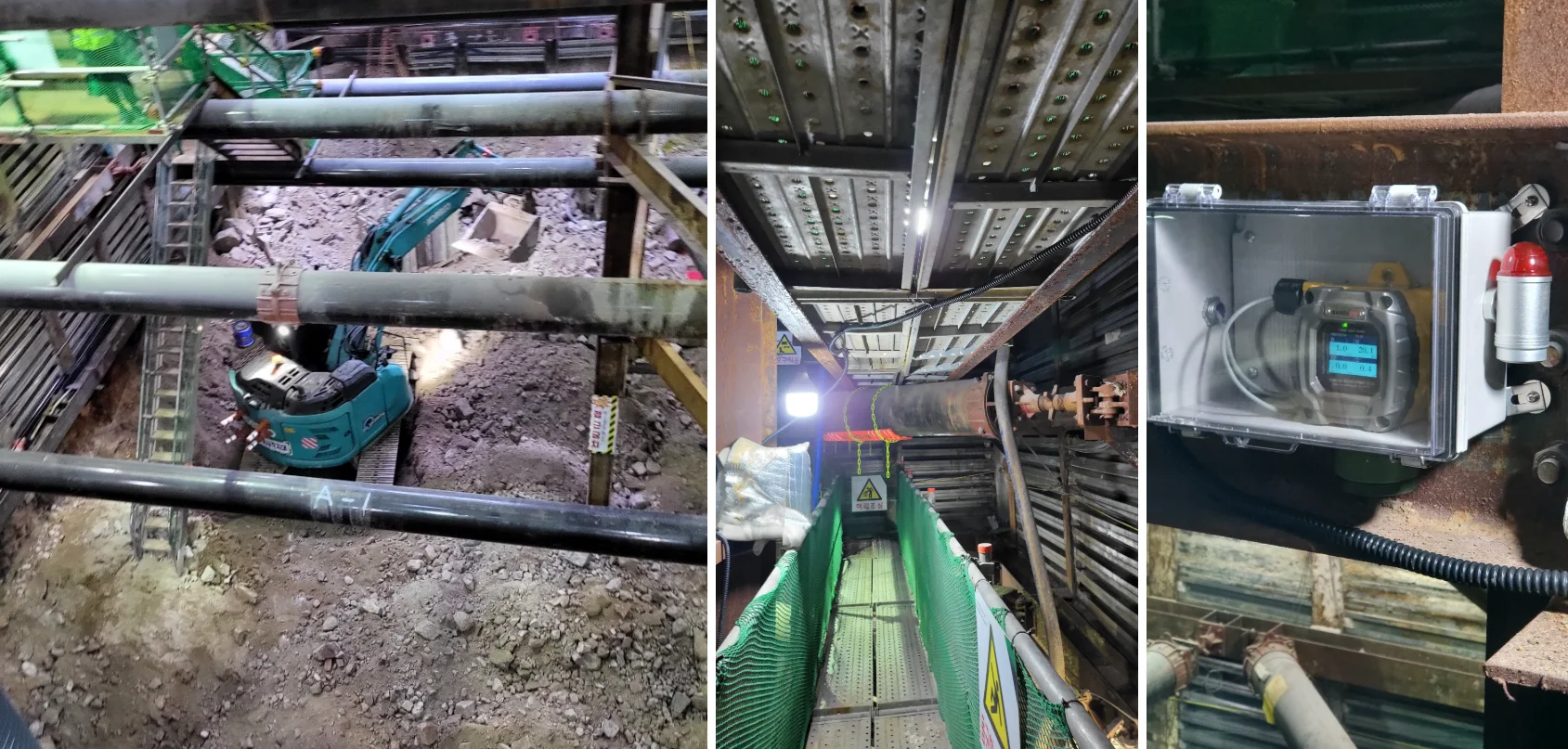
On installation day, the 150-meter run was pre-wired and tested before being connected on site. The team breathed onto the sensor to confirm oxygen-level responsiveness, then verified that the display panel lit up correctly and wireless communication was working before wrapping up.
The Result — More Than a Year of Protection in a Dusty Tunnel, and a Repeat Order
After the original spring installation, a change in site manager prompted a request for refresher training on the previously installed equipment, bringing the WANDI team back to the site. What they found was that the FIX800 had been running without issue for more than a year in a tunnel full of dust. The dust- and rain-resistant enclosure configuration recommended for the site conditions had held up under harsh conditions exactly as intended. That track record built enough confidence that the same contractor placed a repeat order for the same equipment at the newly excavated vertical shaft at Station 109, with plans discussed for relocating the existing vertical-shaft units to the horizontal tunnel section as construction advances.
Confined-Space Gas Monitoring Is a Legal Requirement, Too
Korea's Occupational Safety and Health Standards require measuring oxygen and hazardous gas concentrations before confined-space work, along with continuous ventilation and monitoring where necessary. Since the Serious Accidents Punishment Act took effect, business owners and management can be held personally liable when a confined-space asphyxiation accident occurs — driving more construction companies to proactively install fixed gas detectors for continuous monitoring in confined spaces such as vertical shafts and ventilation shafts. As shown in this case, designing a configuration that solves for electrical-work and relocation constraints from the start lets urban construction sites meet legal requirements and protect workers at the same time.
Closing
The danger in a tunnel construction vertical shaft isn't visible from the outside. As excavation progresses, gas rising from the soil layers and exhaust from heavy equipment build up in a narrow space, and the detector has to move along with the construction section. The combination of the FIX800 4-gas detector, a magnetic bracket, and pre-laid cabling was a configuration that practically solved these site constraints — and more than a year of real-world operation proved that reliability. For inquiries about gas detectors for tunnels, vertical shafts, and other confined spaces, contact WANDI (+82-31-340-6952) — we'll propose the right configuration and quote for your site conditions.