📌 3 Key Takeaways
- A public agency facility-management site in Seongdong-gu, Seoul, adopted the WANDI EDW500 IoT portable multi-gas detector in a 2-gas configuration (H2S and NH3) to manage equipment where hydrogen sulfide and ammonia could leak.
- The EDW500 uses an automatic suction pump and sampling hose to draw and measure gas from confined spaces such as manholes that workers cannot easily enter, and its GPS location data and IoT connectivity let managers check gas levels and worker location remotely, without being on site.
- Under Korea's exposure standards, hydrogen sulfide is managed once the time-weighted average (TWA) exceeds 10 ppm — yet in April 2026, a paper mill tank in Ulsan actually measured 60 ppm, six times that threshold. Without measurement, there is no way to know such a figure in advance.
Among the facilities public agencies manage — sewage treatment equipment, septic tanks, manholes, sump pits — quite a few are spaces where hydrogen sulfide or ammonia can accumulate. A common trait of these gases is that they are barely noticeable under normal conditions, yet concentrations can spike to dangerous levels within a short time once sediment builds up or ventilation stops. This article introduces a real installation case: the challenge faced by a public agency site in Seongdong-gu, Seoul, and how WANDI's partner TS Korea addressed it by supplying an EDW500 IoT portable gas detector.

Why Hydrogen Sulfide and Ammonia Are Dangerous at Public-Facility Sites
Hydrogen sulfide (H2S) is a toxic gas commonly produced as organic matter decays in sewage and wastewater. At low concentrations it has a distinctive rotten-egg smell, but at higher concentrations it can paralyze the sense of smell, leaving people exposed without any warning odor. Ammonia (NH3), widely used as a refrigerant in cold-storage systems and in fertilizer and chemical processes, has a sharp smell that is easy to notice at low concentrations, but at high concentrations it can seriously damage the respiratory tract and eye mucosa. Both gases can occur in sewage treatment plants, septic tanks, manholes, sump pits, and equipment attached to cold storage facilities that public agencies operate, making them a recurring hazard that facility managers must always watch for.
How Concentration Levels Affect the Body
| Gas | Concentration | Typical Effect on the Body |
|---|---|---|
| Hydrogen Sulfide (H2S) | 10 ppm | Korea's exposure standard (TWA) — the threshold requiring management under prolonged exposure |
| 10-50 ppm | Eye and respiratory irritation; possible headache and dizziness | |
| 50-100 ppm | Olfactory paralysis begins — the smell can no longer warn of danger | |
| Above 100 ppm | Risk of loss of consciousness or respiratory arrest within a short time | |
| Ammonia (NH3) | 25 ppm | Korea's exposure standard (TWA) — threshold for prolonged-exposure management |
| 35 ppm | Short-term exposure limit (STEL) — dangerous if exceeded even within 15 minutes | |
| Above 300 ppm | Serious damage to the airway and eye mucosa; life-threatening at high concentrations |
※ The TWA/STEL figures above summarize values commonly adopted under Korea's chemical exposure standard notices. Exact applicable limits and figures should be confirmed against the latest official notice and on-site conditions. Health effects vary by individual condition and exposure duration.
What the Law Requires — Confined-Space Work and Exposure Standards
Korea's Occupational Safety and Health Standards Rule separately addresses the prevention of health hazards from confined-space work in Part 3, Chapter 10. Before confined-space work, employers must measure oxygen and hazardous-gas concentrations and ventilate as needed, and must continue to verify that air quality remains adequate throughout the work. In addition, the chemical exposure standards notified by the Ministry of Employment and Labor set a time-weighted average exposure limit (TWA) and a short-term exposure limit (STEL) for hazardous substances including hydrogen sulfide and ammonia, requiring that the working environment be managed to stay below them. The catch is that all of these standards assume actual measurement. Without a detector, there is no way to know whether a space's current concentration is within limits or has already crossed into dangerous territory.
Real Incidents Like This Have Happened
① April 8, 2026, Moorim P&P Plant, Ulsan — Hydrogen Sulfide Inhalation During Tank Work
According to a Hankyung report (April 8, 2026), at a pulp and paper plant operated by Moorim P&P in Onsan-eup, Ulju-gun, Ulsan, an employee in his 50s was taken to the hospital after inhaling hydrogen sulfide gas around 3:10 p.m. that day while installing flow-measurement equipment on a tank storing "black liquor," a byproduct of pulp production. A first measurement taken by firefighters around 3:42 p.m. found the concentration inside the tank at 60 ppm — six times Korea's exposure standard (TWA 10 ppm). A second measurement roughly 50 minutes later had dropped to 0.7 ppm. Police and fire authorities believe the gas was generated from a small amount of black liquor remaining on the floor of the supposedly empty tank, and the exact cause remains under investigation. The same plant had a prior hydrogen sulfide leak in April 2022 that injured 11 workers.
② August 6, 2026, Incheon City & Ministry of Employment and Labor — Joint Declaration to End Manhole Asphyxiation Accidents
According to a Money Today report (August 6, 2026), the Ministry of Employment and Labor and the City of Incheon announced a joint declaration at Incheon City Hall that day aimed at stopping recurring asphyxiation accidents during confined-space work such as manhole operations. In Incheon, two workers died and three more were injured in confined-space asphyxiation accidents involving manholes over the preceding and current year. As a result, a "pre-work safety verification system" will be piloted first at Incheon Environmental Corporation, under which manhole work ordered by local governments can begin only after oxygen and hazardous-gas concentrations and ventilation status are confirmed in advance. The Ministry urged measuring oxygen and hazardous-gas concentrations before work, ensuring adequate ventilation, wearing respiratory protection, and, in the event of an accident, calling 119 first rather than attempting an unprotected direct rescue.
※ Both cases relate to situations where confined spaces or tank interiors that workers must enter or approach closely lacked prior gas measurement or had an inadequate measurement system in place. This is not to suggest the EDW500 would have directly prevented these specific incidents; they are cited to illustrate why continuous, pre-work gas measurement is needed for this type of hazard.
So, Safety Cannot Be Guaranteed Without Measurement
Both cases share a clear pattern: gases like hydrogen sulfide and ammonia are invisible, hard to gauge by smell at low concentrations, and capable of spiking within a short time. To actually comply with the legal requirement to "check gas concentration before confined-space work," sites need a portable detector workers can carry, a sampling method that can reach inside confined spaces, and a monitoring system that lets managers grasp the situation even from outside the site.
📍 How the EDW500 Was Applied at the Seongdong-gu Public Agency Site
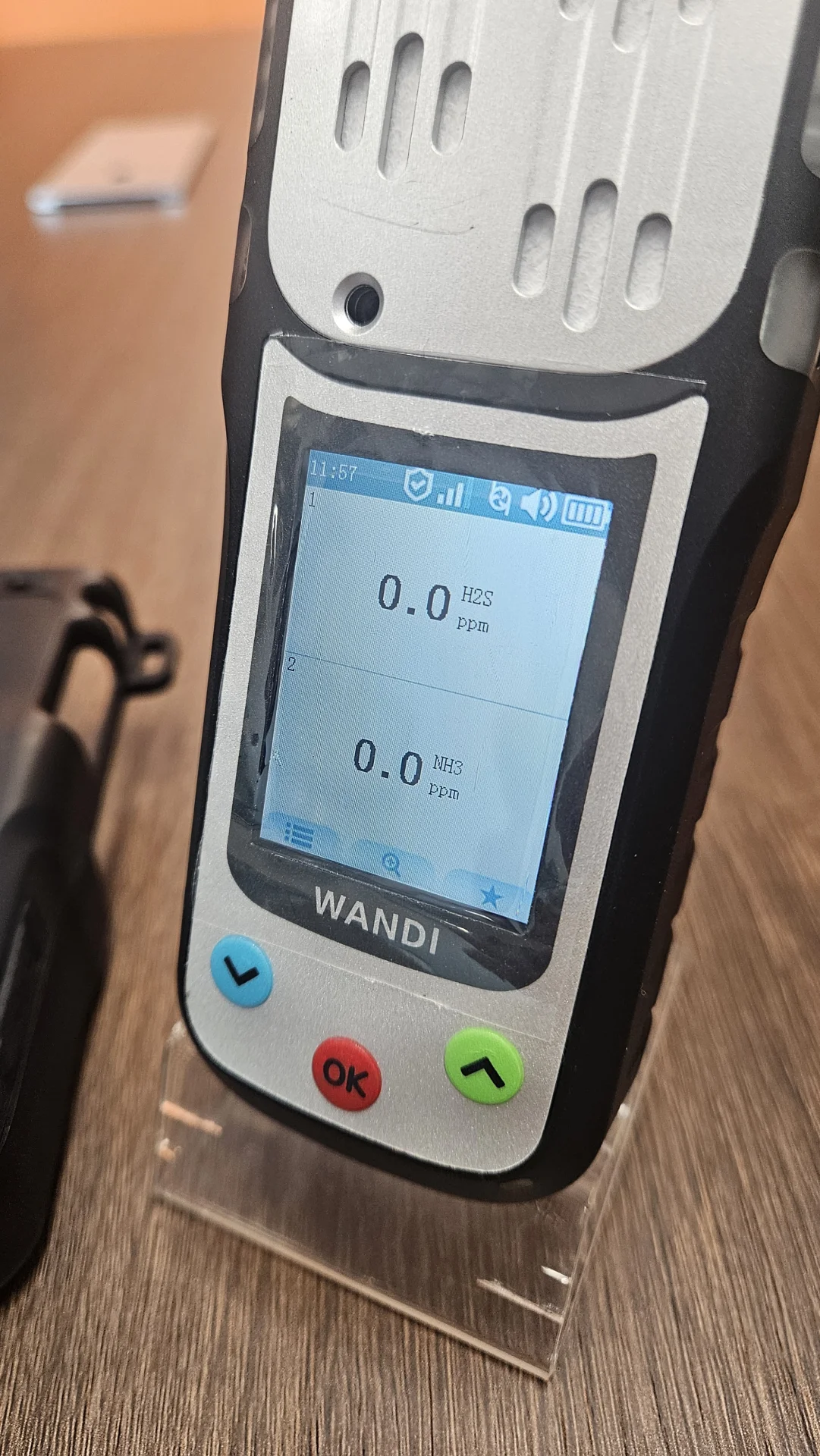
WANDI's partner TS Korea supplied an EDW500 IoT multi-gas detector for hydrogen sulfide and ammonia measurement at a public agency site in Seongdong-gu, Seoul. The EDW500 is a portable multi-gas detector that can be fitted with up to five gas sensors; for this site, it was configured with two sensors — hydrogen sulfide (H2S) and ammonia (NH3) — matched to the site's specific needs.
① Configured for Exactly the Gases Needed — Simultaneous H2S and NH3 Measurement
The EDW500 was supplied in a 2-gas configuration that measures hydrogen sulfide and ammonia simultaneously. Because the gases an EDW500 unit can measure depend on which sensors are installed, the usual approach is to first identify which gases can actually occur on site, then order the needed combination — up to five sensors.
② IoT and GPS for Off-Site Visibility — Concentration and Worker Location Together
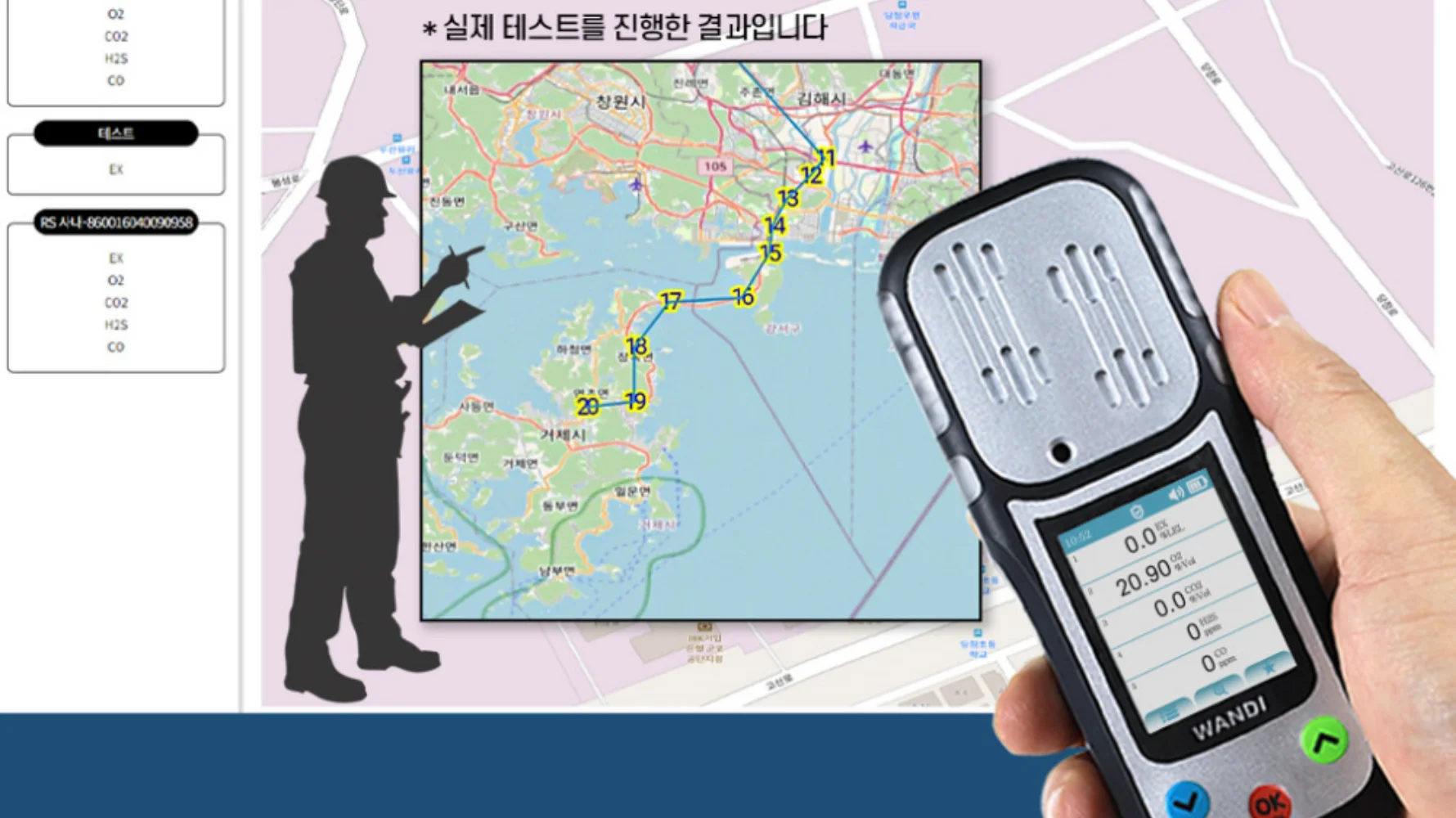
The EDW500 has a built-in SIM (communication module), allowing it to transmit data even in environments without Wi-Fi. Managers can check real-time gas concentrations on site by accessing the monitoring platform from any internet-connected smartphone or PC, and GPS location data is also provided, showing where the worker carrying the device currently is. In environments like confined spaces, where a worker's condition cannot easily be checked from outside, this setup helps managers notice abnormal situations faster without having to be physically present on site.
③ Reaching Inside Manholes with an Automatic Suction Pump — Measuring Without Entering
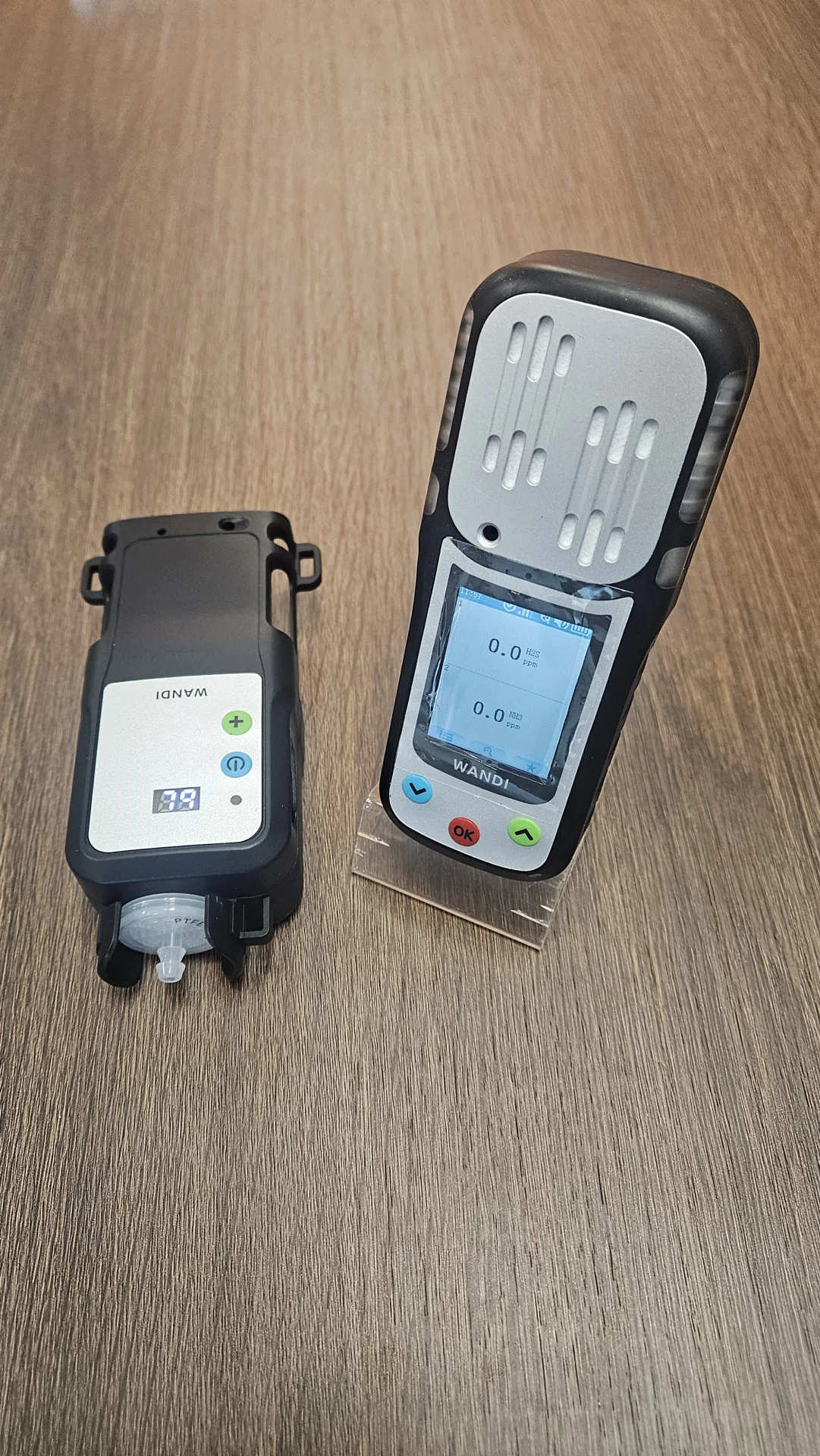
The EDW500 is equipped with an automatic suction pump and sampling hose, allowing gas inside confined spaces such as manholes or sump pits — spaces workers would otherwise be reluctant to enter directly — to be drawn out and measured from outside. The core principle of confined-space work is to "check before entering," and this feature aligns directly with that pre-work safety-verification process by allowing the internal air quality to be checked before anyone goes in.
④ KOLAS Calibration Certificates for Reliable Readings
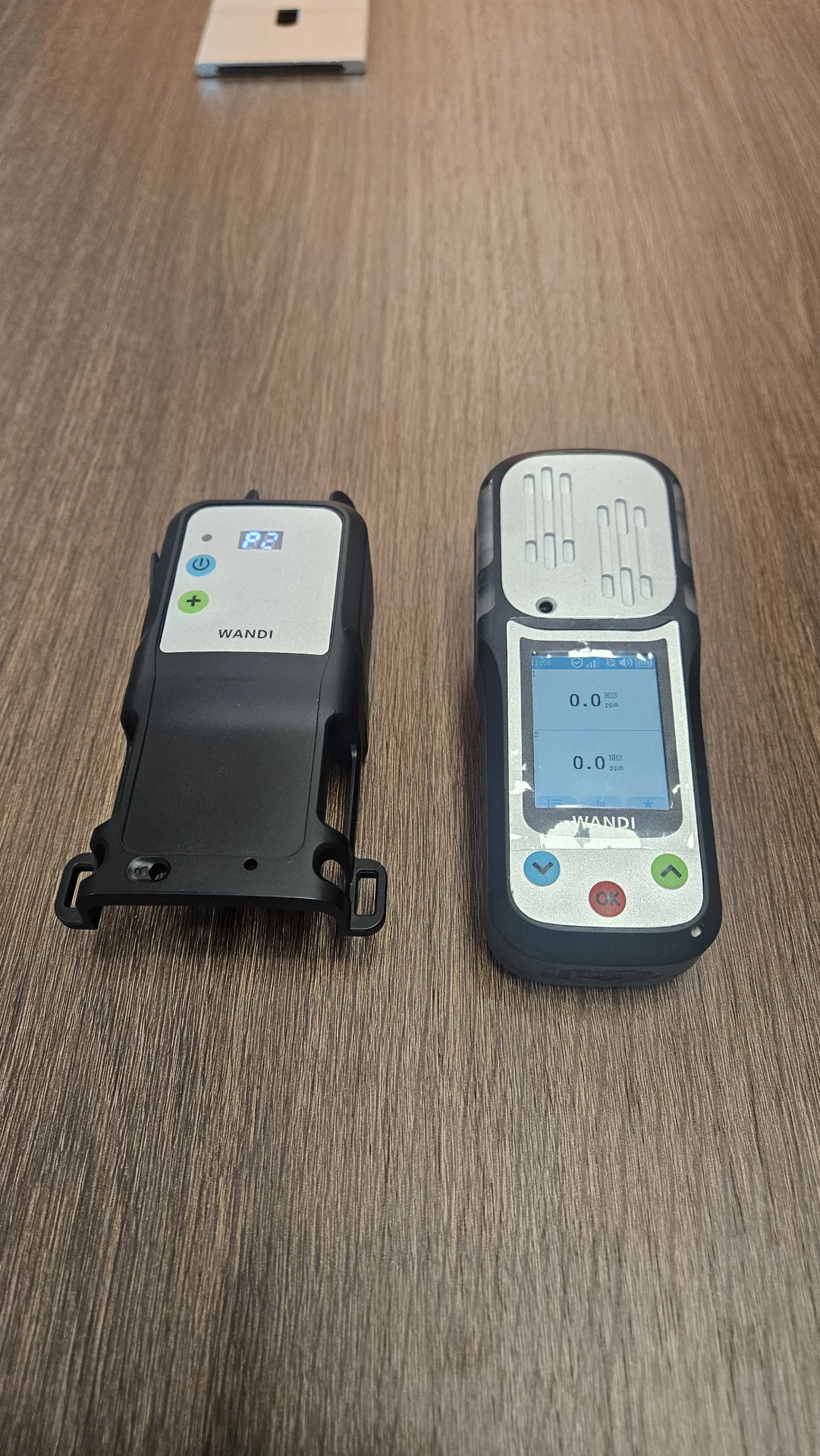
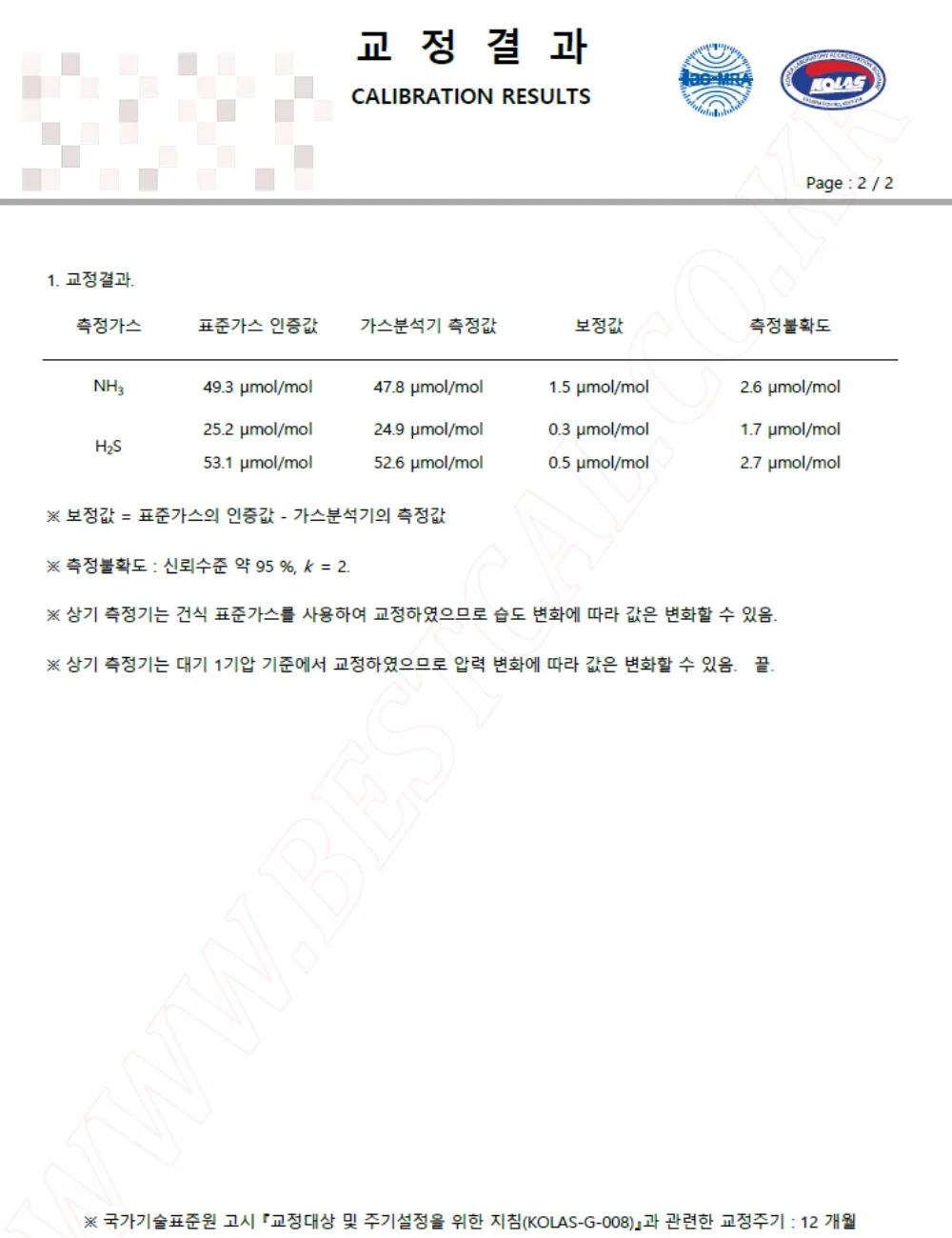
The EDW500 can be issued a KOLAS (Korea Laboratory Accreditation Scheme) calibration certificate, allowing the instrument's calibration results to be verified through an official document and used for quality management or as documentation submitted on site. For sites like public agencies, where the reliability of measurement records and submitted paperwork matters, this is a particularly important practical feature.
Standard Portable Gas Detectors vs. the EDW500
| Category | Standard Portable Gas Detector | EDW500 |
|---|---|---|
| Confined-space measurement | Often requires the worker to enter or approach closely | Automatic suction pump and sampling hose draw air from outside |
| Remote monitoring | Typically limited to the device's own display; comms vary by model | Built-in SIM IoT enables smartphone/PC monitoring without Wi-Fi |
| Worker location tracking | Difficult without separate equipment | GPS location provided alongside gas concentration |
| Gas configuration | Often fixed by model | Choose only the gases needed, up to 5 sensors (this case: H2S and NH3) |
| Calibration documentation | Mainly manufacturer's own certificate | KOLAS calibration certificate available |
※ The table above summarizes characteristics commonly found in standard portable gas detector setups and is not a comparison targeting any specific manufacturer's product. Please confirm exact specifications with WANDI or TS Korea before adoption.
Checklist Before Adopting on Site
- What gases can actually occur at this facility (besides H2S/NH3, is O2, CO, CO2, or a combustible gas sensor also needed)?
- Are there confined spaces such as manholes or sump pits that workers cannot easily enter directly (is pump sampling needed)?
- Are there times when no manager is on site (is IoT remote monitoring needed)?
- Is this a site without Wi-Fi or other communication infrastructure (is the built-in SIM IoT approach suitable)?
- Do measurement records need to be submitted as official documents (is a KOLAS calibration certificate required)?
Closing
Hydrogen sulfide and ammonia are gases that can go unnoticed under normal conditions, yet spike to dangerous concentrations the moment a variable like sediment buildup or a leak occurs. To address this risk, the public agency site in Seongdong-gu, Seoul adopted an EDW500 in a 2-gas (H2S/NH3) configuration, using pump sampling to check confined spaces and IoT/GPS to stay aware of the situation even from off site. For help configuring the right gas sensors and measurement method for your site, contact WANDI at +82-31-340-6952.
Related Reading
- Gas Measurement Before Manhole and Sewer Line Work — Preventing Asphyxiation and Poisoning with the EDW500 Portable 5-Gas Detector
- Gas Measurement Before Cleaning Water Tanks and Reservoirs — Preventing Asphyxiation with the EDW500 Portable 5-Gas Detector
- Methane (CH4) Leak Detection Case Study — The EDW500 Portable IoT Gas Detector Protecting a Wi-Fi-Free Site in Dangjin
Frequently Asked Questions (FAQ)
Q1. Which gases does the EDW500 at this site measure?
The EDW500 in this Seongdong-gu public agency case is a 2-gas configuration measuring hydrogen sulfide (H2S) and ammonia (NH3) simultaneously. Because the measured gases depend on the sensors installed, confirm the gas types your site needs before ordering.
Q2. Can gas concentrations be checked without being on site?
Yes. The IoT function lets you check on-site gas concentrations by accessing the monitoring platform from a smartphone or PC. A built-in SIM enables data transmission even without Wi-Fi, but remote monitoring requires the device's communication link and platform access to be set up.
Q3. Can the worker's location also be checked?
Yes. GPS location data shows the location of the worker carrying the EDW500, helping managers track gas concentration and device location together.
Q4. How is gas measured in manholes or narrow spaces?
The automatic suction pump and sampling hose draw gas from the target point into the instrument, allowing gas inside manholes or other hard-to-reach confined spaces to be sampled and measured from outside. It's best to confirm the required hose length and operating conditions through a consultation before purchase.
Q5. Can a KOLAS calibration certificate be issued?
Yes, a KOLAS calibration certificate can be issued. If you need one, request it when ordering and provide the target gases, calibration range, and the submitting body's requirements so the issuance conditions and schedule can be arranged.
Q6. Can this configuration also measure oxygen or combustible gases?
No. This unit is configured solely for hydrogen sulfide and ammonia, so oxygen or combustible-gas concentrations cannot be checked with these two sensors alone. If additional gases need to be measured, you can specify the required items and add sensors up to a total of five.
Q7. How does it alert when a gas concentration reaches a dangerous level?
When a configured alarm threshold is exceeded, the EDW500 alerts the worker directly on the device while also reflecting the situation on the manager's monitoring platform through its IoT connection. Site-specific alarm thresholds should be set in consultation before adoption, based on the exposure standards and the nature of the work.
Q8. How can I get a quote or consultation for purchase?
Contact WANDI (+82-31-340-6952) or a supplying partner with your site conditions — the gases to measure, whether confined spaces are involved, communication infrastructure, and whether calibration documentation is required — to receive a matching EDW500 configuration and quote.
Sources
· WANDI installation case, "EDW500 IoT Portable Gas Detector (H2S/NH3) — From Gas Concentration to Worker Location" (TS Korea, Seongdong-gu, Seoul) — wandi.co.kr/construction-cases/405
· Hankyung, "Employee in His 50s Inhales Hydrogen Sulfide at Moorim P&P Plant in Ulsan" (April 8, 2026) — hankyung.com
· Money Today, "Stopping Repeated Manhole Asphyxiation Accidents — Work Approved Only After Oxygen and Ventilation Checks" (August 6, 2026) — mt.co.kr
· One situational image: Unsplash (Bradley Andrews) — not an actual site photo.